
Browse using the new Vinous website now. Launch →
Printed by, and for the sole use of . All rights reserved © 2015 Vinous Media
Joseph Phelps Insignia 1974-2025: Past, Present and Future
BY ANTONIO GALLONI | OCTOBER 6, 2026
First produced in 1974, Joseph Phelps’ Insignia was a groundbreaking wine in Napa Valley. It was Napa Valley’s first proprietary red Bordeaux blend, a wine that opened the door for so many others that followed. Two recent vertical tastings provided an incredible opportunity to delve into Insignia’s rich history and examine the trends that have shaped these wines over the last six decades.
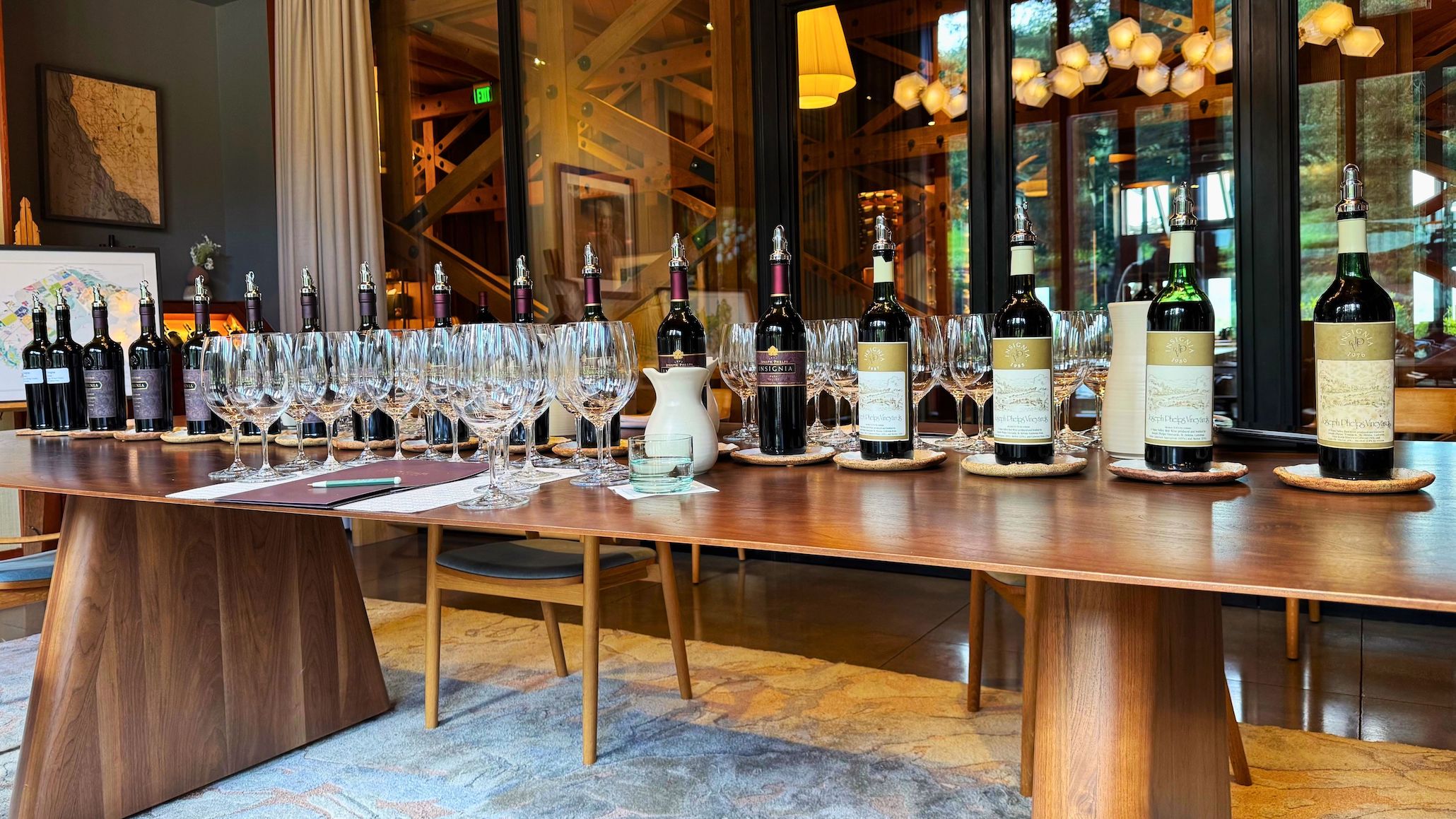
A stunning collection of Insignias stretching across six decades.
A Rich Legacy
Joseph Phelps was born in Missouri in 1927 but grew up in Colorado. Phelps completed three years of military service during the Korean War, after which he joined Hensel Phelps Construction Co., the family construction business. Phelps led a period of significant expansion that took him to San Francisco, where he began exploring nearby Sonoma and Napa Valley. The Phelps business played a central role in many local construction projects, including hotels and infrastructure such as airport terminals and San Francisco’s BART public transportation system.
Phelps was a true Napa Valley pioneer. Intrigued by Napa Valley, Phelps purchased a large, sprawling ranch in St. Helena in 1972. At the time, the property was used for grazing cattle; there were no vineyards at all. These were very early days in Napa Valley’s modern history. Robert Mondavi was the best-known producer in the region. The Judgment of Paris was still a few years away from putting Napa Valley on the map, literally and figuratively. There were only about a dozen active wineries, a far cry from the 500 or so that are present today. Joe Heitz had founded his winery in 1961, the same year Nathan Fay planted Cabernet Sauvignon in what is now the Stags Leap District AVA. Dick Steltzner planted his ranch, also in Stags Leap, in 1964. The Mondavis founded their winery in 1966, followed by the Chappellets in 1967. Al and Boots Brounstein founded Diamond Creek Vineyards in 1968. Milton and Barbara Eisele purchased their ranch in Calistoga in 1969. Activity picked up in the 1970s. Clos du Val, Stag’s Leap Wine Cellars, Caymus, Chateau Montelena, Cakebread and Burgess are some of the wineries that were founded in the early 1970s.
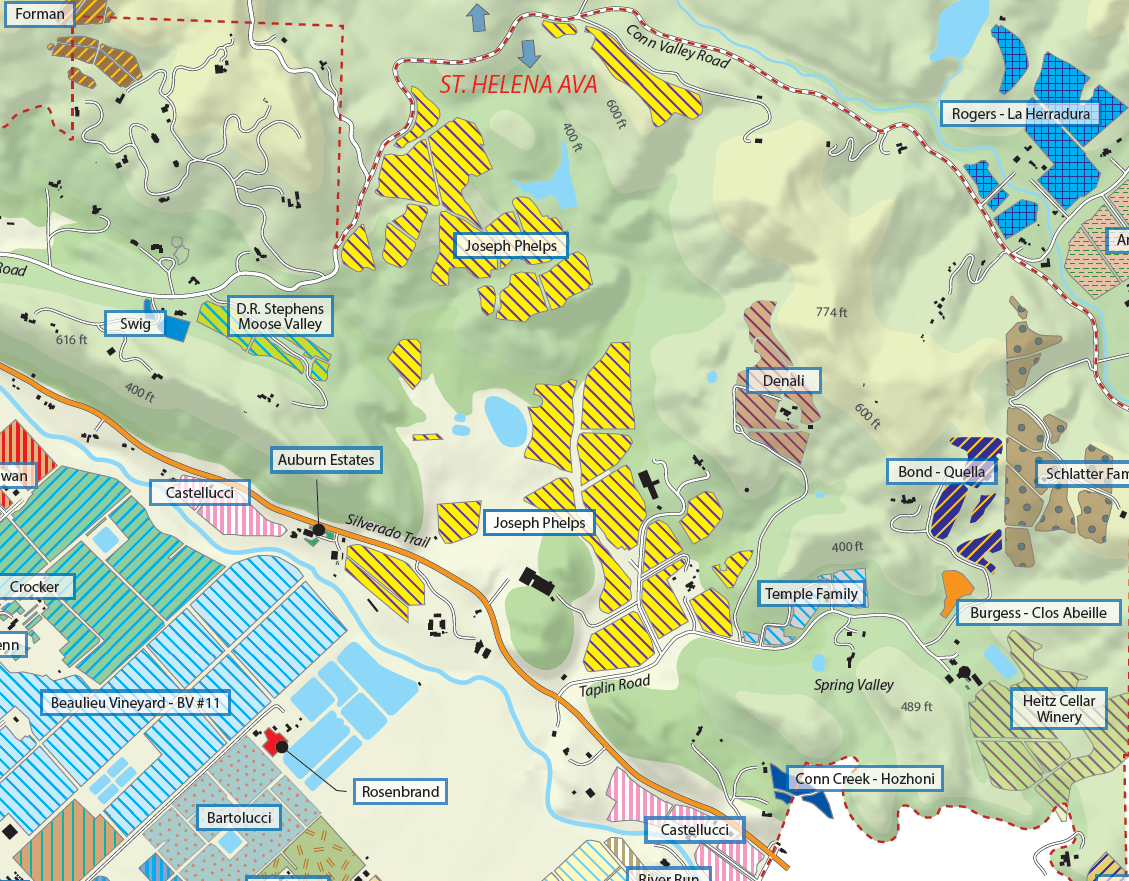
Spring Valley is one of the most distinctive corners within the St. Helena AVA. Image from the Vinous Map of St. Helena and Conn Valley, updated 2026, by Antonio Galloni and Alessandro Masnaghetti © 2016-2026 Vinous.
Against this backdrop, Joe Phelps aspired to make great wines like the Bordeaux reds he admired so deeply. He planted vines in 1973 and 1974, while also building the barn-like facility that served as his first winery and is home to the hospitality center today. Among his many achievements, Phelps was the first to make and bottle Syrah in the United States. Phelps isolated Syrah from a field blend at Wheeler Ranch previously used by Christian Brothers for sacramental wines, in the last surviving vineyard from an experimental 1935 planting of French Syrah undertaken by Dr. Harold Olmo at UC Davis.
Phelps enjoyed a brilliant career that stretched across many decades, during which Joseph Phelps Vineyards became synonymous with exceptional quality. The 2002 Insignia was Wine Spectator’s Wine of the Year in 2005. Robert Parker wrote glowingly about the wines. I tasted Insignia and other Phelps wines with Parker several times, sessions during which I was able to glean invaluable perspectives from someone who had directly witnessed the wine’s early ascent into the elite. Joseph Phelps passed away in 2015. In 2022, his heirs sold the winery to the Arnault family and LVMH. Today, Joseph Phelps Vineyards is run by President David Pearson, a highly respected industry veteran whose résumé includes stops at many illustrious properties, including Opus One, which he ran from 2004 to 2020.
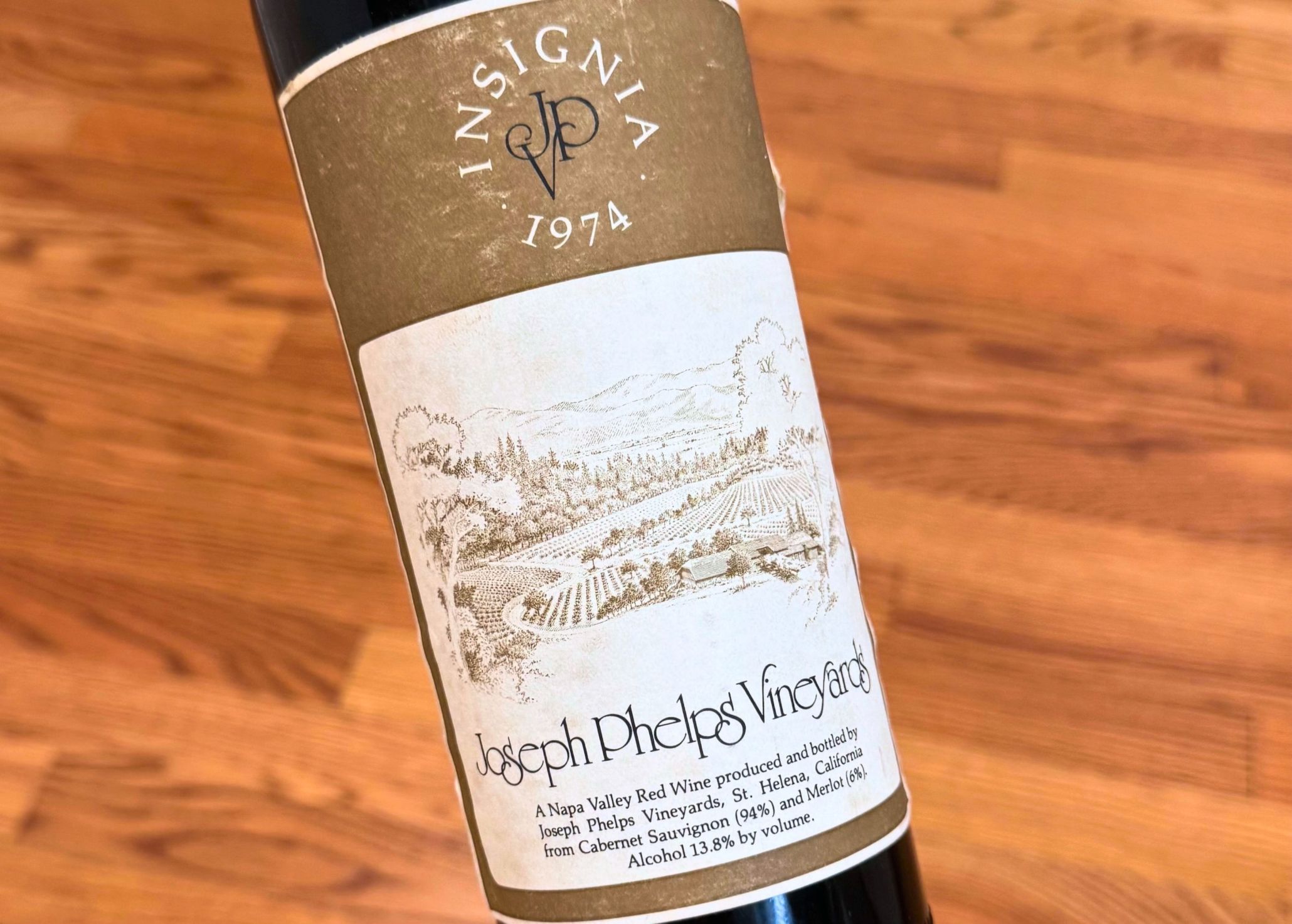
The 1974 Insignia, the debut vintage, is still in magnificent shape.
Six Decades, Four Winemakers
In its six decades of history, Joseph Phelps has employed just four head winemakers. This is quite a feat in Napa Valley, a region in which changes can be fast and furious. Founding Winemaker Walter Schug turned out a series of magnificent Insignias during a tenure that ran from 1973 to 1982. His wines have stood the test of time. Schug oversaw Phelps’ early move to estate vineyards, a transition that would take a full 30 years to realize. Except for the 1975, 1977 and 1978, Schug’s Insignias relied heavily on Cabernet Sauvignon. Schug also experimented with various aging regimes and oak formats, as readers will see in the accompanying notes. Schug’s 1974, 1976 and 1980 Insignias remain benchmarks. I can only say I hope to have a chance to taste them again.
Craig Williams joined Joseph Phelps in 1976 and worked with Schug for several years before taking over as Head Winemaker in 1983. The late 1980s saw another important move in the direction of favoring estate vineyards in the blends. Williams crafted several stunning Insignias during his 20 years at the helm. These include the 1991, which remains quite possibly the greatest Insignia ever. The 1997 is another profoundly beautiful Insignia. Production grew significantly during the 1980s and 1990s, reaching 20,000 cases with the 1997. In the late 1990s, Williams pushed extractions (as many winemakers did during this time) and began experimenting with longer aging in barrel. The aforementioned 2002 Insignia received considerable acclaim. Although I have always preferred the 2001 to the 2002, there is no question the 2002 is a more important wine in terms of the attention it brought to Insignia and Joseph Phelps.
Ashley Hepworth arrived at Joseph Phelps in 1999 as a harvest intern. She spent time working alongside Mark Herold during the years Herold ran Phelps’s experimental laboratory. Five years later, she was appointed Associate Winemaker. Hepworth presided over one of the most important periods in the winery’s history, as Insignia became a 100% estate wine with the 2004 vintage. Her wines built on the tradition established by her predecessors. She experimented with classic Bordeaux blenders such as Cabernet Franc, Petit Verdot and Malbec, while also crafting wines that balanced textural richness with the natural energy of cooler sites — most notably Suscol, a vineyard in southern Napa that features in many of her wines. The 2006, 2010, 2013 and 2016 remain strikingly beautiful Insignias.
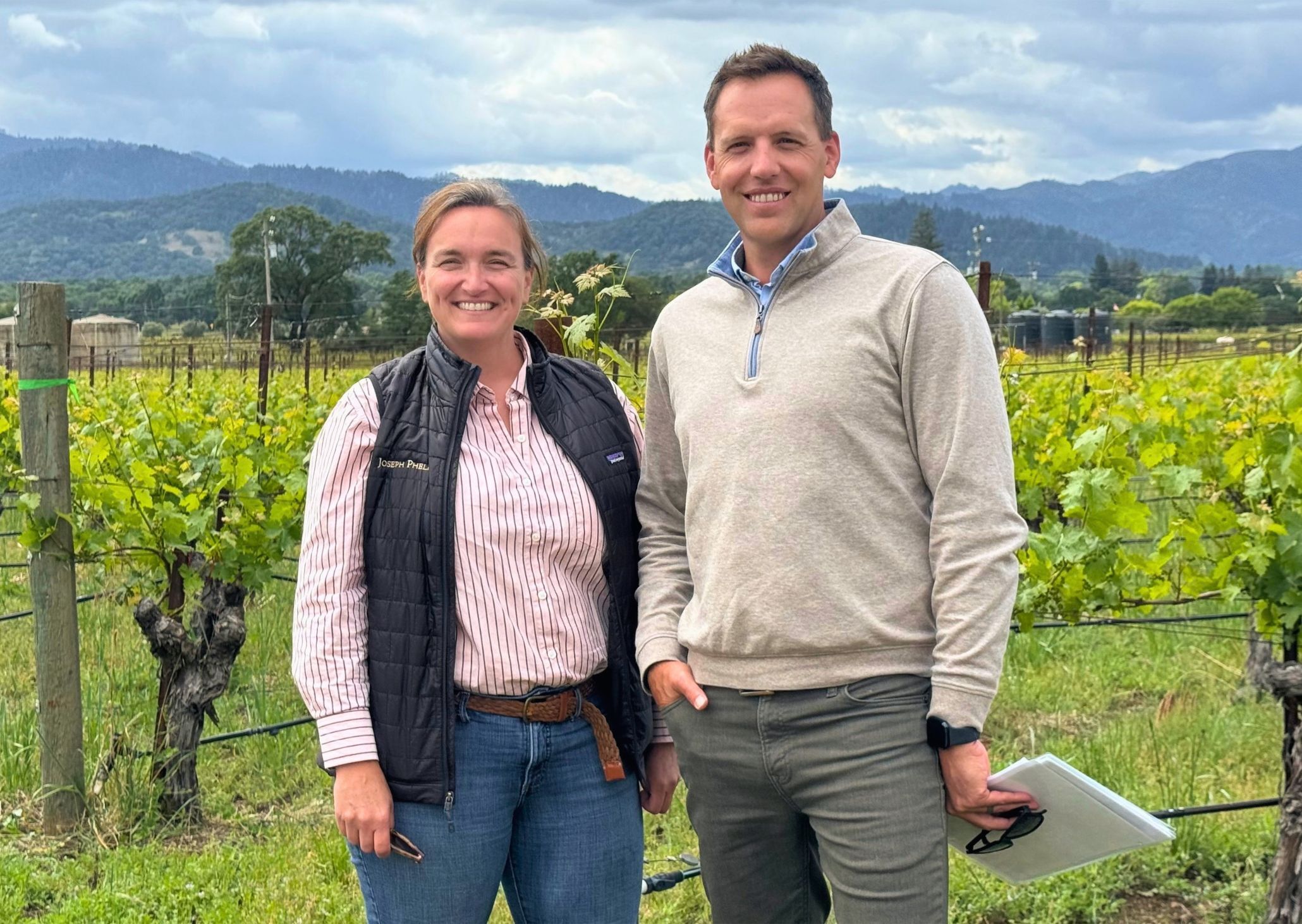
Vineyard Manager Nathalie Buckland and Winemaker Ryan Knoth at Barboza Vineyard in Stags Leap.
Ryan Knoth is only the fourth head winemaker in Joseph Phelps’ history. He joined in 2022 after working at Sinegal, where I first met him. In just a few years, Knoth has brought a more contemporary style to Insignia by backing off extractions, lowering temperatures in fermentation, reducing toast levels and shortening time in barrel. Because of its relatively long aging in the past, Insignia is a wine I frequently tasted two times from barrel. I often felt that the first tasting was the best. Not all vintages responded well to extended time in barrel, and those that did needed a few years in bottle post-release to show at their best. Other adjustments include using a touch of fruit from Backus, which had not been seen since the 1980s. Knoth’s first wines point to an exceptionally bright future for one of Napa Valley’s true icons.
The newer style of Insignia is one I like a great deal. Napa Valley naturally provides a lot of richness; a more restrained hand in the cellar is a very fine counter to that intensity.
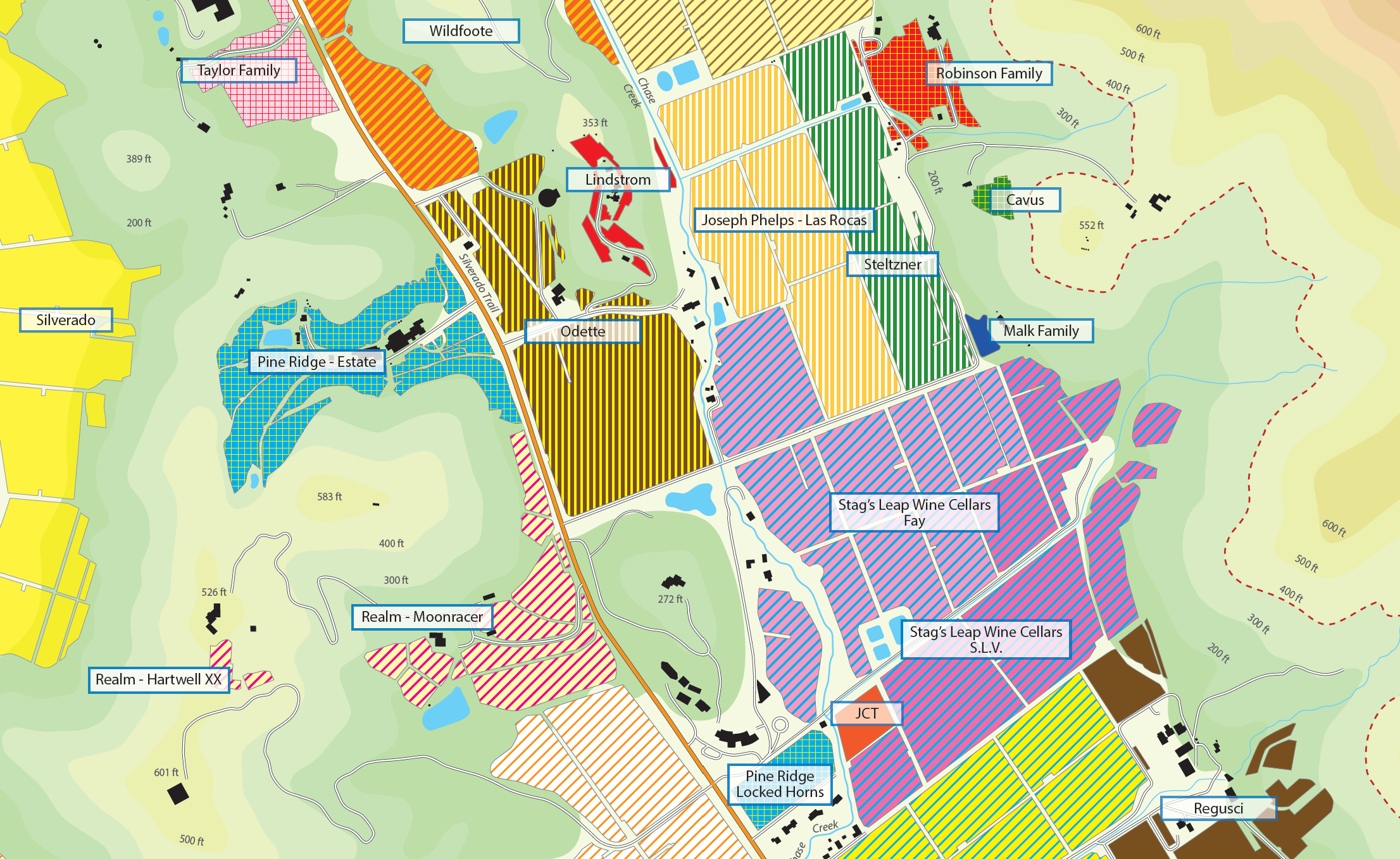
Stags Leap District has long played a central role in the Insignia blend. Phelps purchased Las Rocas Vineyard in 1983, while Steltzner, just to the east, was a core site for the first two vintages. Image from the Vinous Map of Stags Leap, updated 2026, by Antonio Galloni and Alessandro Masnaghetti © 2016-2026 Vinous.
Key Vineyard Sites
From the very beginning, Insignia was conceived as a blend, not just of varieties, but also of sites, allowing the winemaker the utmost flexibility to produce and bottle only the very best for the winery’s flagship bottling. In the early days, Insignia was made exclusively from outside grower fruit. Although it is impossible to know for sure, the variation of vineyard sources in the early Insignias suggests that Schug, and later Williams, experimented considerably with various sites rather than relying on long-term sources or formal agreements. Phelps had access to many sites that have since gone on to become highly recognized as estates and/or high-quality fruit sources. These include Eisele, Steltzner, Shafer, Markham, Tench, Backus, Beckstoffer (Rutherford and Oakville) and Vine Hill Ranch. Interestingly, some of the early Insignias also include fruit from Backus, in the heart of Oakville, a site Phelps has also bottled separately as a vineyard-designate Cabernet Sauvignon since 1977. The first estate fruit was used in Insignia with the 1977 vintage. The percentage of estate fruit in Insignia grew throughout the 1970s and into the 1990s until Insignia became a 100% estate wine in 2004. One of the most intriguing aspects of Insignia, especially in more recent years, is a focus on sites in Stags Leap, Oak Knoll and southern Napa Valley, all relatively cooler and later ripening than sites further north. Production grew from about 600 cases in the early days to a peak of 20,000 cases in 1997, and now stands at around 12,000-18,000.
The major theme driving farming today is agroecology, specifically the desire to rebuild a more natural and sustainable environment for vineyards than what was once common throughout Napa Valley. Many vineyards are undergoing significant replanting because of vine pests and widespread outbreaks of red blotch that can spread easily and destroy large swaths of vineyards within just a few years. Testing for red blotch is now possible, but there is a latency period of a few years that has slowed down the pace of replanting. Today, the pace of redevelopments is much more measured than in the past. Land is ripped and planted with cover crops. Rootstock goes in a year or so later and then is left there for another year or more until vines are grafted on. Trees, shrubs and other native plants will become part of the landscape once again. Trees are also planted between every third row of vines with the goal of re-establishing natural biodiversity, and therefore building soil health. The ultimate objective is to create a living, vital ecosystem that will allow vines to last more than the 20-or-so years that is currently the norm in Napa Valley.
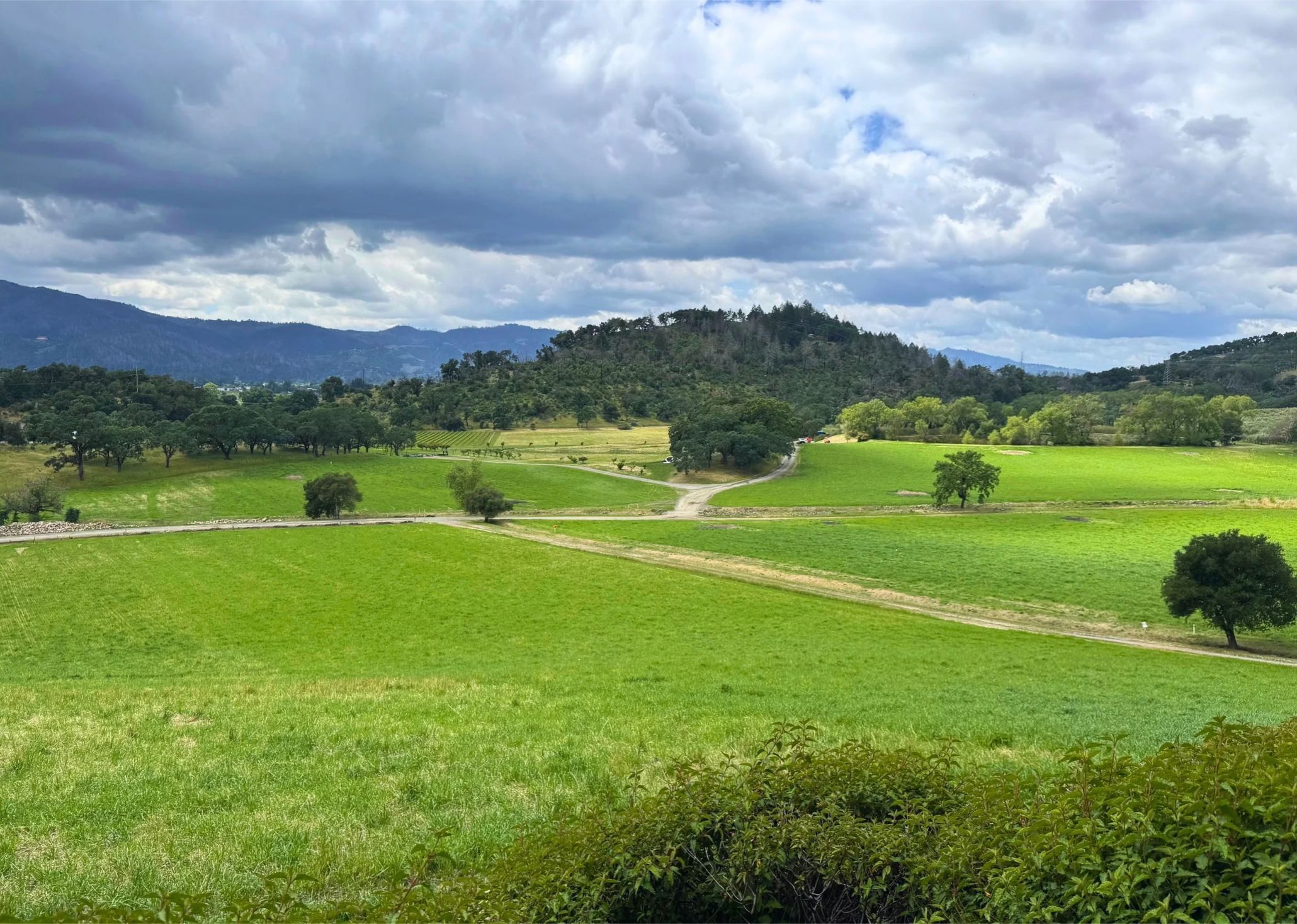
Home Ranch, in the heart of St. Helena’s Spring Valley, is the heart and soul of Joseph Phelps Vineyards. These blocks are in the middle of an ambitious replanting program aimed at restoring the natural ecosystem with the goal of fostering vines that will be productive for many decades.
Home Ranch
Joe Phelps purchased his Home Ranch in 1973. The site is located in the Spring Valley district, a small district in St. Helena’s eastern hills that is also home to Heitz Cellars’ original vineyard and winery, as well as BOND’s Quella property. Home Ranch — known as Spring Valley Vineyard in early Phelps literature — is the heart and soul of Joseph Phelps, as well as home to a large hospitality center. It is also here that Phelps is experimenting with their most ambitious replantings and an overall move into regenerative farming.
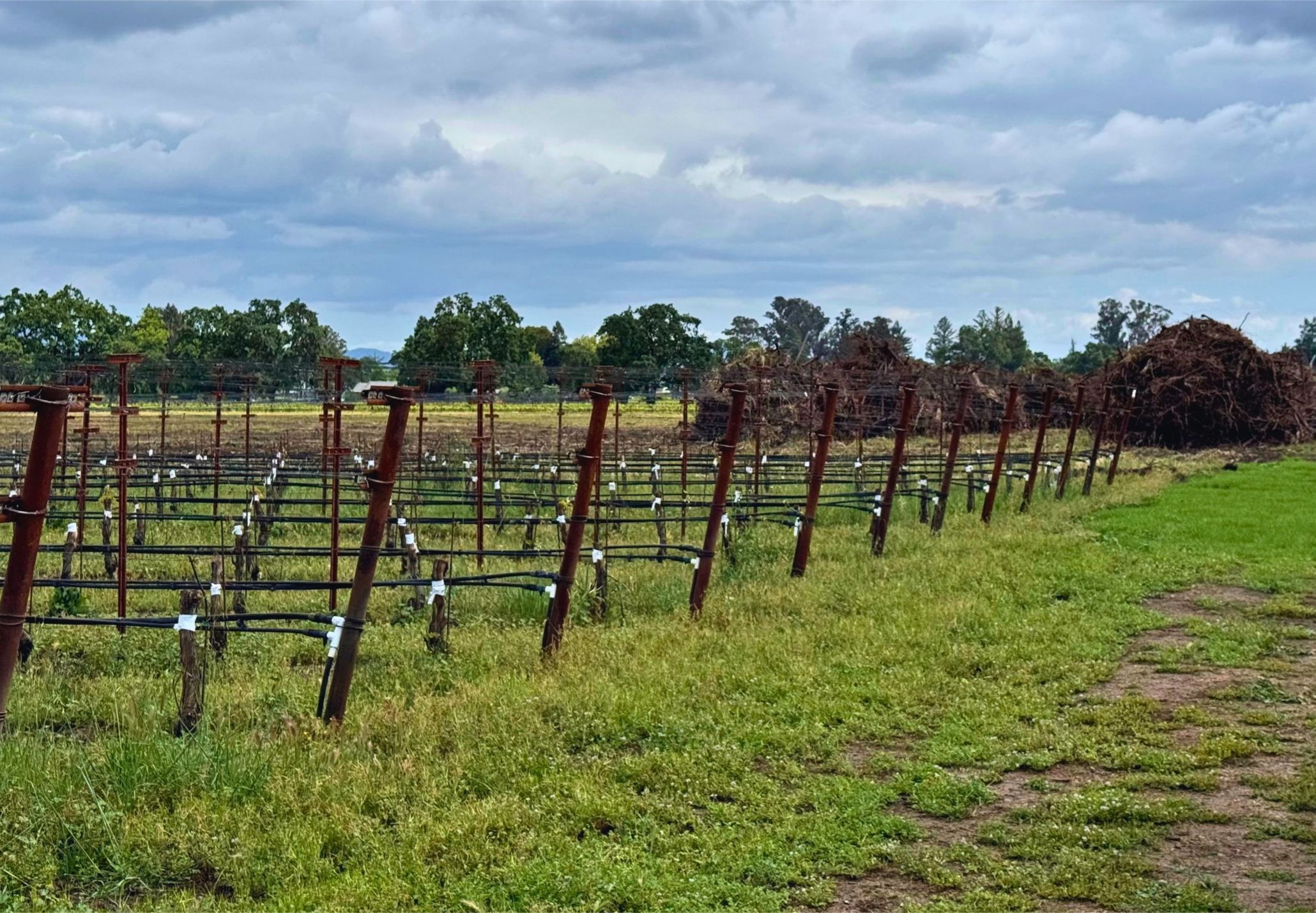
Yountville Vineyard, a core Insignia site, is currently undergoing extensive replanting to address red blotch.
Yountville Vineyard
Phelps purchased Yountville Vineyard from the Stanton family in 1979 but has been sourcing fruit there since 1973, making it Phelps’ original fruit source. Curiously, Yountville Vineyard is in the Oak Knoll AVA, a remnant of a time before formal AVAs existed, when naming conventions were more casual than they are today.
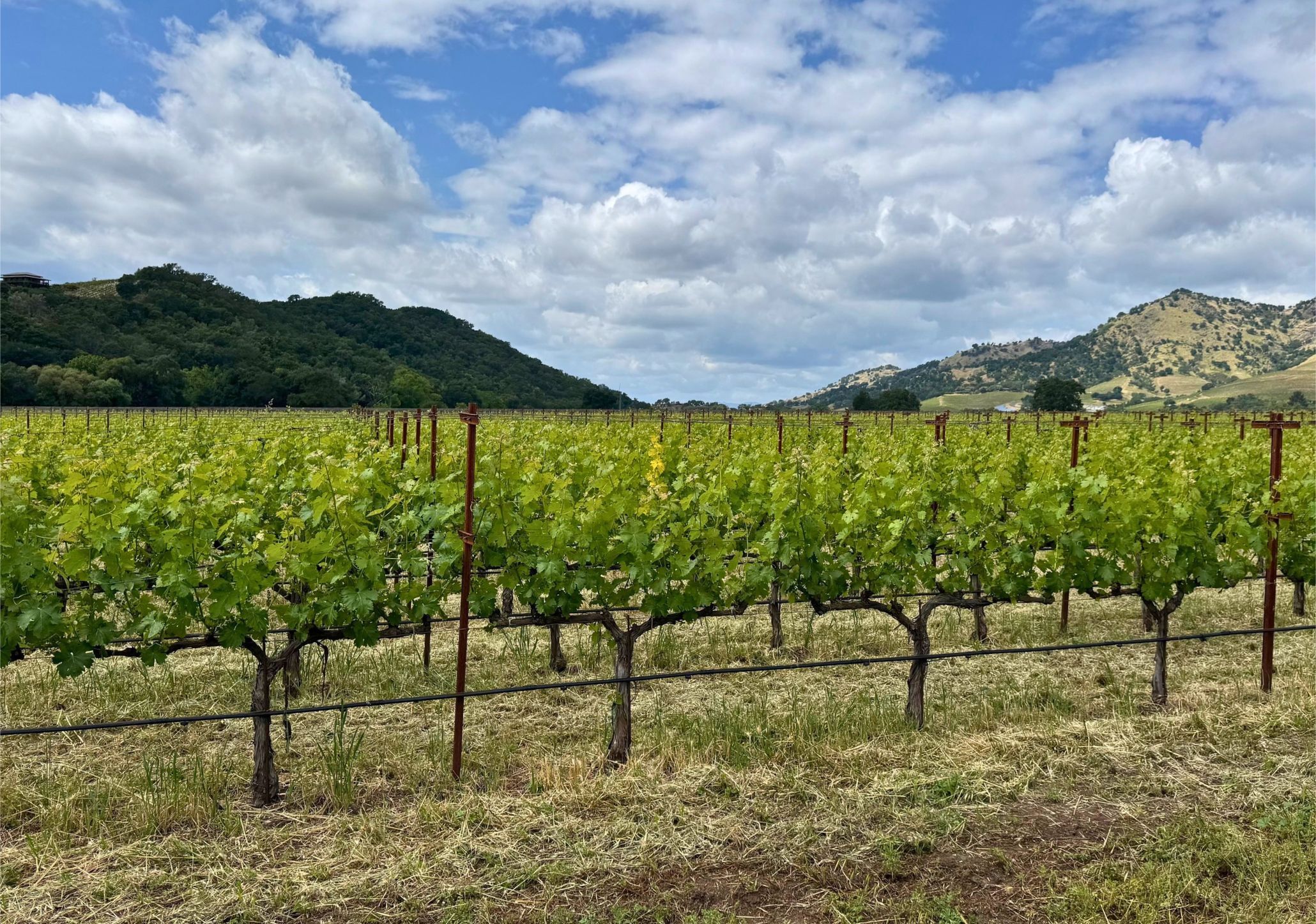
Las Rocas occupies a privileged position within the Stags Leap District AVA and has long been a core Insignia site.
Las Rocas Vineyard
Phelps acquired Las Rocas in 1983. The vineyard is nestled in the heart of the Stags Leap District AVA, tucked between Odette and Steltzner, and adjacent to Stag’s Leap Wine Cellars’ FAY Vineyard on its southern border. Las Rocas sits on the same alluvial fan as FAY. Clay with sandy and gravelly soils confer finesse and elegance to the Insignia blend.
Banca Dorada
Banca Dorada, also purchased in 1983, is in western Rutherford, at the foothills of the Mayacamas Mountains, bordering Morisoli, Inglenook and Bella Oaks. There are presently 34 acres under vine.
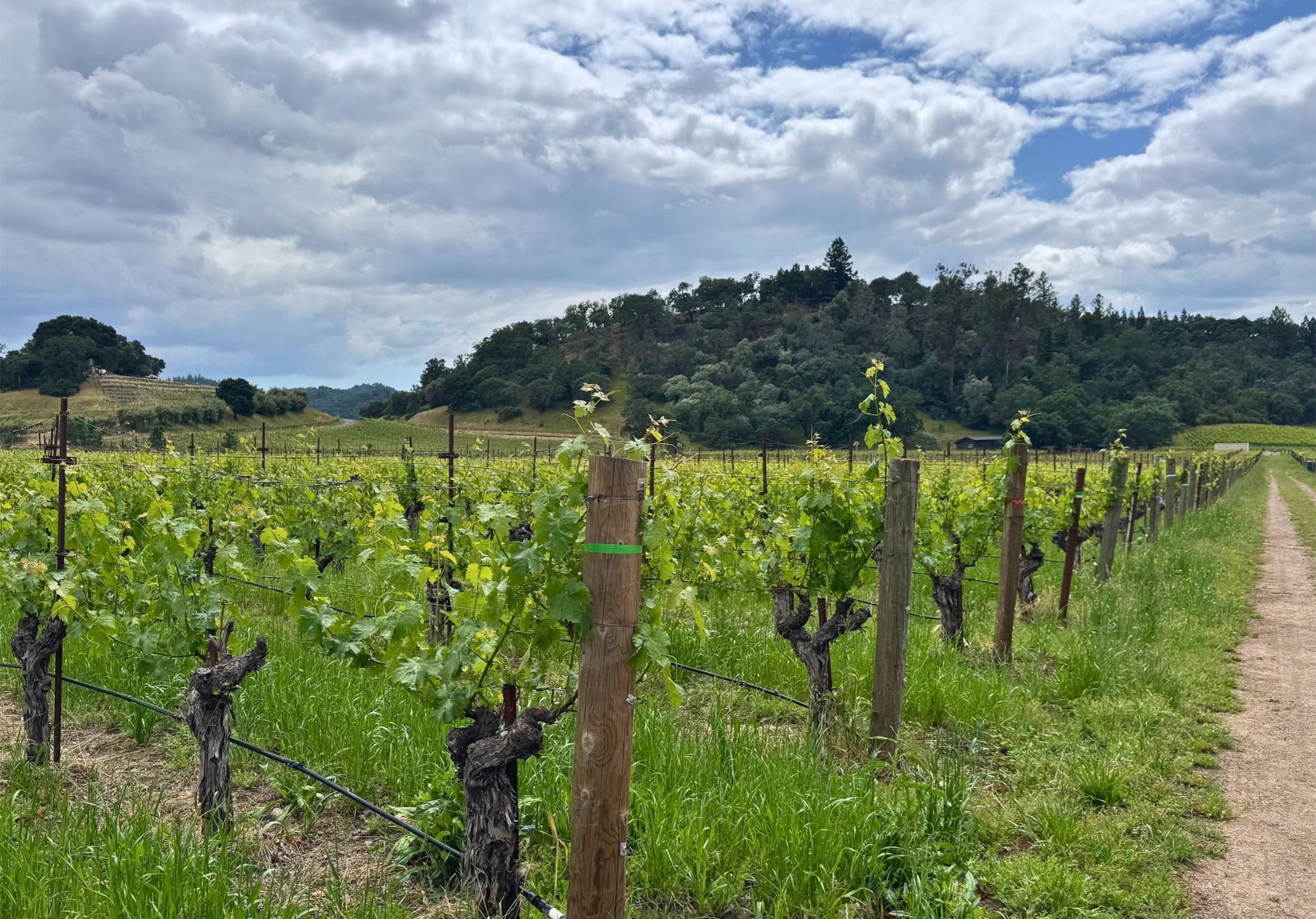
Barboza Vineyard, located in the northern reaches of the Stags Leap District AVA, is known for conferring power.
Barboza
Barboza lies in the northern reaches of the Stags Leap District AVA, adjacent to several vineyards owned by Cliff Lede and Pine Ridge. Soils here are rockier than those found at Las Rocas. This site is known for lending power and depth. Most of the 17 acres are Cabernet Sauvignon planted in the early and mid-1990s, although there is a bit of Petit Verdot at the back of the ranch. Phelps entered into a long-term lease here in 1997.
Backus Vineyard
Backus is Phelps’s sole vineyard site in Oakville. A steep, dramatic site, Backus is clearly identifiable by its turret-style building. From time to time, small pieces of Backus have appeared in the Insignia blend, a practice Ryan Knoth brought back with the 2023, 2024 and 2025. There are presently 22 acres under vine, mostly Cabernet Sauvignon, with some Malbec and Petit Verdot. Phelps purchased Backus in 1996.
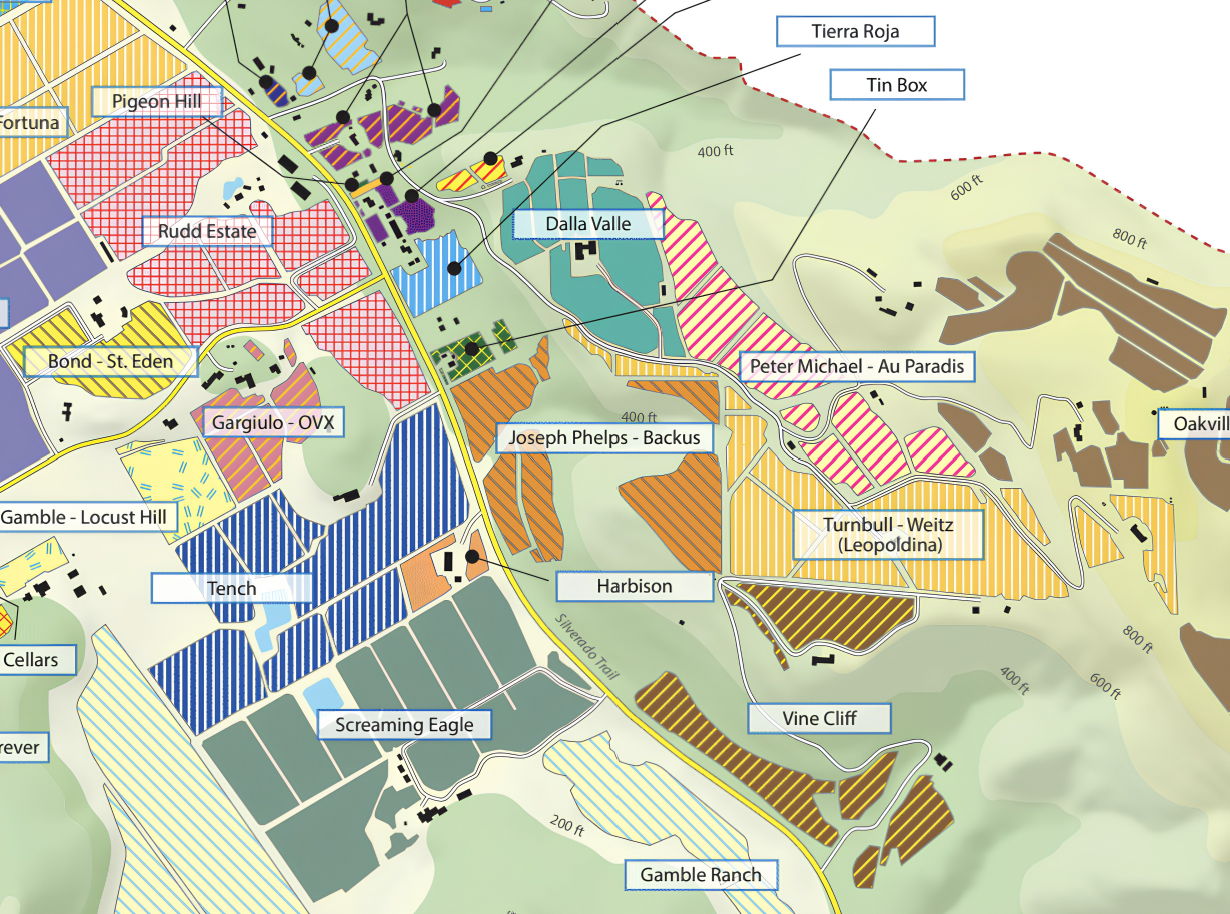
Backus Vineyard, with its turret-like building and steep hillsides, is one of the most visually striking sites in Oakville. Image from the Vinous Map of Oakville, updated 2020, by Antonio Galloni and Alessandro Masnaghetti © 2016-2020, Vinous.
Suscol Vineyard
Located in southern Napa Valley, Suscol became a core part of Insignia during Ashley Hepworth’s tenure. It is the coolest of the estate vineyards. Phelps purchased the ranch in 1999. There are presently 90 acres under vine, mostly Cabernet Sauvignon, with bits of Cabernet Franc, Malbec, Syrah and Viognier.
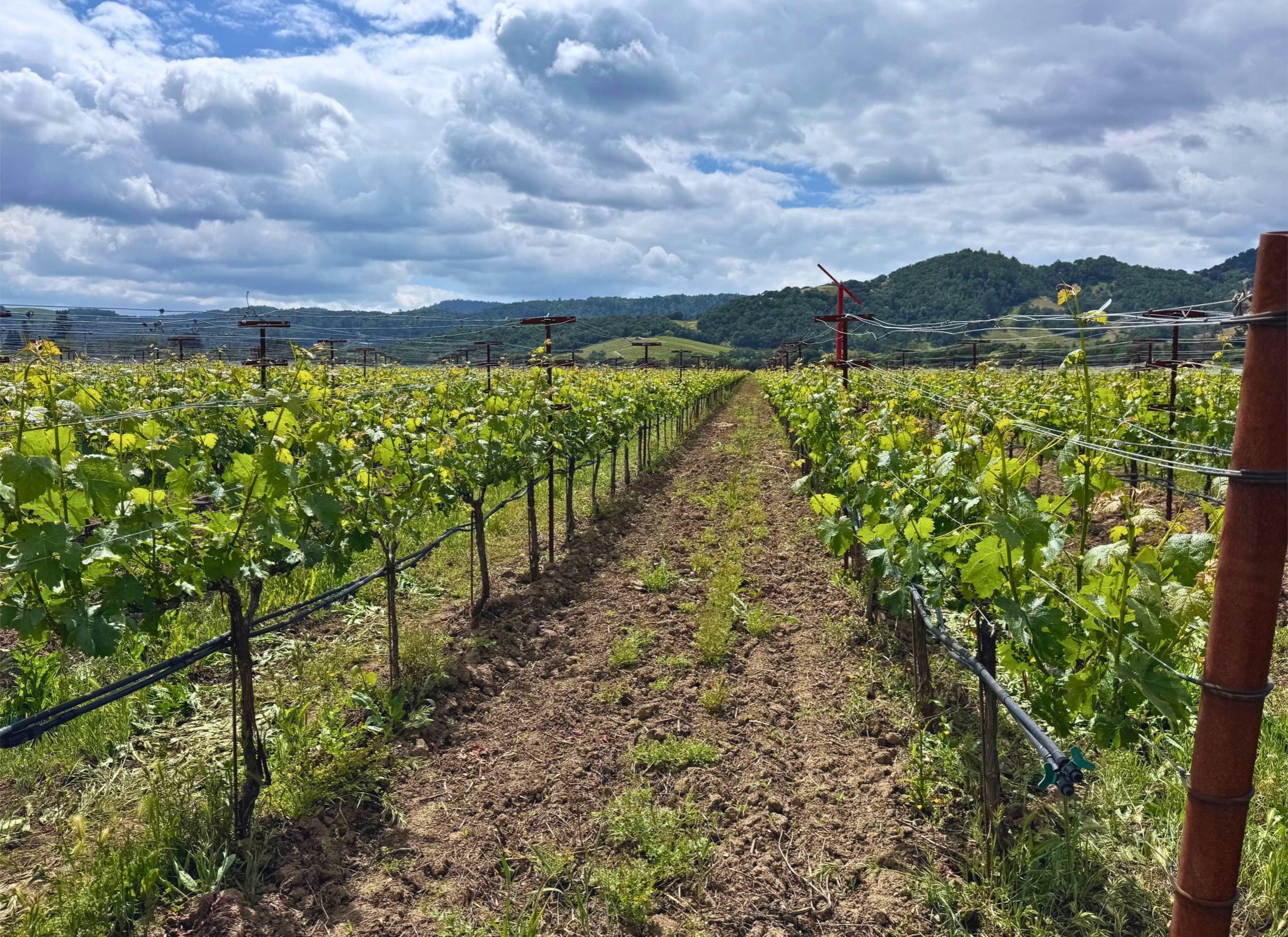
El Venadito is undergoing extensive replanting, but its heritage as a top site for Cabernet Sauvignon goes back more than 100 years.
El Venadito Vineyard
El Venadito (the little deer), purchased in 2019, is the most recent addition to the Phelps portfolio. This old Christian Brothers site has been planted with grapes for at least 140 years. Brother Timothy, one of the leading winemakers of his day, made wines from this site throughout the 1970s and 1980s and considered it one of his top sites. Much of the vineyard is being replanted. As a result, El Venadito has been used only intermittently in Insignia.
I tasted the wines in this article during two visits to Joseph Phelps in 2026, except for the 1974, which I found in the cellar of a dear friend who graciously shared the bottle — a poignant reminder of the generosity the world’s greatest wines inspire.
© 2026, Vinous. No portion of this article may be copied, shared or redistributed without prior consent from Vinous. Doing so is not only a violation of our copyright but also threatens the survival of independent wine criticism.
You Might Also Enjoy
Napa Valley Soars: The 2023 & 2024 Cabernet Sauvignons, Antonio Galloni, November 2025
2015 Napa Valley Cabernet Sauvignon: In the Zone, Antonio Galloni, November 2025
Napa Valley’s 2022 & 2023 Cabernet Sauvignons, Antonio Galloni, December 2024
The 2021 Napa Valley Cabernets, Part One, Antonio Galloni, December 2023
Napa Valley: The Frantic 2020s & Stunning 2021s, Antonio Galloni, February 2023