
Browse using the new Vinous website now. Launch →
Printed by, and for the sole use of . All rights reserved © 2015 Vinous Media
Santa Cruz Mountains 2023 and 2024: A Rising Tide
BY BILLY NORRIS | JUNE 25, 2026
The Santa Cruz Mountains has been the underdog region in California wine for decades. Quality has been exceptionally high in pockets for just as long, with the tone set by marquee estates like Ridge, Mount Eden and Rhys. But it has been an uphill battle for the many intrepid smaller producers fighting to carve out their share of the limelight in a region that seems almost designed to resist easy agriculture.
That is changing, and it’s good news for everybody.
I put 1,400 miles on a rental car over five days of meeting and tasting with producers in the Santa Cruz Mountains. The sprawl is undeniable. Situated roughly an hour’s drive south of San Francisco, the Santa Cruz Mountains AVA comprises nearly 480,000 acres, of which a paltry 1,600 are planted to vine. That is only 0.3% of the land. It's a vast, segmented region generally divided by the San Andreas fault, which splits the AVA generally in two, with a pocket of cooler sites in the south, closer to Monterey Bay. Vineyards appear as small clearings in a vast, forested landscape, scattered across ridges, gullies and exposures that can vary dramatically over short distances. Much of the region is mountainous, densely wooded, difficult to access and either cost-prohibitive or logistically unfeasible to plant vineyards. Historically, the estates with the deepest pockets were often best positioned to absorb the region’s complications.
But today the narrative is shifting. The main takeaway is no longer hardship — it is momentum. There is an inescapable sense that the Santa Cruz Mountains as a whole is firing on all cylinders. Quality and ambition have never been higher, and the sense of community and collaboration is palpable, from the region’s stalwarts to the fledgling up-and-comers. The long-standing benchmark estates remain bastions of fine, important wine, but the whole picture is far broader. An impressive array of producers are now crafting wines of real impact, wines that have earned their place among the finest in the United States. The tide has risen.
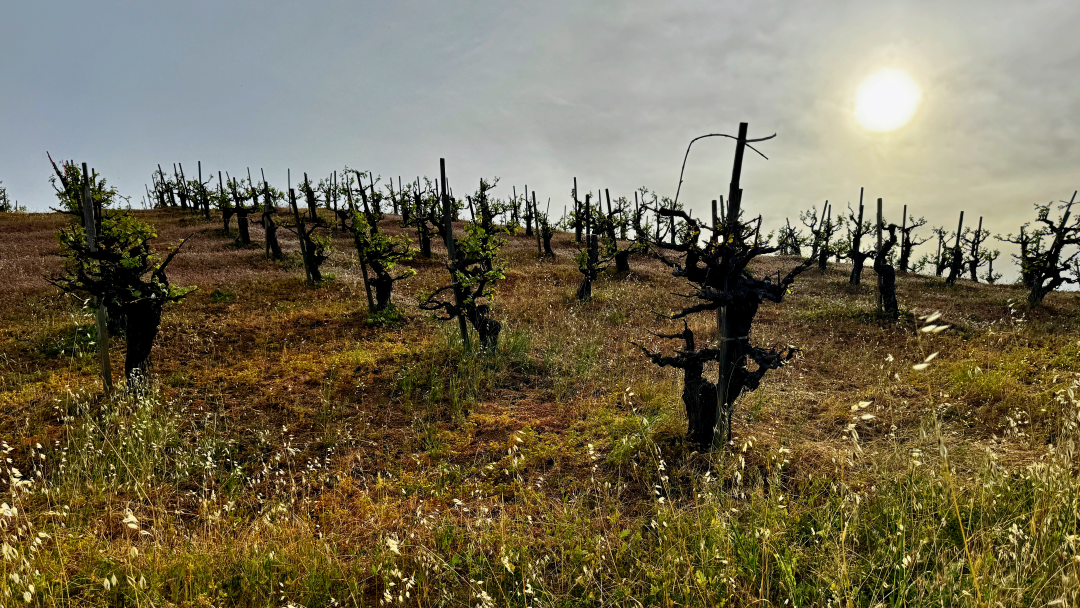
The Peter Martin Ray vineyard boasts a viticultural history dating back to the late 1800s. The head-trained Cabernet pictured here was part of a 1979 replanting.
Viticulture is Everything
The challenges of viticulture in the Santa Cruz Mountains are not just logistical. In this rugged, wild AVA that spans mountainous terroirs at a range of elevations from 400 feet to more than 2,700 feet, most of the vineyards sit within 15 miles of the Pacific Ocean. That’s close enough for fog, wind and cold marine air to be daily farming realities. With those conditions comes significant mildew pressure. Precise work in the vineyard is the only way to grow anything worth vinifying, let alone anything capable of producing world-class wine. Here, the viticulturist is the rockstar. That is not to suggest that other California regions lack serious, intentional farming, but rather that farming in the Santa Cruz Mountains is more important than any subsequent input in the winery.
I’ve never visited another region where so many people talk about specific viticulturists by name. And it’s the same names that come up again and again: David Gates, Prudy Foxx and Ken Swegles. The same themes also emerge regularly: transitioning to organic practices, limiting herbicides, raising the health of the ecosystem, canopy work, mildew pressure, vine balance, labor, timing and the accumulated knowledge required to farm tiny, scattered blocks in a cold, coastal mountain range.
The modern Santa Cruz Mountains has its own class of farming technicians. David Gates has carried the torch for decades. His nearly four decades of work at Ridge helped set the standard for thoughtful, site-specific viticulture in the region — more art than technical discipline. Foxx is a rockstar in her own right, a universally revered figure whose work as a viticultural consultant has helped sharpen the understanding of what it takes to grow top-tier grapes.
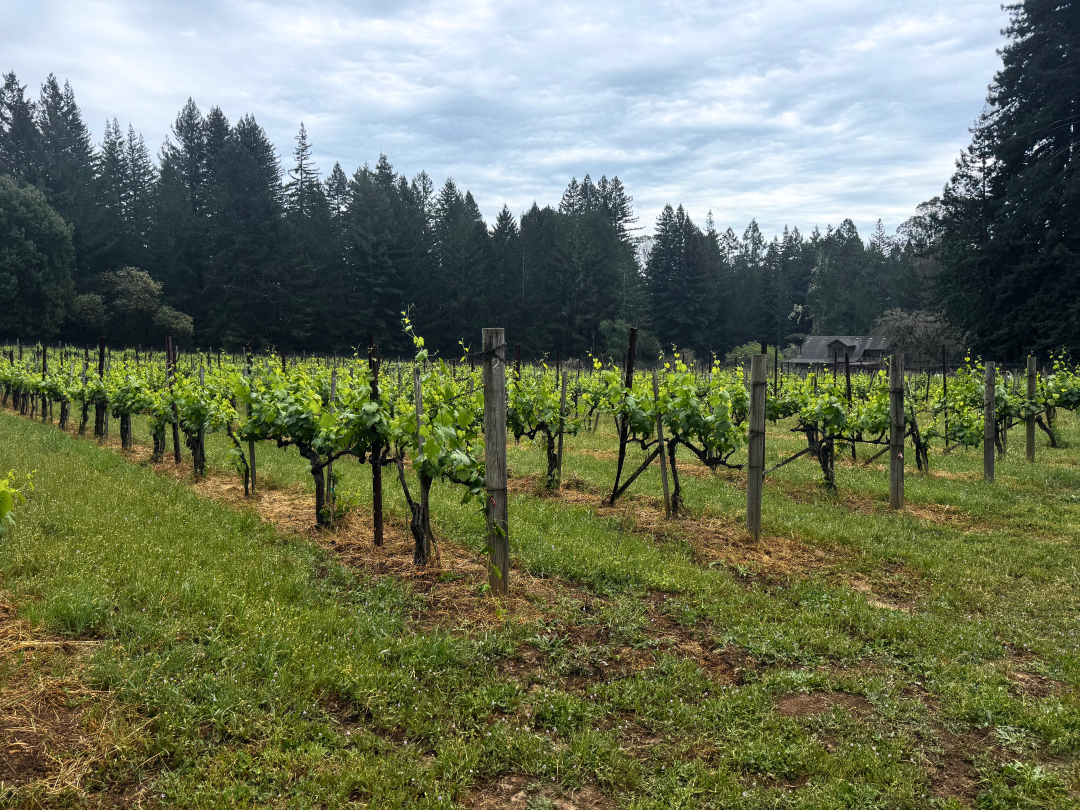
Surrounded by redwood groves and planted entirely to Chardonnay in 1974, Le Boeuf Vineyard is one of the many sites Ken Swegles farms.
Swegles represents another modern model, with experience and vision across dozens of extreme sites and a focus on implementing regenerative, holistic farming practices in order to let these vineyards truly speak. Working under each of them is a team — “more like a family,” as Swegles calls it — of workers who’ve spent years learning the sites, the vines and how they respond to the unique conditions of the region. “In recent years, everyone has really started to dial in organic viticulture. The soils are more alive. The whole ecosystem is more alive,” he said. That environmental synergy is crystal-clear in the glass, but more on that later.
Visionary grape-grower Ken Burnap staked his claim on the potential for the region to excel in the 1970s. He passed recently, and these figures are the next link in the chain. The modern generation has capitalized on greater technical precision, better farming, more collaboration and a deeper understanding of which sites can deliver greatness. All of these things are finally bringing the region’s identity into focus.
2023: The Luxury of Time
By now, you’ve probably heard the lore. The 2023 growing season in California was one for the record books. The superlatives have been applied liberally, but as always, the reality is more complicated. Greatness was within arm’s reach in 2023 across most of the state. Did everyone achieve it? No. Did some? Of course. Is much of that greatness on display in the Santa Cruz Mountains? Absolutely. The 2023s from the Santa Cruz Mountains are among the most consistently excellent of the 2023s anywhere in California, which is particularly impressive when you consider how geographically diverse the region is.
The 2023 growing season followed a historic winter that effectively broke California’s drought pattern. In parts of the Santa Cruz Mountains, growers came into the season with more than 60 inches of accumulated rainfall, recharged soils and no need for irrigation. That abundance of water set the stage for a very different kind of year — cold, foggy and slow, with mildew pressure replacing drought stress as the principal viticultural challenge. “It was really, really cold,” said John Benedetti of Sante Arcangeli. “We just didn’t get warm for the entire season. You couldn’t even grow tomatoes in 2023.”
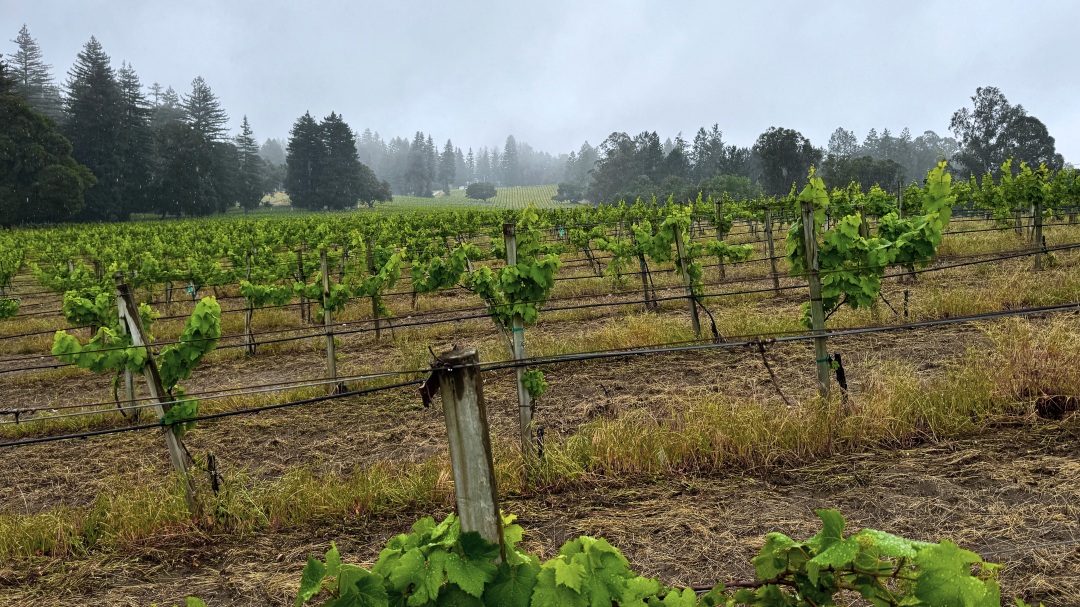
Beauregard’s Bald Mountain Vineyard is an incredibly distinctive, sandy site in the nested Ben Lomond Mountain AVA.
But the vines, and the people who farm them, are accustomed to humidity, fog and cold conditions. The challenge in 2023 was to maintain vine health and preserve balance over a long, drawn-out season, a key factor in coaxing the most out of the wines. Careful canopy management, mildew control and a willingness to wait separated the best results from the merely good, but truth be told, there’s more great than good.
The best 2023s are often striking. They are vivid, classically structured wines that reflect all the finest qualities the region has to offer. The Pinot Noirs boast purity, energy and sublime detail, with a sense of phenolic completeness that only comes from an abundance of uninterrupted hangtime. Beyond the stratospheric 2023 Rhys Pinot Noir Alpine Hillside, look to the 2023 Beauregard Pinot Noir Coast Grade Vineyard and the 2023 Sandar & Hem Pinot Noir Deerheart Vineyard for seriously compelling expressions of coastal character.
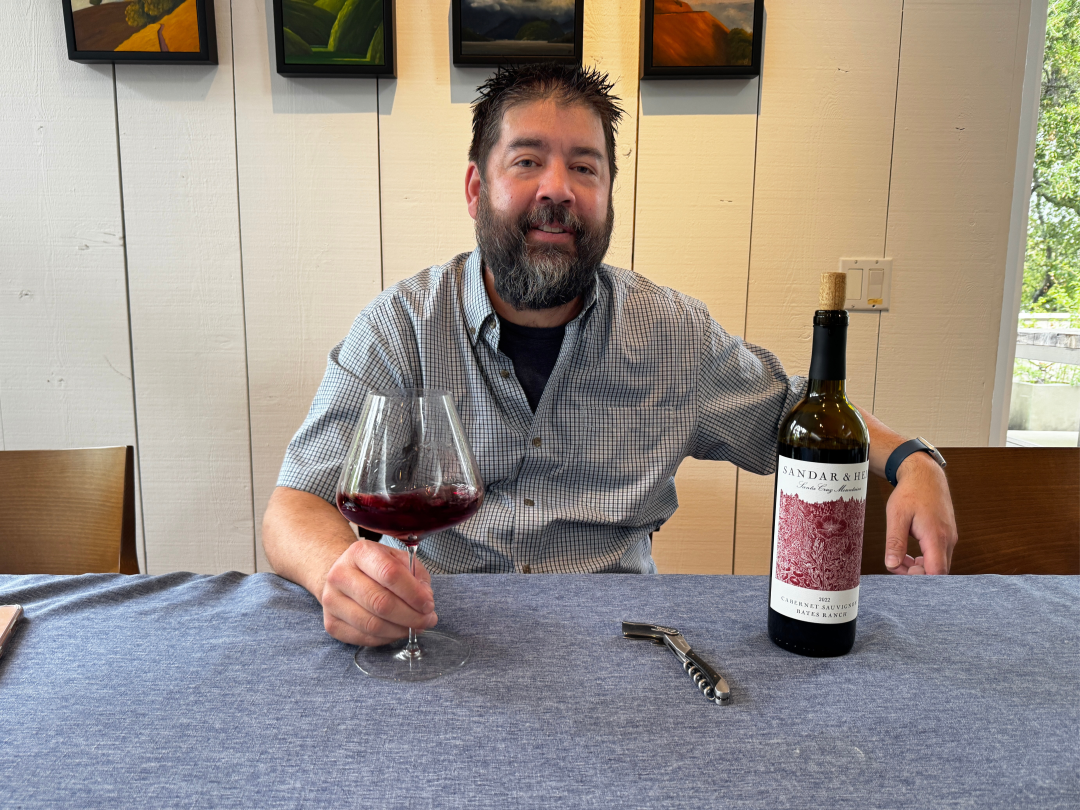
Winemaker Rob Bergstrom of Sandar & Hem.
The 2023 Chardonnays are electric, combining tension and focus with the hallmark minerality and saline character this terroir delivers in spades in the best vintages. The 2023 Beauregard Chardonnay Bald Mountain Vineyard, 2023 Big Basin Chardonnay Kimari Vineyard, 2023 Sandar & Hem Chardonnay Mountain Winery Vineyard and 2023 Thomas Fogarty Chardonnay Albutom Vineyard are all drop-dead gorgeous.
Cabernet-based wines from the right sites possess the lifted freshness of a cool year with the richness, depth and layering imbued by the long season. The epic 2023 Ridge Monte Bello is destined to be one of the all-time greats.
2024: Challenging but Rewarding
The 2024 season began with some familiar themes. Winter and spring moisture returned, leading to timely budbreak and healthy, vigorous canopies. In many sites, the early part of the growing season suggested another cool, steady year. But the shape of the vintage changed as heat arrived in September. Proximity to the Pacific Ocean was a help in the coastal sites, but inland sites saw temperatures cresting 100°F for over a week. Diurnal shifts were not significant enough to slow ripening, as low temperatures stayed around 80°F during that stretch. This sudden heat caused rapid dehydration in the berries, compressing picking schedules and forcing rapid decisions in both vineyard and cellar. Yields suffered as a result. Labor is always a challenge here, but crews were spread particularly thin in 2024. Getting fruit off the vine in a timely fashion was especially tough for producers without their own dedicated workers.
However, the good news is that the wines didn’t suffer. In most cases, the extra dose of richness and ripeness drawn from the dehydration in the late-season heat gives the wines a little more “meat on the bone.” Though a September heat spike calls to mind the recent struggles of 2022, the 2024s don’t show the hallmarks of phenolic underripeness and physiological overripeness that befell many of the 2022s, and the 2024s managed to retain bright acidity.
Generally, the 2024s openly show the generosity of the year. The wines are more immediate, more textural and more pliant than their 2023 counterparts, but they retain excellent energy. The best Chardonnays show surprising drive and depth, with powerful concentration. The 2024 Sante Arcangeli Chardonnay Split Rail Vineyard is one of the finest Chardonnays I’ve ever tasted from the Santa Cruz Mountains.
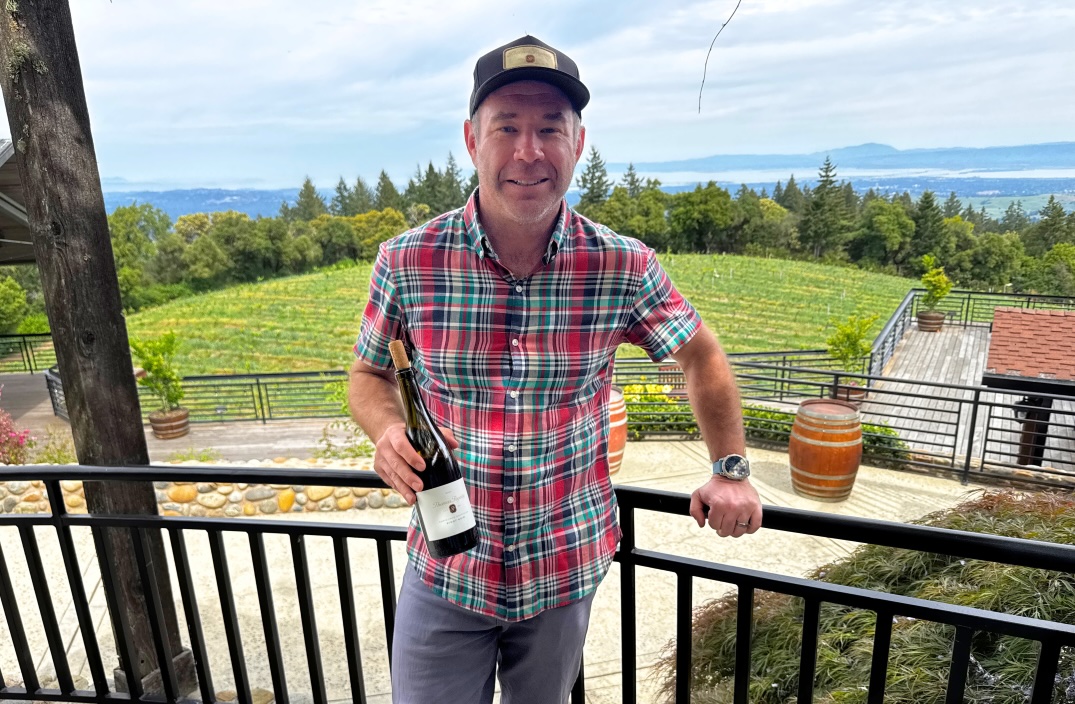
Nathan Kandler at Thomas Fogarty Winery delivered a knockout appellation-level Pinot Noir in 2024.
The Pinots vary a touch more, with riper flavors and richer textures, but there are ample successes and very few abject failures. Some producers opted to declassify fruit to bolster appellation-level bottlings. Winemaker Nathan Kandler at Thomas Fogarty Winery culled his range from ten vineyard/block-designate Pinot Noirs and nine Chardonnays to one Pinot Noir and three Chardonnays. “With that September heat, the delineation between sites just wasn’t as clear as it typically is, so we chose to just bottle the best blocks together,” said Kandler. That approach clearly paid off, as the 2024 Thomas Fogarty Pinot Noir (Santa Cruz Mountains) is exceptional, especially at the “entry level.”
Winemaker Jeff Brinkman at Rhys shared a different experience. “We don’t irrigate our estate sites, so those old vines are resilient in the heat. We were fortunate to have a fairly average harvest window that spanned about a month,” Brinkman said. I will taste the 2024s from Rhys and add reviews in the coming months, but the three wines I tasted from barrel pointed to a potentially strong vintage here.
I have only tasted a few 2024 Cabernet-based wines from barrel. Those appear to be the most affected by the heat, with some loss of freshness, especially in wines from more exposed inland sites. I will taste the bottled wines in the fall.
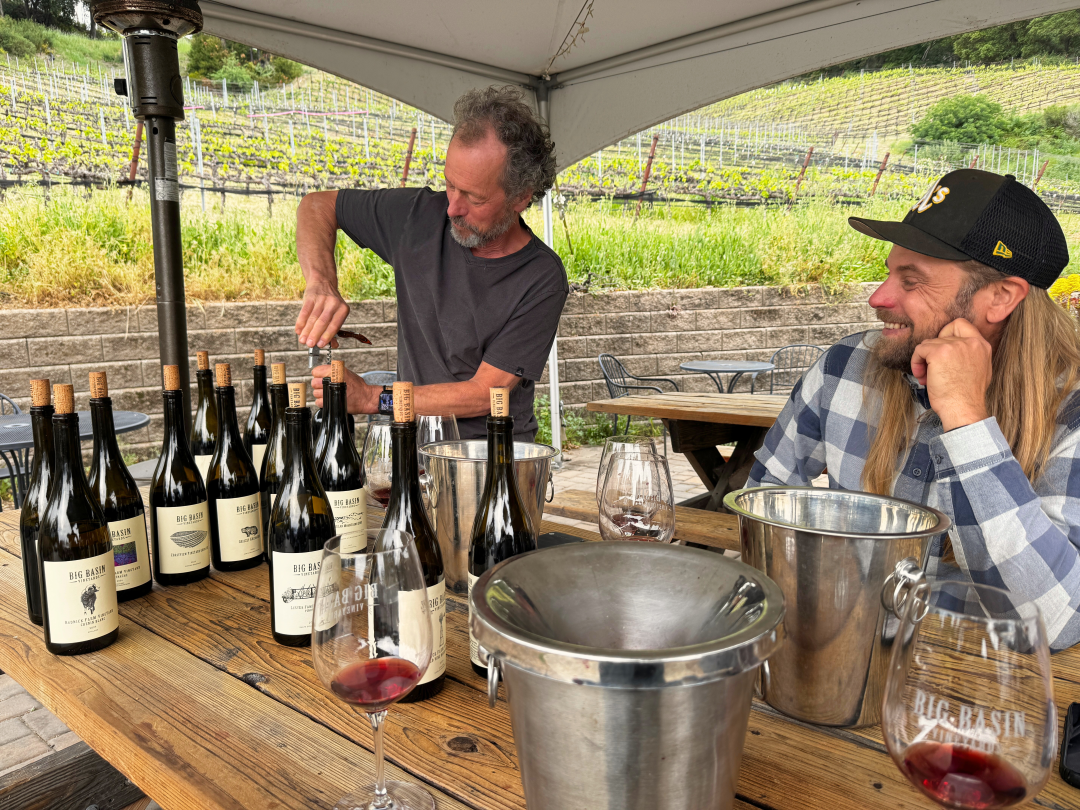
Bradley Brown (left) and Blake Yarger (right) continue to turn out the finest Rhône variety wines in the region.
I would be remiss not to mention the range of Rhône variety bottlings I tasted from a mix of vintages, many of which are from 2021 or 2022, as these varieties typically see longer élevage. Suffice it to say, Syrah and Grenache can be superb in the Santa Cruz Mountains. Readers would do well to seek out any of the wines from Big Basin; the 2022 Grenache Grizzly and 2022 Syrah Coastview Vineyard Terraces vie for top marks, but they’re both stunning.
Community and the Rising Tide
The story here is not simply that the best wines are great. That has been true in the Santa Cruz Mountains for a long time. The story is that the middle and upper-middle tiers have improved dramatically. Producers who might once have been interesting mostly in a local context are now making wines that deserve serious attention. Appellation bottlings are stronger. Vineyard designates are more articulate. Chardonnay, Pinot Noir, Cabernet Sauvignon, Syrah and other varieties are all finding compelling expressions in the right hands. Producers like Alfaro, Beauregard, Big Basin, Farm Cottage, Madson, Neely, Sandar & Hem and Sante Arcangeli are just some of the exciting needle-movers who are claiming their rightful spots at the top of the heap.
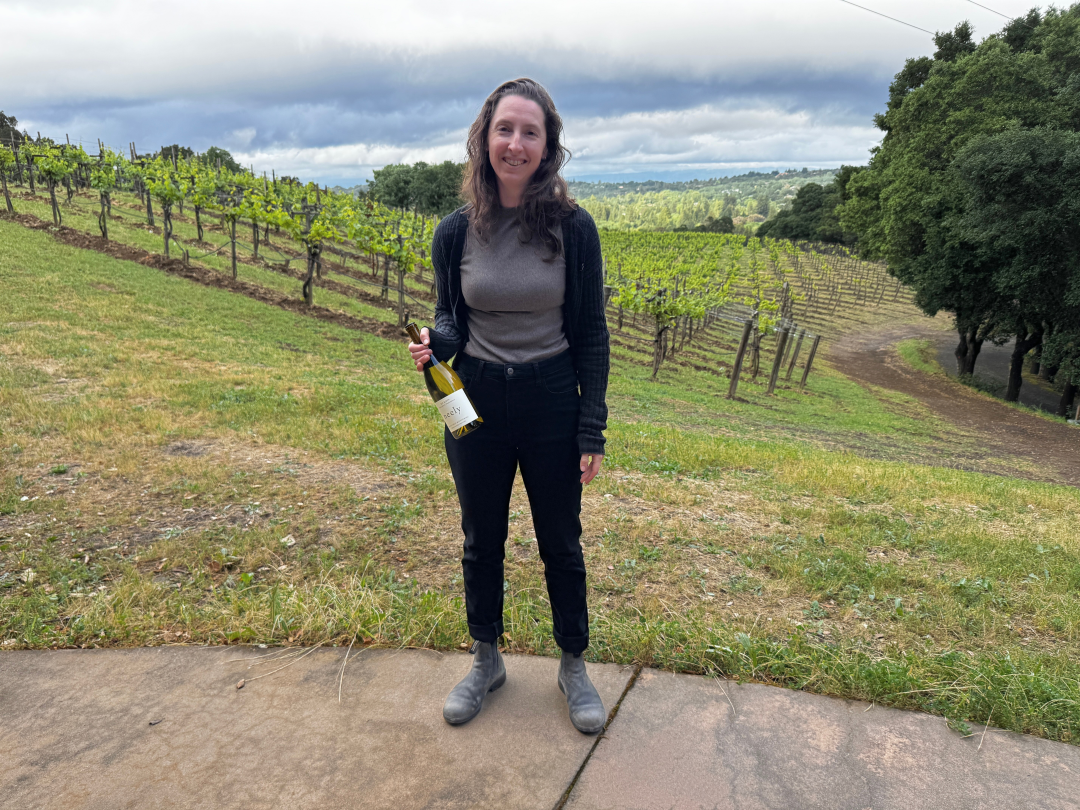
One of the very few female winemakers in the region, Sarah Green has quickly raised the bar at Neely after taking over winemaking duties in 2024.
A striking sense of collaboration runs through the Santa Cruz Mountains today. This is not always the case in regions defined by scarcity, limited recognition and intense logistical challenges, but here, the mood is communal. Producers talk openly about farming. They taste each other’s wines and offer feedback. They taste wines from other regions with the goal of learning and benchmarking their own progress. They eat together. They drink together. Viticultural knowledge circulates, and the energy of that collective knowledge is in the air. The strong community is an invaluable asset and a big reason why the region is performing at such a high level.
A rising tide lifts all boats.
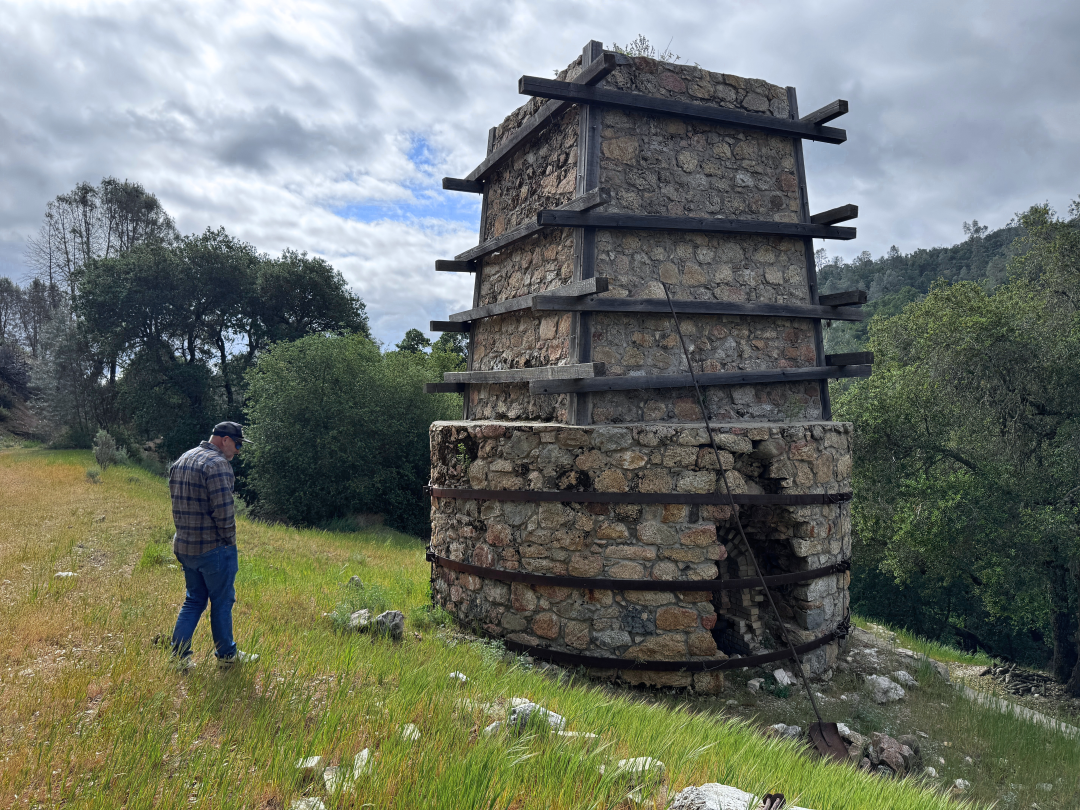
Winemaker Mike Waller and the historic lime kiln at Calera.
As per usual, this report also includes wines from San Benito County, Chalone and the Gabilan Mountains, regions outside the boundaries of the Santa Cruz Mountains but within proximity. The 2023s at Calera knocked my socks off, a true testament to the legacy of the late Josh Jensen’s super-remote site in the limestone-laden mountains of San Benito. Hats off to Winemaker Mike Waller. I’ve also included reviews for the latest Sonoma County releases from Ridge.
I tasted the wines for this report in spring 2026 in the Santa Cruz Mountains, with follow-up tastings at my home office in Florida.
© 2026, Vinous. No portion of this article may be copied, shared or redistributed without prior consent from Vinous. Doing so is not only a violation of our copyright but also threatens the survival of independent wine criticism.
You Might Also Enjoy
Santa Cruz Mountains — The Chameleon, Billy Norris, October 2024
Santa Cruz Mountains — California’s Hidden Gem, Antonio Galloni, November 2023
Santa Cruz Mountains: The Compelling 2018s & 2019s, Antonio Galloni, May 2022
Santa Cruz Mountains: Wines of Breathtaking Pedigree, Antonio Galloni, September 2020
Show all the wines (sorted by score)
- Alfaro Family Vineyards
- Beauregard Vineyards
- Big Basin Vineyards
- Birichino
- Calera
- Clos de la Tech
- Deauratus
- Domaine Eden
- Eden Rift Vineyards
- Farm Cottage
- Gali Vineyard
- Lexington Wine Co.
- Madson
- Maison Areion
- McHenry
- Mount Eden Vineyards
- Neely Wine
- Rhys Vineyards
- Ridge Vineyards
- Sandar & Hem
- Sante Arcangeli
- Thomas Fogarty Winery
- U.S. Grant