
Browse using the new Vinous website now. Launch →
Printed by, and for the sole use of . All rights reserved © 2015 Vinous Media
2024 Santa Lucia Highlands: It’s Complicated
BY BILLY NORRIS | MAY 28, 2026
After years of extremes, the 2024 growing season in the Santa Lucia Highlands arrived with something close to an unfamiliar quality: normalcy, or at least a version of it. “It was one of the most normal-ish vintages we’ve had in a long while,” said Scott Caraccioli, proprietor of Caraccioli Cellars. Why normal-ish and not simply normal? “Because we don’t really know what ‘normal’ is anymore.”
That statement lands with particular weight after a string of anomalous years up and down California. Take the recent run: an extra-smoky 2020, an extra-dry 2021, an extra-extra-hot 2022 and an extra-long 2023. And 2024? Extra…ordinary? On paper, maybe. In the glass, it’s not so simple.
Whatever may constitute normalcy in the Santa Lucia Highlands—the 18-mile-long stretch of vineyards that climbs the foothills at the western edge of the Salinas Valley south of Monterey Bay—the 2024 growing season was generally unremarkable, a relief for growers and winemakers alike. However, even absent obvious extremes, the vintage delivered a slate of wines that defy what many, including myself, have come to expect from the region.
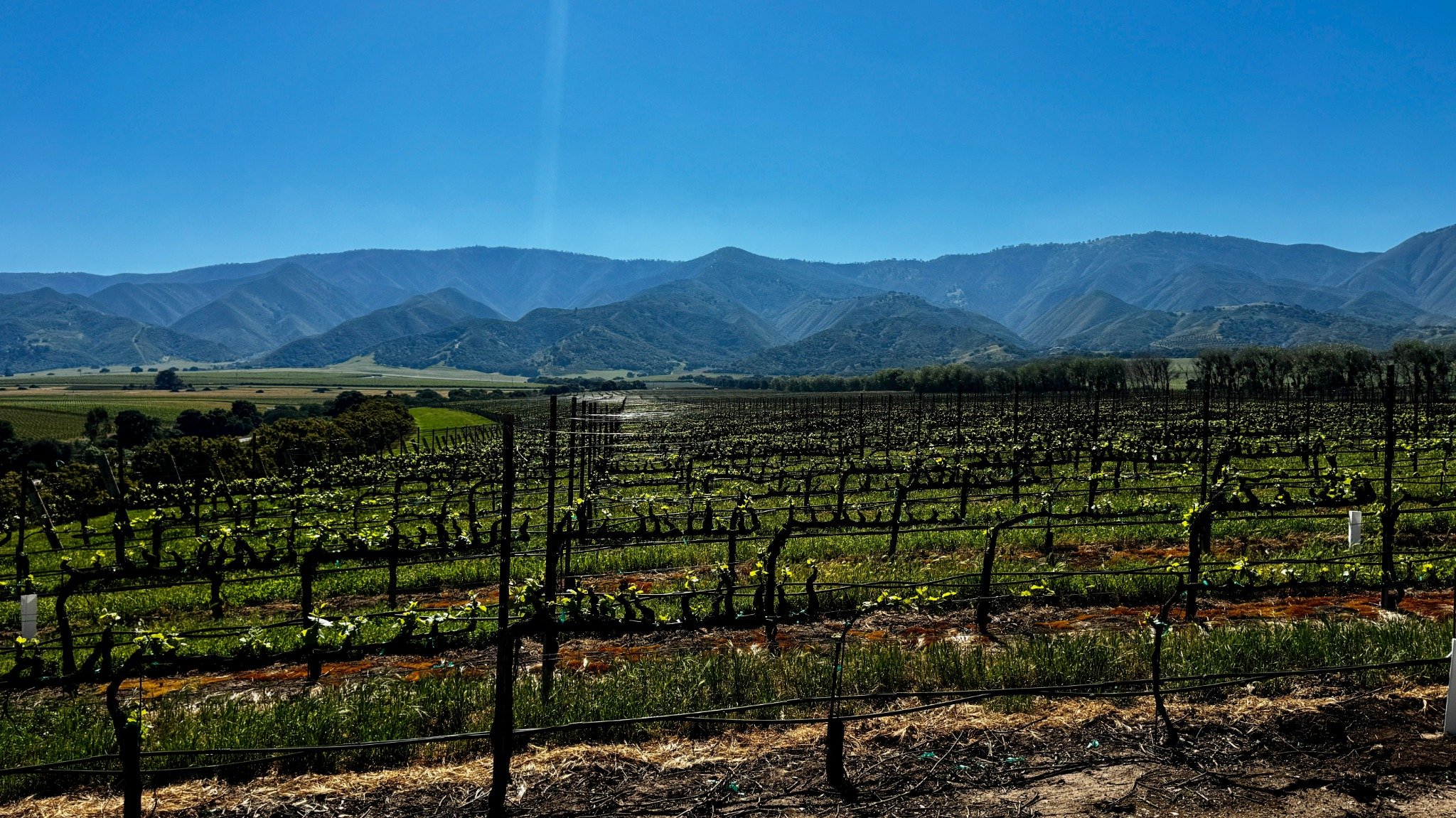
Looking west over Rosella’s Vineyard.
The Growing Season
Following a record-late harvest in 2023 that tracked into November for some, just-above-average winter rains replenished groundwater reserves and primed vines for the season to come. For producers who eschew irrigation when possible, there was ample water in the soil to allow for dry farming. Cover crops flourished, and vines appeared to be in a general state of happiness, a sentiment echoed by many of the producers with whom I spoke. Flowering arrived as expected in early spring, but a period of cool temperatures delayed budbreak by anywhere from one to two weeks. At fruit set, cluster counts were down across the region, but the clusters were small, dense and tightly packed with small berries so that final yields ended up coming in about average.
A moderate summer followed, only to be disrupted by a brief heat spell at the end of August. “It was a pretty cool summer, especially relative to the rest of California, which was tracking early. Everything was pretty normal, except that we noticed early on that the skins on all the berries were really thick,” said Jeff Pisoni of Pisoni Estate. Harvest commenced in the first week of September, but unusually cool-to-cold weather brought ripening to a halt, in some cases for nearly two weeks. Average September temperatures in the SLH sit between 88-92° F, but on September 15, 2024, the high topped out at only 58° F. As temperatures recovered, another push of 95+° F weather toward the end of that month and into October brought about the conclusion of harvest. That’s where the plot thickens.
The vineyards at the southern end of the SLH have historically been the earliest to ripen, for the simple reason that they are situated further from the cooling influence of Monterey Bay. These sites are thus the first to be picked, setting off a general south-to-north wave of harvests. But in 2024, that pattern happened in reverse. Though many sites were approaching the ideal balance of physiological and phenolic ripeness as September opened, the cold that set in shortly thereafter slammed the brakes on sugar accumulation.
“Sugars actually rolled back over about eight to ten days, then they stabilized and finally started to increase again,” said Ian Brand of I. Brand & Family. An extra week or two of hangtime is generally considered a positive for flavor development, but in 2024, it actually set off a disparity in the fruit as phenolic ripeness continued to march ahead. Some producers chose to harvest through the cool weather, some waited until just after it passed, and others held out until the final week of September and slightly beyond. As you might imagine, the differences are clear in the wines.
Chardonnay Wins the Day
First, the good news. The hallmark bright acidity that typically characterizes both whites and reds from this windswept region is fully present across all varieties in 2024. The wines are juicy, fresh and energetic. I have at times been critical of Santa Lucia Highlands Chardonnay for its lack of identity or distinctiveness in a crowded field of excellent California Chardonnays. Happily, that took a turn in 2024. The 2024 Chardonnays are the bright spot of the year and the most universally successful across the region. Thicker Chardonnay skins made for more textural, phenolic wines that deftly balance their typical rich fruit and vibrant acids with a sense of “chew.” This is a hugely positive development, and one that I hope to see continue in the coming years. The 2024 whites from Caraccioli Cellars, Lucia by Pisoni and ROAR have reached new heights and are on equal footing with the finest Chardonnays being produced anywhere in California. Special mention also goes to Caraccioli’s sparkling wine program, which continues to deliver some of the finest sparkling wines in the country. All of these wines also offer remarkable relative value in a region where red wine prices (Pinot Noir in particular) can be on the high side compared to elsewhere in California.
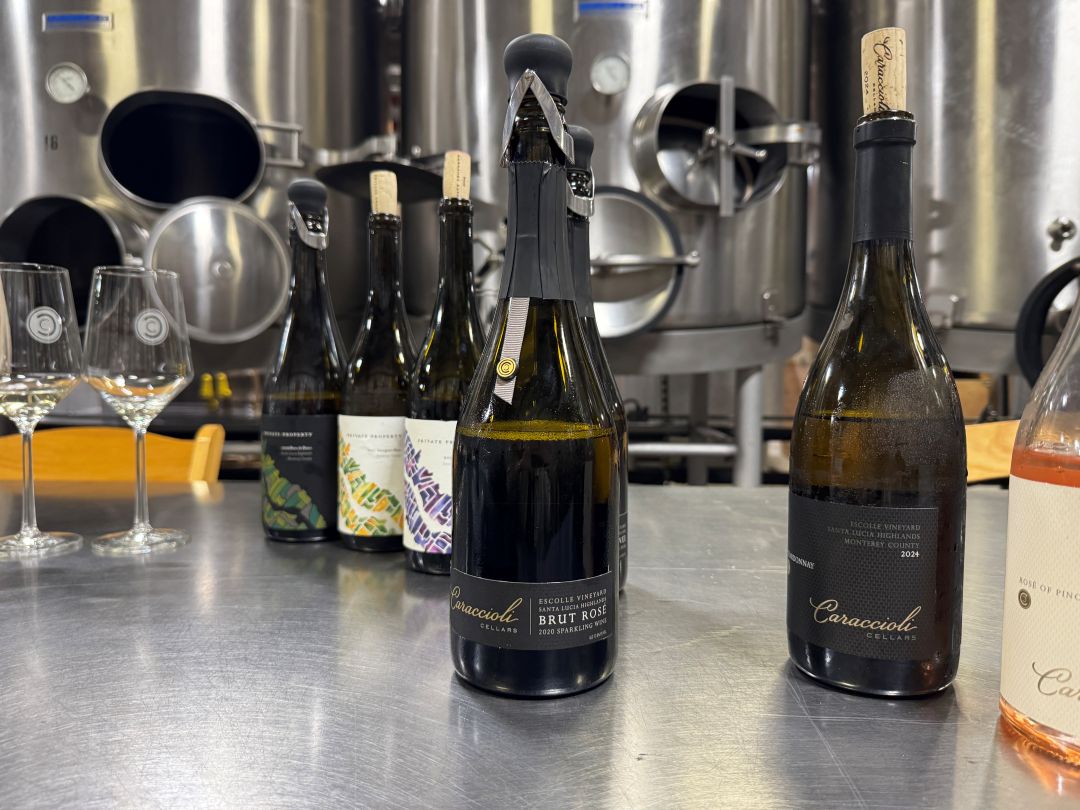
Scott Caraccioli presented an impressive range at his expansive winery in Gonzales, crowned by his finest edition of Brut Rosé yet, the 2020.
Speaking of Red Wine…
I tasted the majority of the 2024 Pinot Noirs twice: once in January in Sonoma, where many of the SLH producers actually live and make their wines, and a second time in the SLH in March. My January tastings were concerning, with many of the nascent wines showing fierce, imposing tannins that felt both uncharacteristic for the region and uncharacteristic for the variety. Thankfully, the second set of tastings showed much better tannin integration. However, make no mistake, aside from a handful of appellation-level bottlings intentionally made for earlier drinking, the 2024s are massively structured wines.
Adam Lee of Clarice Wine Co. noted the development of unexpected structure in his Pinot Noirs as they fermented: “Everything came in with really thick skins and small berries, but the musts were very juicy. I actually saignéed 20-25% off before fermentation. Usually, I press off the skins at anywhere from 17 to 21 days, but after about ten days, I noticed that things were getting really tannic. I pressed everything by day 15.” This proved to be a sage choice; though unmistakably structured, the 2024 Clarice wines are once again the most complete and balanced the SLH had to offer.
There are other Pinot Noir successes in 2024, most of which come from the vineyards situated further south in the appellation. Remember that harvest took place from north to south, so the wines from the southern vineyards (namely Pisoni and Sierra Mar) had the most hangtime and the most time to recover from stalled sugars, rather than getting caught somewhere in the grey area. As such, these wines show the best balance between rich fruit and firm tannin. The wines from the more northern sites possess less complexity, less aromatic development and generally less intrigue. The mismatch of sugar and phenolic ripeness appears to be the culprit.
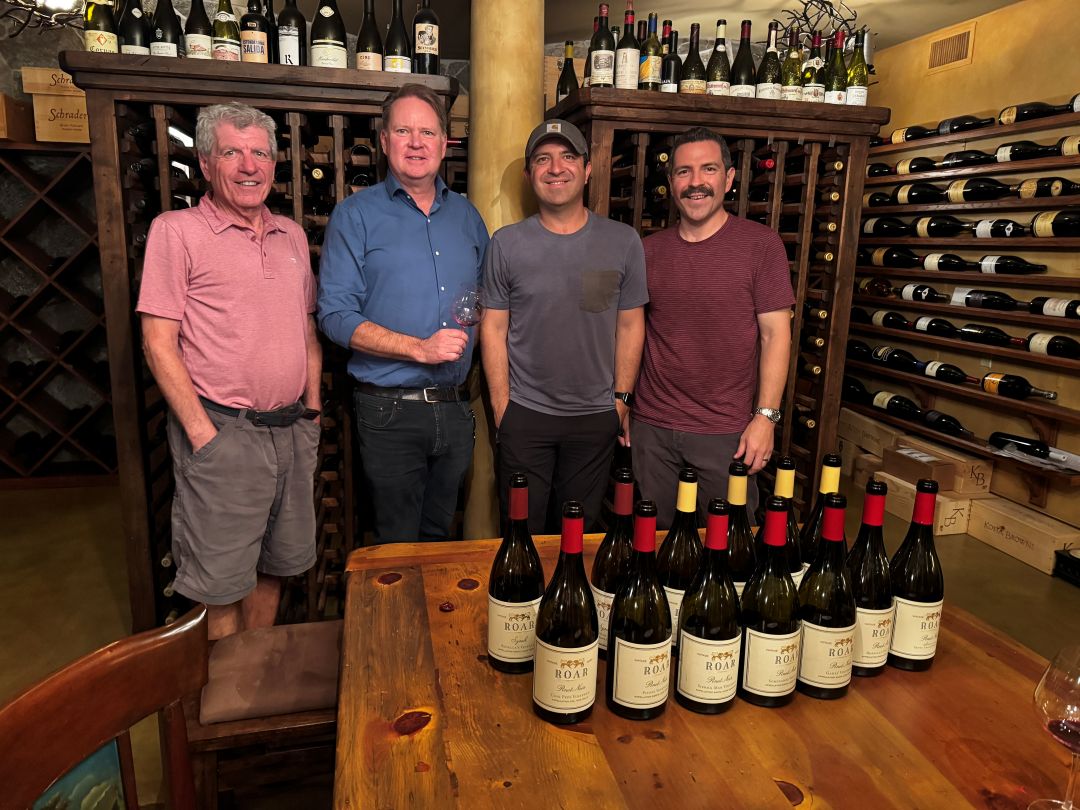
From left to right, Gary Franscioni, Scott Shapley, Adam Franscioni and Nick Franscioni presented an impressive set of 2024s.
The one characteristic shared by all of the best 2024 Pinot Noirs is that they are wines for the cellar, not wines for near-term enjoyment. In that sense, the wines are reminiscent of the 2021s, but with even more tannin and a bit less complexity at this stage. I’ve never before encountered this level of tannin in SLH Pinot Noir.
The 2024 Syrahs, though not nearly as tannic as the Pinot Noirs, are less exciting than usual. They are dark and rich, but generally come across as monolithic, thick and lacking in their usual depth. That said, there appears to be enough stuffing in these wines to set the stage for potential improvement with time as they find their footing.
Though 2024 was not extreme in a climatic sense, its decisive factor was the interaction between berry morphology and interrupted ripening at the finish line, with quality determined by choices made in the vineyard and the winery. The result is a set of wines that often show impressive freshness and structure, but not always the expressiveness or completeness that defines the Santa Lucia Highlands at its best. This is a vintage to approach buying decisions selectively rather than broadly. Readers should feel confident looking to the top names, who also happen to be the most meticulous farmers in the region: Pisoni, ROAR, Caraccioli and Clarice.
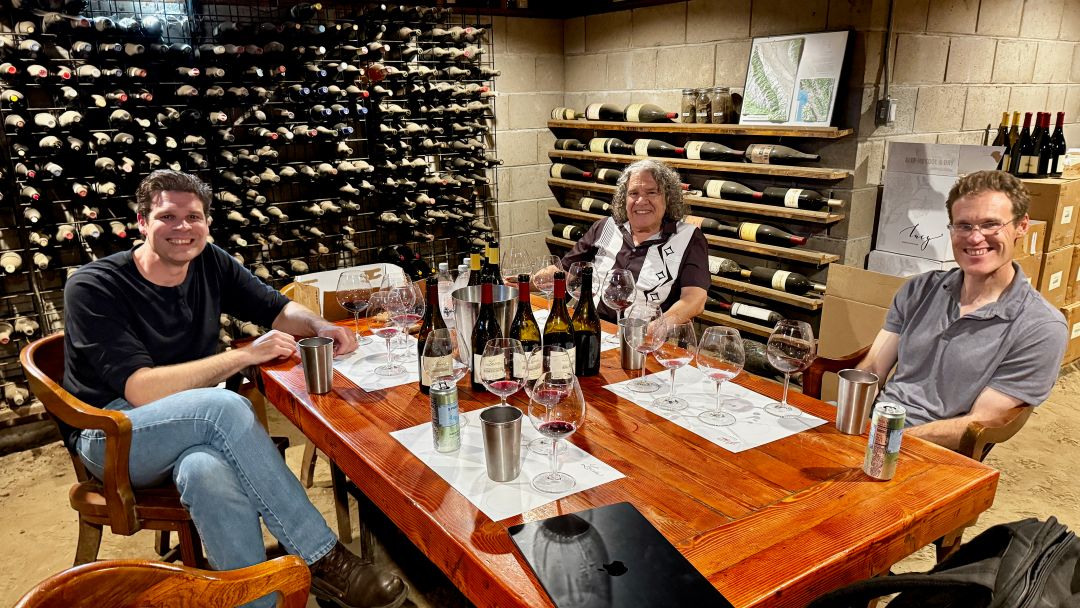
From left to right, Jeff Pisoni, Gary Pisoni and Mark Pisoni in the underground cellar of the family’s farmhouse at their vegetable farm in the Salinas Valley.
Looking Ahead
So far, I have yet to taste more than a few 2025 barrel samples, but initial signs point to a balanced year. The wines show excellent concentration, bright acidity and much more polished structure than the 2024s. Time will tell, but I am optimistic. As for 2026, at the time of this writing, most of the vineyards in the region are at least three to four weeks ahead of schedule, spurred on by ridiculously unseasonable temperatures that coincided with my visit in March—it was upwards of 95° F for a couple of weeks, which rocketed vine development ahead at blinding speed. “It all depends on what happens in August, but this may very well be the first time ever that I get to take a day off in October,” said Gary Franscioni of ROAR, implying that harvest will likely be wrapped up very, very early.
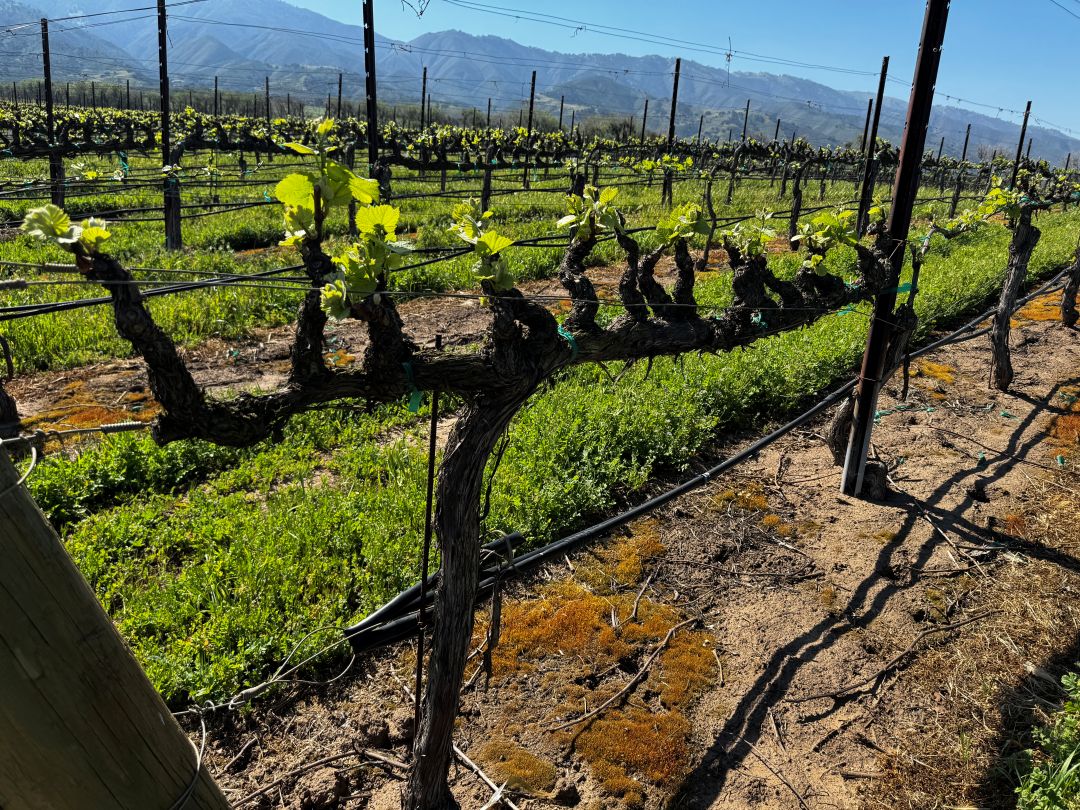
Pinot Noir vines were well past budbreak in March 2026, easily three to four weeks ahead of schedule.
Uncertain Times
It should come as no surprise that the difficulties of the broader wine industry are being felt in the Santa Lucia Highlands. Nowhere in the SLH is that more evident than at Talbott and the historic Sleepy Hollow Vineyard, which Gallo has owned since 2015. The entire Talbott property is for sale, including Sleepy Hollow and the massive winery, which is both the largest and one of the only winemaking facilities actually in the SLH. The vineyard appears to be no longer meaningfully maintained, and the once-prominent Talbott brand has essentially been shuttered. Though this is the most visible example, it is not the only such case, as smaller production vineyards throughout the area are being ripped out and put on the market as fallow land. That said, it’s not all doom and gloom. The region’s stalwarts continue to invest and develop. The Franscioni/Pisoni families’ newest vineyard, WindRock, is now old enough to deliver distinctive vineyard-designate wines, which will likely emerge in the ROAR stable in the near future. Early tastings have been promising.
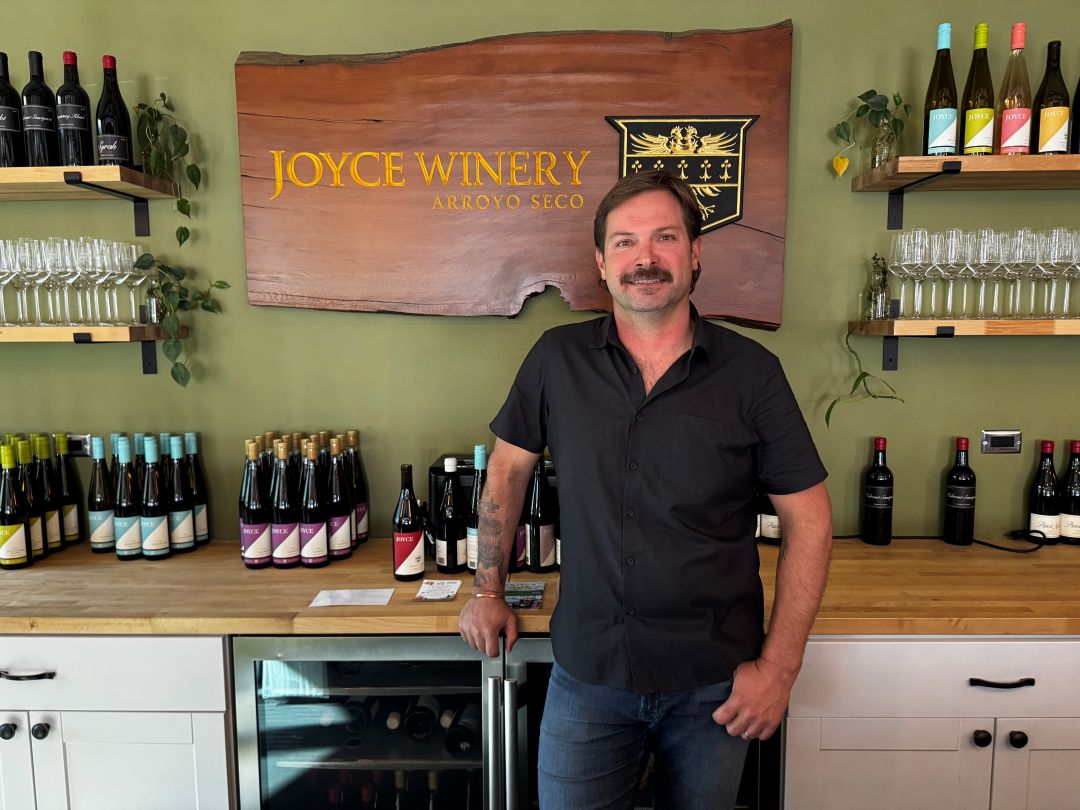
Russell Joyce, pictured at his tasting room in Carmel Valley Village.
Lastly, though the SLH lacks hospitality infrastructure (there are very few tasting rooms, no restaurants and no hotels in the region itself), the adjacent Carmel Valley shows encouraging signs of growth. Producers like Joyce Wine Co. and I. Brand & Family are sourcing fruit from across Monterey County to make excellent wines geared toward an earlier-drinking, fresher style that is wildly appealing to young consumers. Their tasting rooms, among the slew of breweries, restaurants and other tasting rooms in Carmel Valley Village and Carmel by the Sea, are drawing noticeable traffic. That’s a very good thing.
I tasted the wines for this report in January and March 2026, in both Sonoma and the Santa Lucia Highlands. This report also includes wines from broader Monterey County, Carmel Valley and the proposed new Carmel Coast AVA (which covers 4,100 acres at elevation, closer to the Pacific coast), as well as Sonoma wines made by the aforementioned SLH producers who are based there.
© 2026, Vinous. No portion of this article may be copied, shared or redistributed without prior consent from Vinous. Doing so is not only a violation of our copyright but also threatens the survival of independent wine criticism.
You Might Also Enjoy
High Highs: Santa Lucia Highlands 2023, Billy Norris, July 2025
Santa Lucia Highlands: Steely and Steadfast in 2022, Billy Norris, August 2024
Santa Lucia Highlands: Cool-Climate Excellence in 2021, Antonio Galloni, November 2023
Santa Lucia Highlands: Back-to-Back Greatness in 2018 & 2019, Josh Raynolds, May 2022
Vinous Santa Lucia Highlands Map: Behind the Scenes, Antonio Galloni, January 2021
Show all the wines (sorted by score)
- Admire by Dan Kosta
- Alma de Cattleya
- Bernardus Winery
- Bruliam Wines
- Caraccioli Cellars
- Cattleya Wines
- Clarice Wine Company
- Claudio Family Cellars
- Convene by Dan Kosta
- Corral Wine Co.
- CRŪ Winery
- Etienne
- Grail by Dan Kosta
- I. Brand & Family
- J. Lohr Vineyards & Wines
- Joyce Wine Co.
- Kosta Browne
- La Marea
- Landmark Vineyards
- Lucia by Pisoni
- Lucy
- Luli
- McIntyre Vineyards
- Miner Family Winery
- Morét-Brealynn
- Morgan
- Odonata
- Patz & Hall
- Paysan
- Pisoni Estate
- Private Property
- Red Stitch
- ROAR
- Russell Joyce
- Rustiqué wines
- Rustiqué Wines
- Samuel Louis Smith
- San Simeon
- Sarah's Vineyard
- Scheid Family Wines
- Shared Notes
- Siduri
- Testarossa
- Theopolis
- WALT Wines
- Windstream
- Wrath