
Browse using the new Vinous website now. Launch →
Printed by, and for the sole use of . All rights reserved © 2015 Vinous Media
Remembering David Hirsch
BY ANTONIO GALLONI | AUGUST 5, 2026
The wine world lost a trailblazing pioneer when David Hirsch passed away on July 28, 2026. He was 81 years old.
I met David Hirsch several times, both in California and later in New York, after a devastating accident in 2014 that left him paralyzed. That event would have broken almost anyone’s spirit, but Hirsch bounced back, eventually leading an extremely active and busy life. Our conversations were always wide-ranging. Music, literature, farming, vineyards, Burgundy and the wines of Piedmont, deep interests we shared, were always on the table. Even in his later years, Hirsch retained a childlike sense of wonderment and a passion for adventure.
A self-described working-class kid from the Bronx, David Hirsch dropped out of Columbia University and eventually made his way to the Santa Cruz Mountains. There, he befriended Jim Beauregard and a small group of contemporaries who introduced him to wine culture. Hirsch’s clothing business took him to France regularly during these years. He began exploring wine regions, most notably Burgundy, where he became enamored by the notion of terroir — the idea that a wine should reflect its place of origin.
Looking for solace and a place where he could hear himself think, as he once told me, Hirsch began searching for land. He originally wanted oceanfront property but could not afford it, so he purchased 1,000 acres in what is now the Fort Ross-Seaview AVA. The year was 1978. Hirsch realized the property, mostly redwood forest and overgrazed land, required quite a bit of maintenance. In 1980, Hirsch planted grapes solely for the purpose of generating revenue to offset expenses. He started with two acres of Riesling and one of Pinot Noir on own-rooted vines. The Hirsch ranch was only the second vineyard planted in Fort Ross-Seaview, which was once considered too cold for the cultivation of grapes. Other producers soon followed, most notably the Martinelli family, Marcassin, Flowers, Failla, Wayfarer and Peter Michael. These were the early days of what later became known as the West Sonoma Coast AVA.
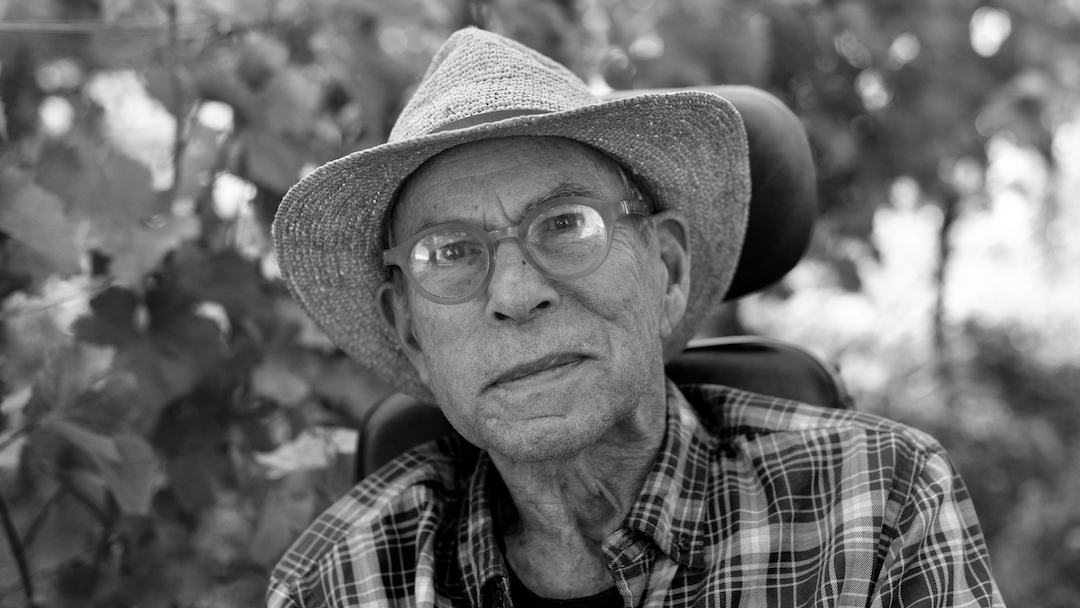
Photo by Erik Castro.
By the late 1980s, Hirsch was ready to focus full-time on his ranch. Extensive planting followed. In 1994, Hirsch began selling grapes to top wineries. At one point, his client list included Littorai, Kistler, Failla and Williams-Selyem. California does not have a formal system for ranking vineyards or wineries, but winemakers I taste with never left any doubt: They always reserved deep reverence for David Hirsch and the fruit from his ranch, which they regarded as a California Grand Cru.
In 2002, Hirsch built a winery and started his own label, gradually building a range that highlights many of the unique aspects of the various clones, soils and exposures on the ranch. Hirsch remains just one of two wineries in the Fort Ross-Seaview AVA. In 2011, Hirsch converted his vineyards to biodynamic farming.
Today, the vineyard spans about 80 acres divided into more than two dozen blocks. Most of the fruit goes into the estate wines, although a few historic clients still get fruit. Daughter Jasmine Hirsch manages the vineyard and winery with the same keen attention to detail. The Hirsch wines have never been better.
The word “pioneer” is often overused. It is very much appropriate here. David Hirsch was a true pioneer who showed the world what was possible with a deep focus on site and meticulous farming in California’s West Sonoma Coast, a region that will always owe him a tremendous debt of gratitude.
All of us at Vinous extend our deepest condolences to the Hirsch family.
© 2026, Vinous. No portion of this article may be copied, shared or redistributed without prior consent from Vinous. Doing so is not only a violation of our copyright but also threatens the survival of independent wine criticism.