
Browse using the new Vinous website now. Launch →
Printed by, and for the sole use of . All rights reserved © 2015 Vinous Media
Santa Barbara 2024: Shifting the Spotlight
BY BILLY NORRIS | SEPTEMBER 24, 2026
Wines across Santa Barbara County reached impressive heights once again in 2024, but not always in the ways you might expect. Though the region has long been broadly synonymous with high-quality Pinot Noir from the Sta. Rita Hills, the Chardonnays, Syrahs and Cabernets coming out of the county’s many subregions have exploded in quality in recent years. This year, the spotlight turns to these other players, setting the stage for the region’s very bright next chapter.
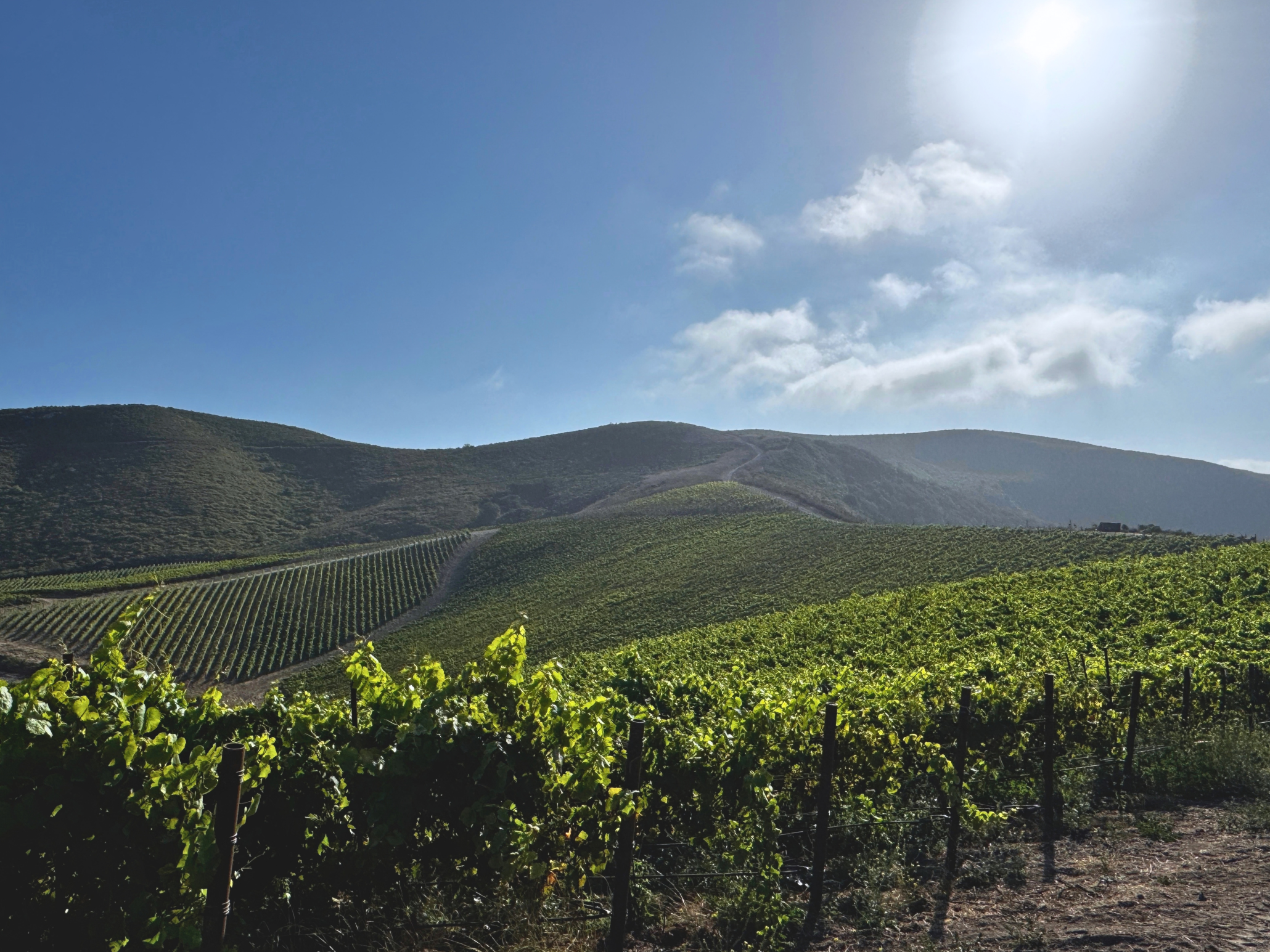
Radian Vineyard in the Sta. Rita Hills.
The long, cool growing season in 2023 yielded a bumper crop and challenged winemakers with disease pressure, cellar logistics and tests of their overall patience, but the wines were uniformly exceptional. In 2024, the season appeared mostly as it did in many other parts of California: uneventful. Yields were low and consequently more manageable. Fruit was healthy. Aside from the Lake Fire, which blanketed some of the eastern portions of the Santa Ynez Valley with smoke in July, things progressed without obvious drama. Talk to enough growers, though, and a much more nuanced picture emerges.
The 2024 Growing Season: Deceptively Complex
Grapevines don’t follow the Gregorian calendar, and they certainly don’t hit the reset button on January 1 every year. That means the intricacies of 2024 began in the spring of 2023, when cool, cloudy conditions and high vigor limited sunlight exposure to the buds then developing for the following year. Vines were subsequently taxed by the large crop and the long duration of the 2023 season, as harvest pushed into November in many parts of Santa Barbara County. This compressed the period during which the vines could reset for the coming cycle. Couple that with three consecutive vintages marked by extended periods of blocked sunlight in the spring, which potentially limited the replenishment of carbohydrate reserves, and it’s easy to understand why vines would begin to protest. “In 2024, the theme was a search for physiological ripeness. I suspect that to be a vine metabolism issue. They just didn’t have enough time to recover after the long 2023 season,” said Graham Tatomer of Tatomer Wines.
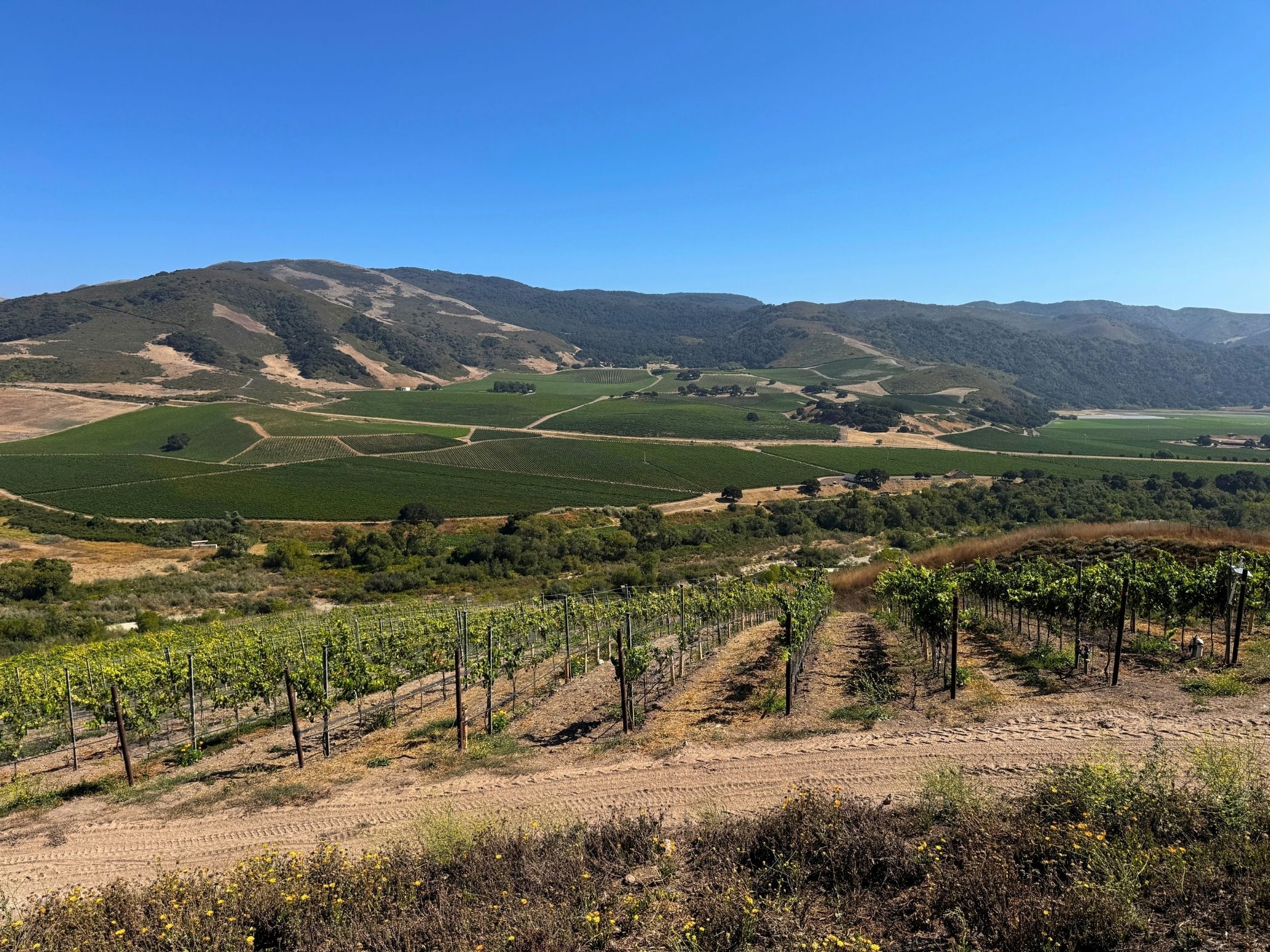
Overlooking the Sta. Rita Hills from Sea Smoke’s Rita’s Crown Vineyard.
The 2023-2024 winter was wet, just as the previous winter had been, with total rainfall close to 50% above the annual average. That wet weather persisted through early spring, delaying budbreak by weeks relative to historical norms. Uneven fruit set occurred under gloomy conditions, with irregular clusters especially evident in Pinot Noir. “Cluster morphology was unusually quirky. In ‘bigger’ years like 2023 and 2025, the clusters are generally pretty consistent. In 2024, there was much more variability,” said Greg Brewer of Brewer-Clifton.
The usual California sunniness returned in early June. Conditions stabilized and remained unremarkable through the rest of the summer, and temperatures hovered around long-term averages — warmer in some pockets, but notably cooler in others. A now-common push of heat around Labor Day, coinciding with the start of harvest, was neither as severe nor as sustained as the extreme 2022 heat wave, but this is where the plot thickens.
Temperatures quickly fell after the three-day heat spike, throwing vines into an in-between state whereby sugars rolled back and physiological development slowed. Fruit harvested in that intervening window could produce wines in which the naturally high acidity in cooler sites was not matched by sufficient concentration or maturity. Pinot Noir in the Sta. Rita Hills was especially exposed, because the uneven crop and odd cluster makeup made the balance between acidity, concentration and physiological maturity particularly precarious. Chardonnay (naturally less fickle) and the later-ripening Rhône and Bordeaux varieties were considerably more insulated.
“We started picking September 5, but when it turned cold in mid-September, the vintage basically hit pause. We stopped for nine days because neither sugars nor phenolics were moving. Waiting was the key,” said Trey Fletcher of Sanford Winery. While Sanford and several others waited to bring in the remainder of their fruit, others pulled the trigger and brought in the full load straightaway.
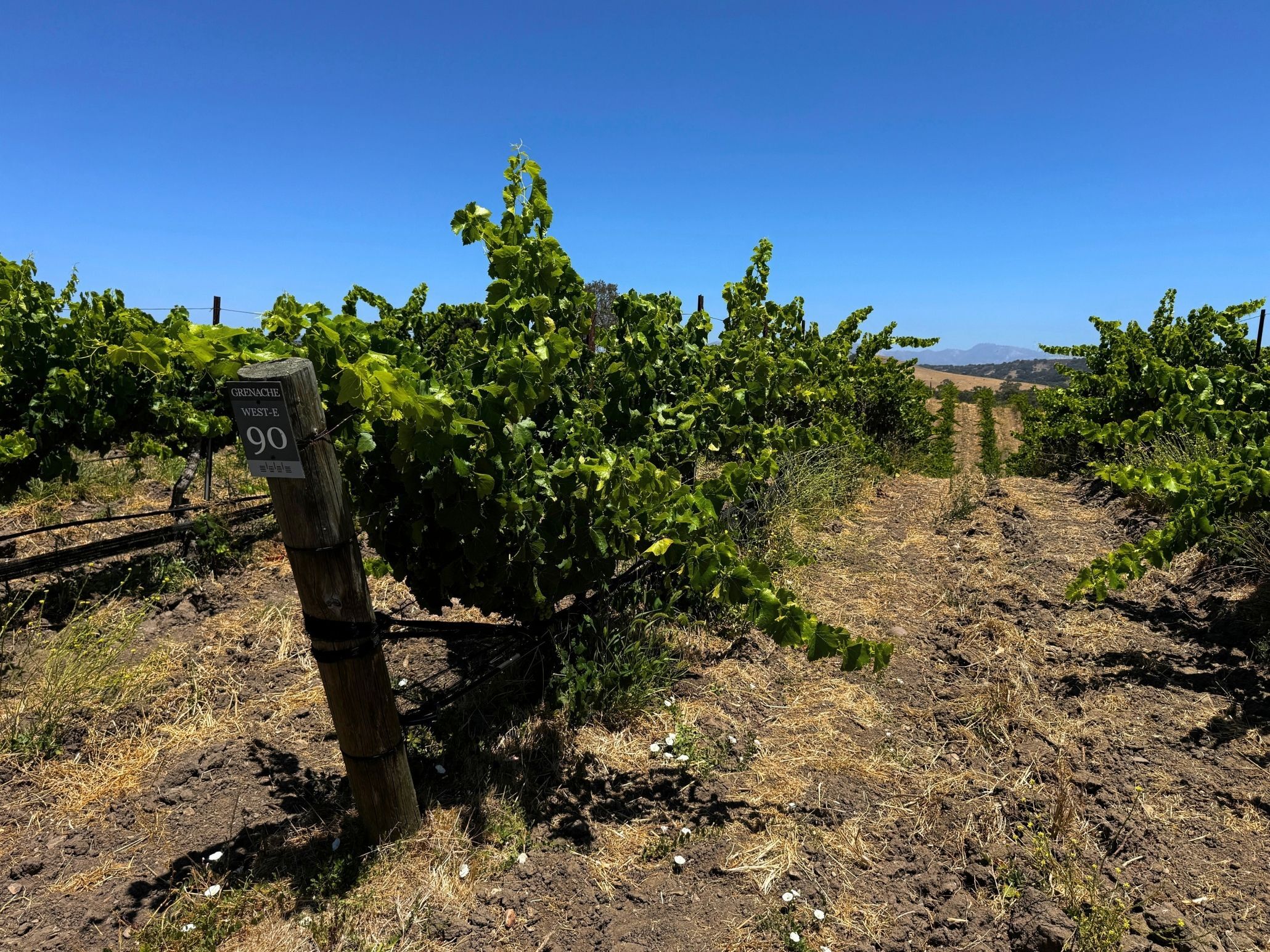
Grenache rows at Thompson Vineyard in Alisos Canyon, now part of the Dovecote estate.
Beyond the Sta. Rita Hills, that brief temperature hiccup was beneficial. In warm Ballard Canyon, even though low yields, tiny clusters and tiny berries were the norm in 2024, the September warmth gave Rhône and Bordeaux varieties a welcome push toward the final stages of ripening. “We learned our lesson in 2023, when there just wasn’t enough heat to ripen the high yields, so in 2024, we dropped more fruit than usual; and we did it early, in May. In 2023, there wasn’t really much latitude for stylistic decisions — we just felt lucky that we got to ripeness — but in 2024, we had more cushion because the warmth came in early September,” said Pete Stolpman of Stolpman Vineyards. Harvest in Ballard Canyon, Santa Ynez Valley and Happy Canyon, centered around mid-October, which tracks with what is considered average timing. Interestingly, many producers reported that final picks more or less coincided with their 2023 dates.
Though some see 2024 as a warm vintage, that broad brush misses the site-by-site reality. It also risks attributing the fruit concentration present in many of the best wines to warmth, when in fact low yields were a significant determining factor. Rather than a warm vintage or a cool vintage, Brandon Sparks-Gillis of Dragonette described 2024 as an “amplifier vintage,” accentuating differences between sites rather than imposing a uniform stamp. It was a season where Santa Barbara County’s numerous microclimates (more granular than at the AVA level) yielded wildly varied results. Case in point: at Radian Vineyard in the Sta. Rita Hills, weather station data shows that 2024 was in fact cooler than 2023, while sites in Ballard Canyon ran much warmer.
It bears mentioning that the Santa Maria Valley is its own beast, as the constant fog and cloud cover means that fruit ripens on a completely different trajectory. Sauvignon Blanc harvest began three weeks earlier than ever at Presqu’ile, while Syrah at Bien Nacido hung deep into October.
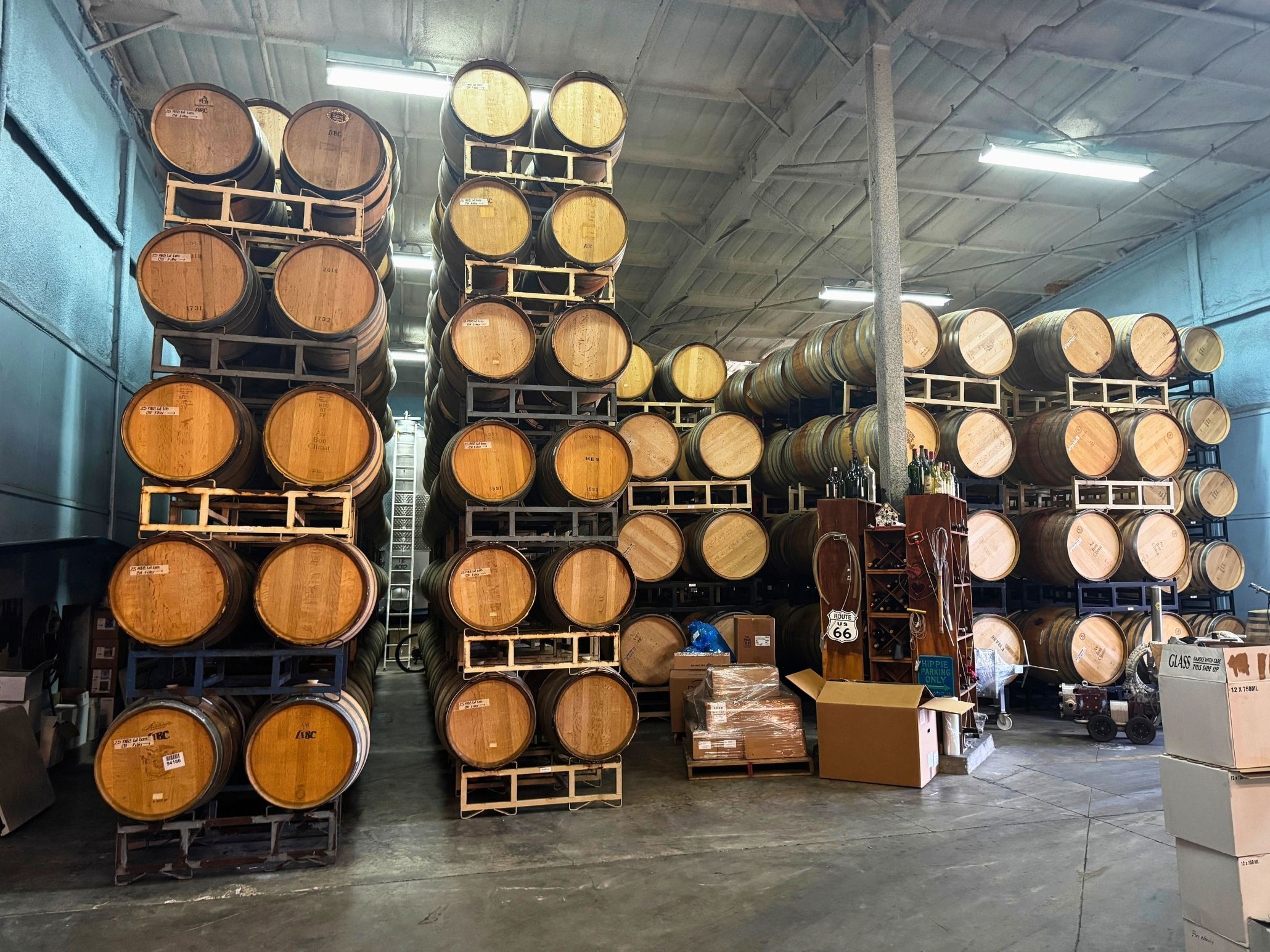
Stacks of barrels at the Au Bon Climat winery in the Santa Maria Valley.
The Wines
Sta. Rita Hills Pinot Noir is an inconsistent performer in 2024. The extended season had many of the qualities of a cool vintage, and producers who brought in fruit during the period of sugar regression made Pinot Noirs that lack balance. These wines often feel sharp, angular and disjointed. Because acids amplify the perception of tannin and vice versa, many 2024 Pinots also feel very tannic. This is not an isolated phenomenon; it is prevalent in enough of the 2024 Pinot Noirs to register as a real characteristic of the vintage.
On the bright side, those who were patient with their harvests and strategic in the winery delivered wines with ample concentration to offset that acidity. “The acids were so high, so we really stepped on the gas with stems in ’24, because that raises the pH and helps offset that acid. We also left things in barrel longer to try to add texture and just shave the edges off,” said Justin Willett of Tyler Winery. Similarly, Paul Lato opted to extend élevage by a couple of months to the same end. These choices yielded intensely layered wines that boast immense fruit depth and definition, but also serious phenolic structure. At the top tier, the 2024 Sta. Rita Hills Pinot Noirs reach dizzying heights, but readers will have to be very selective. Tyler’s Fiddlestix Pinot Noir, Domaine de la Côte’s Pinot Noir Sous le Chêne and Brewer-Clifton’s Pinot Noir Machado show what was possible in 2024.
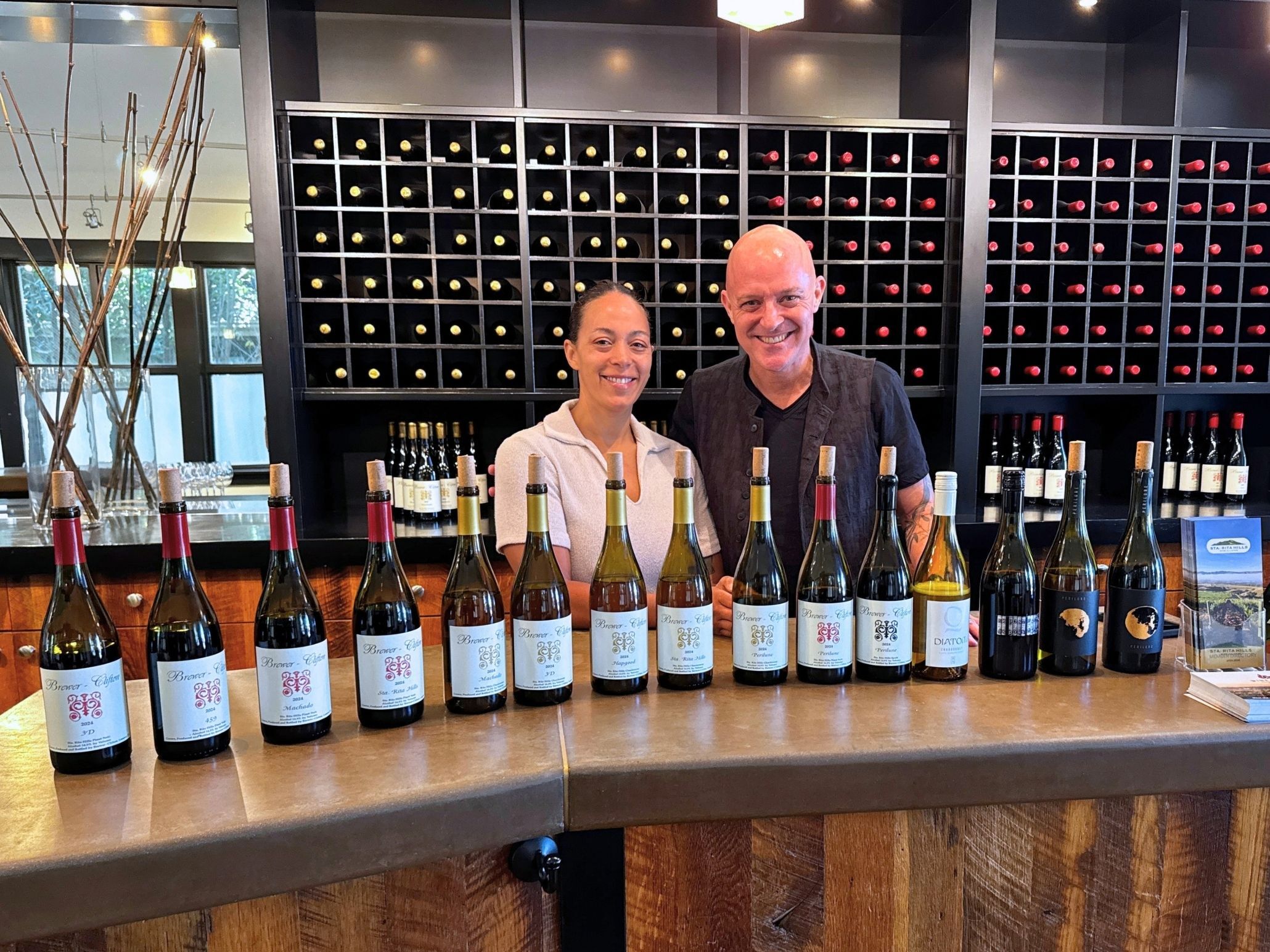
Sharde Shepherd and Greg Brewer with their excellent range of 2024s at Brewer-Clifton.
Chardonnay is a star in 2024, yielding some of the very finest interpretations of the variety in California. Wines of tension, energy and power, the 2024 Sta. Rita Hills Chardonnays straddle cool- and warm-vintage characteristics, marrying the concentration and structure imparted by low yields with the bright acids of the year. Many of these wines call to mind the “amplifier vintage” metaphor, as they do indeed feel amplified. Terroir imprints and site signatures are crystal clear. These Chardonnays come across as pixelated, chiseled and confident. Tyler’s two Chardonnays from the MAE estate reached extraordinary heights. Offerings from OLG, The Hilt, Whitcraft and Dragonette are similarly excellent and well worth seeking out.
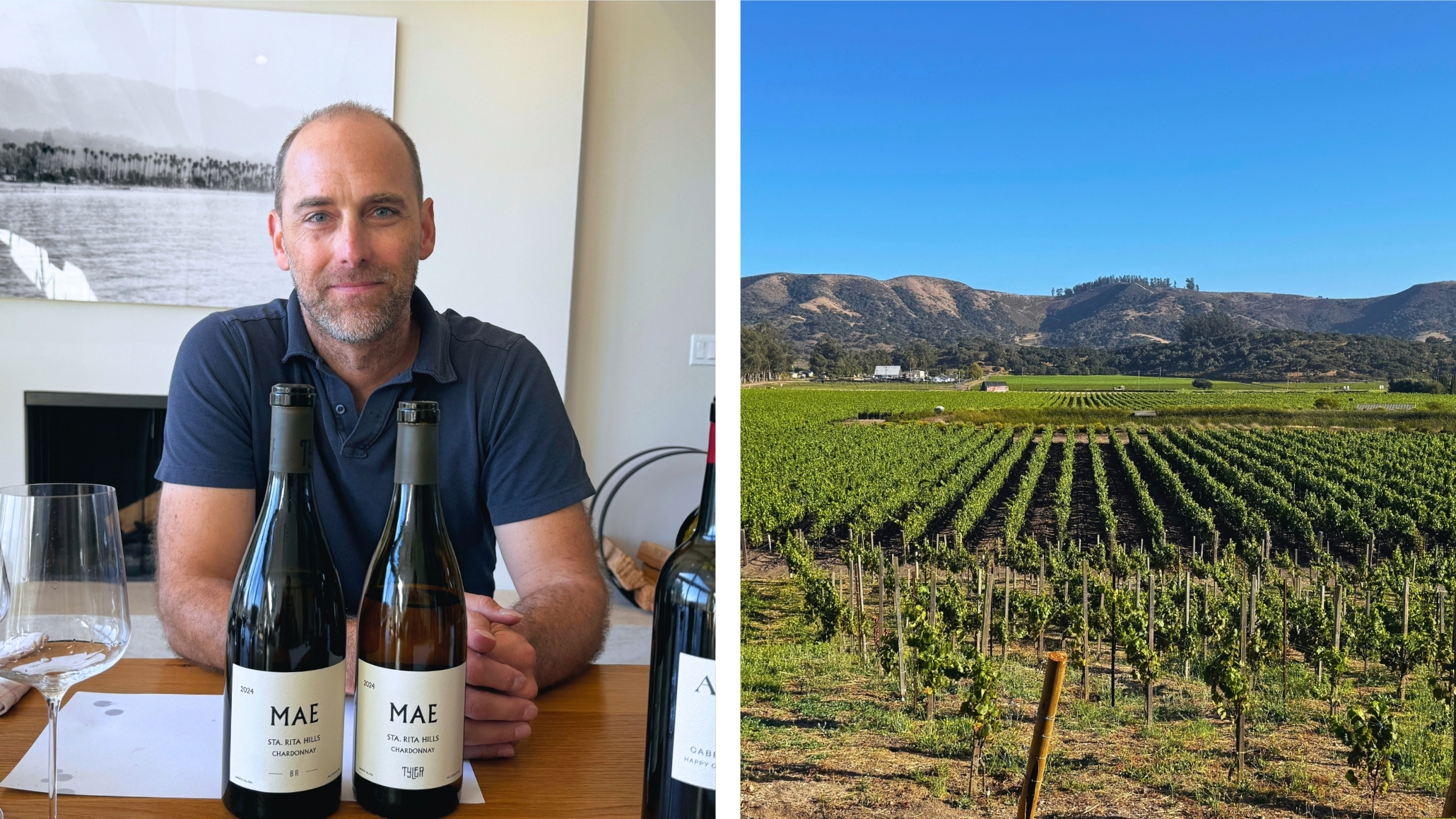
Justin Willett of Tyler with his two stunning 2024 Chardonnays from the MAE estate, pictured at right.
It is my firm belief that many of the sites planted to Pinot Noir in the Sta. Rita Hills would perform more consistently and compellingly with Chardonnay. It’s something of a dirty little secret, as many producers with whom I’ve spoken over the past few years have privately offered support for that thesis. As it stands, Chardonnay accounts for approximately one-sixth of the plantings in the Sta. Rita Hills. As consumer tastes continue their shift toward white wine, I would be neither surprised nor disappointed to see that proportion climb.
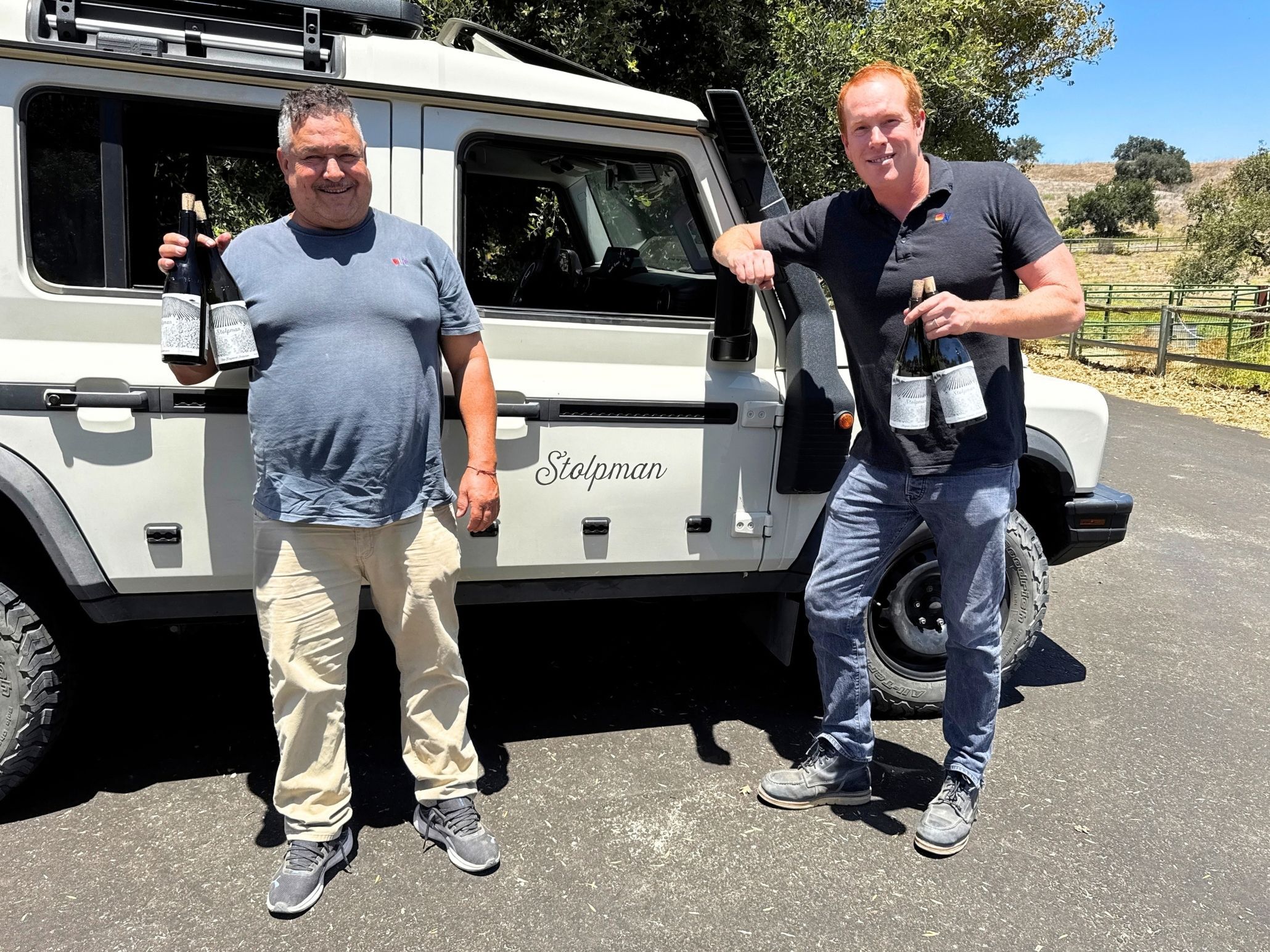
Ruben Solorzano and Pete Stolpman of Stolpman Vineyards.
Two thousand twenty-four is a magnificent Syrah vintage in Santa Barbara County. I hope that statement might move the needle even slightly in the battle against consumers’ nagging indifference to Syrah. In Ballard Canyon, Santa Maria Valley, Sta. Rita Hills and Santa Ynez Valley, Syrah consistently delivered tremendous wines in 2024. Syrah has a special capacity to balance intensity, depth and powerful flavors while retaining vibrant acidity; that’s exactly what the 2024s are like, especially in Ballard Canyon. Many are notably red-toned and bright, which lends them a sense of energy without any heaviness or clunkiness. The full range of The Great Places Syrahs from Stolpman, Tensley’s Syrah Colson Canyon Vineyard, Jonata’s La Sangre de Jonata and Paul Lato’s Syrah Bien Nacido Vineyard Il Padrino are all memorable, as is the very promising 2024 Fingers Crossed Syrah Spark that I tasted from barrel.
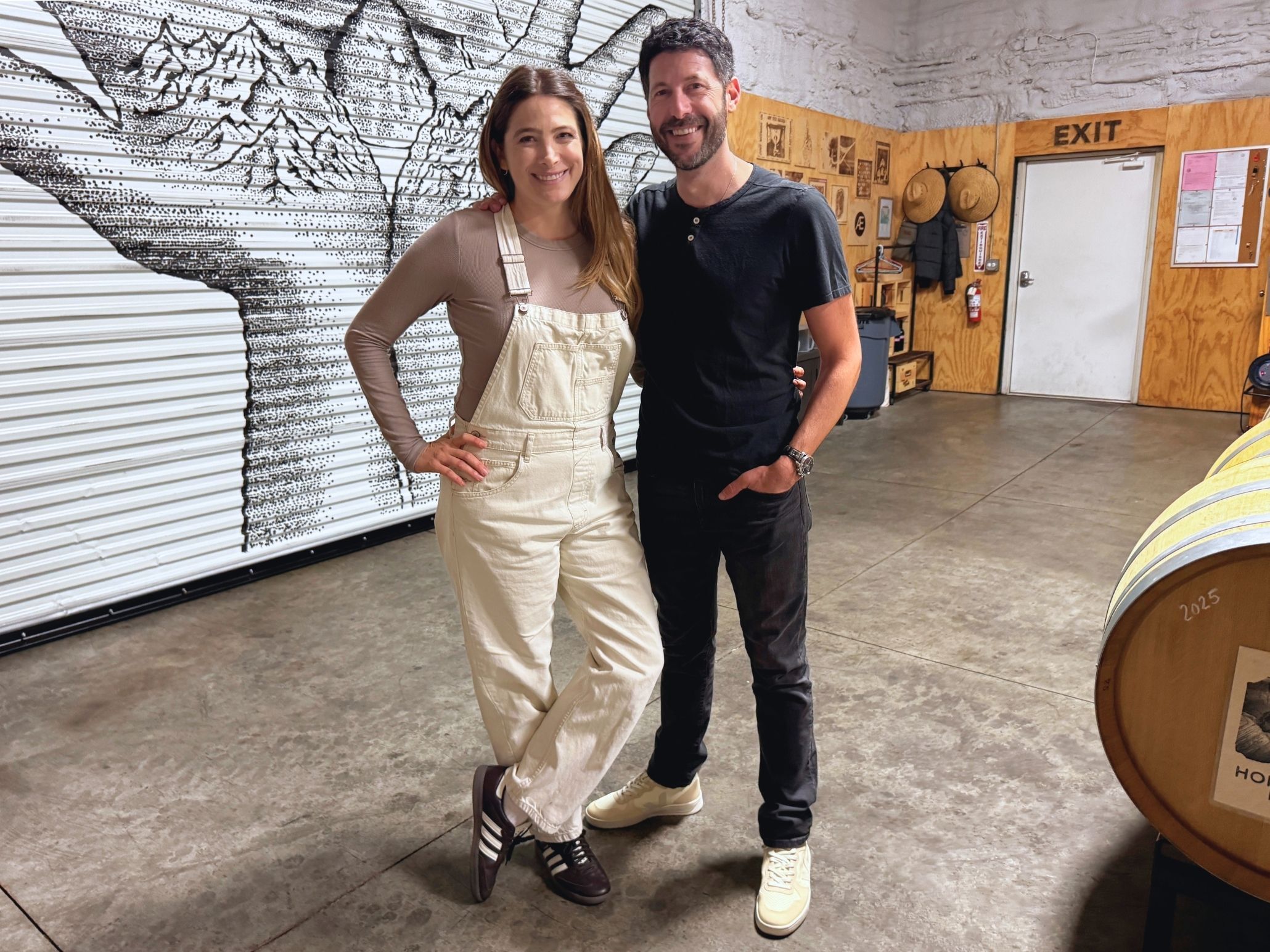
Julia and Nikolas Krankl in their garage winery at Fingers Crossed.
Other red and white Rhône varieties in various blends and varietal bottlings also excelled across the region in 2024. The Lillian Roussanne from Bien Nacido, Site Wines Viognier Larner Vineyard and Alma Rosa Red Wine Attente are among the myriad successes that speak to the same qualities I’ve already outlined.
Now in bottle following their typical longer élevage, the 2023 Bordeaux-variety reds from Happy Canyon and the Santa Ynez Valley are among the best I’ve ever tasted from the region. Happy Canyon Cabernets offer deep herbal signatures and fine structure that inform an attractively old-school style. The 2023 Cabernets from Crown Point and Star Lane are top-notch wines that easily stand toe-to-toe with the very best California has to offer. Early tastings of 2024s have been immensely promising.

Tyler Thomas turned out an excellent set of 2023s at Star Lane in Happy Canyon.
One of the most encouraging trends across the entire region is an increased focus on appellation-level and “entry-level” bottlings. These wines are generally expressing more complexity and regional identity than they once did. Many producers have realized the importance of offering wines of character at approachable prices and have chosen to either craft new bottlings to satisfy the lower tier or bolster the quality of existing cuvées with better fruit. You don’t have to spend an arm and a leg to get a feel for what Santa Barbara has to offer.
Up Next: 2025 and 2026
The 2025 season was another “normal” one with no stress events, a relatively cool summer and a return to average yields, but as we’ve seen with 2024, the complexities will likely reveal themselves in due time. Early tastings have pointed to wines that run generally on the lighter side, especially the reds. The 2026 harvest was already kicking off when I was in the region in July, marking the earliest start ever after a spring heat wave spurred early development. As is the tale across much of California, the entire growth cycle occurred about three to four weeks ahead of normal, but total hangtime was actually relatively average.
The Elephant in the Room
As I wrote in last year’s report, portions of Santa Barbara County — particularly Santa Maria Valley — are in a period of purgatory, with declining yields, elevated disease pressure and challenging economic conditions leading to large-scale vineyard uprooting. Nowhere is this more evident than at the historic Bien Nacido Vineyard.
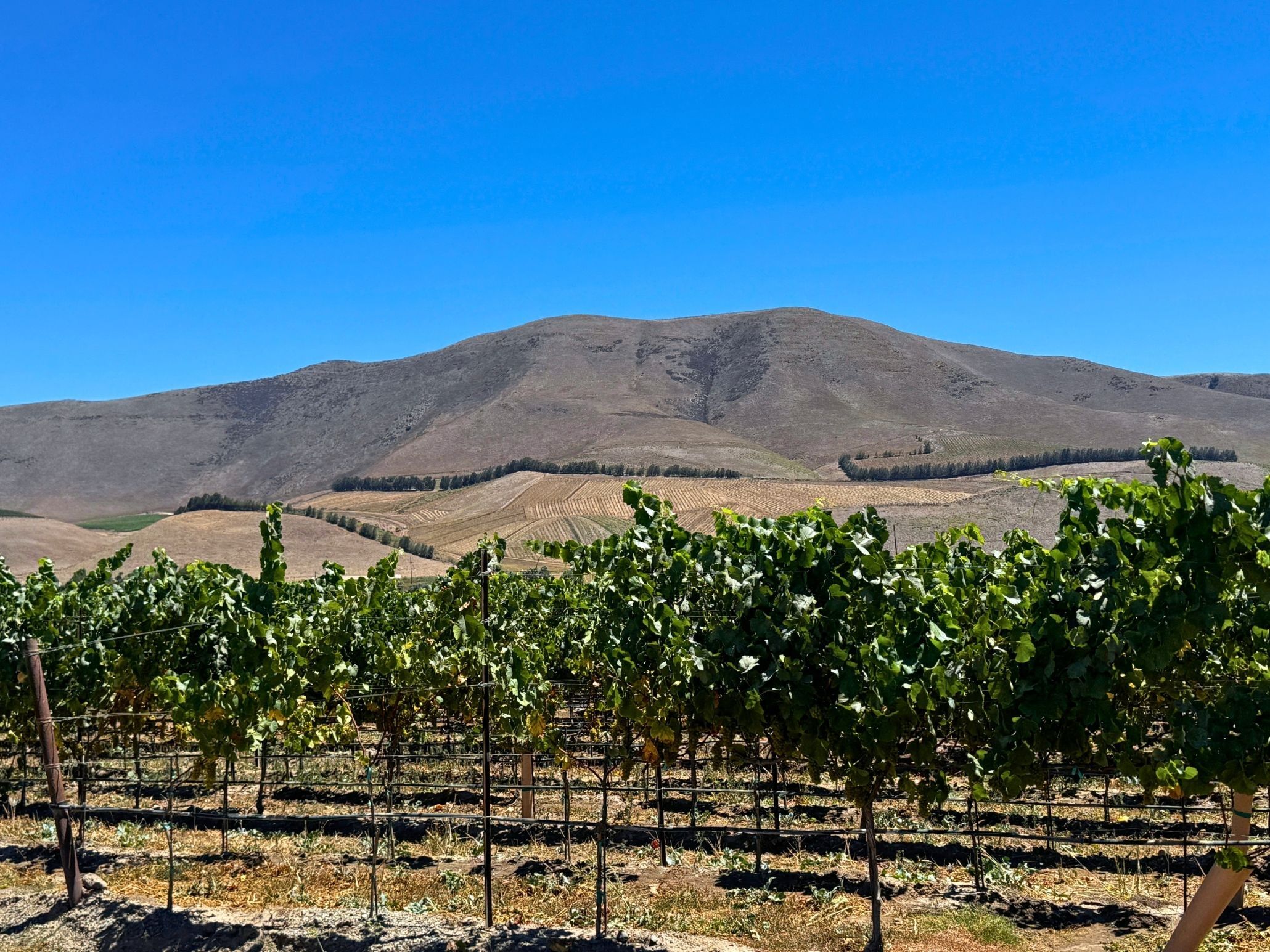
Former vineyard blocks dot the hillside at Bien Nacido.
Bien Nacido, once a crown jewel of California, is steadily being gutted, with no declared plans to replant. Nearby Solomon Hills, under the same ownership, is now an empty lot, save for the piles of canes that have yet to be cleared. The reasons are murky but seem to be a mix of physiological and economic. The vineyard is plagued by numerous vine diseases, while both the quality and consistency of the farming have been declining. That’s not to say that the team at Bien Nacido isn’t making efforts to mitigate issues, as evidenced by the autonomous over-the-row UV machines that have been brought in to ramp up mildew control efforts. But the prevailing view among the producers I spoke with is that too little is being done and too little is being communicated to those who buy this fruit.
The downstream effect on winemakers across California is profound. Many producers are in limbo, not knowing if they will receive the quality of fruit they expect, and not knowing if their block will even exist from one year to the next. The wine industry has more than its fair share of headwinds. Asking small producers to contend with such uncertainty only compounds them. Bien Nacido is one of the most important vineyards in the United States. I hope that efforts are made to save this site. If that is not the ultimate goal, I hope that a real plan will be communicated to all concerned parties.
Even as the spotlight shifts, the fact remains that Santa Barbara County is a magical place with an embarrassment of oenological riches to discover. Few regions in California offer such a compelling combination of diversity, quality and relative affordability. The wines are distinctive, the people are welcoming and there is still a tremendous sense of possibility here. Santa Barbara’s best days feel very much ahead of it.
I tasted the wines for this report in July 2026 in Santa Barbara, with follow-up tasting at my home office in Florida.
© 2026, Vinous. No portion of this article may be copied, shared or redistributed without prior consent from Vinous. Doing so is not only a violation of our copyright but also threatens the survival of independent wine criticism.
You Might Also Enjoy
Santa Barbara: Out of Many, One, Billy Norris, August 2025
Santa Barbara: California’s Undiscovered Jewel, Antonio Galloni, August 2024
Brilliance in Santa Barbara, Antonio Galloni, September 2023
Santa Barbara: A Rare Bright Spot for California in 2020, Antonio Galloni, August 2022
Santa Barbara: On the Road...Finally!, Antonio Galloni, October 2021
Show all the wines (sorted by score)
- Ad Ripa
- Alma Rosa Winery
- Âmevive
- Amy & Peter Made This
- Andremily
- Andrew Murray Vineyards
- A Tribute to Grace
- Au Bon Climat
- Babcock Winery
- Barden
- Beckmen Vineyards
- Bien Nacido Estate
- Bishop's Peak
- Blair Fox Cellars
- Brander Vineyard
- Brave & Maiden Estate
- Brewer-Clifton
- Cambria Estate Winery
- Chanin Wine Company
- Clementine Carter
- Clendenen Family Vineyards
- Côtière Winery
- Crown Point Vineyard
- Dave Phinney Wines
- Deovlet
- Department 66
- Diatom
- Dierberg
- DiPalermo
- Domaine de la Côte
- Donnachadh
- Dovecote
- Dragonette
- Dunites Wine Co.
- Epiphany
- Evan's Ranch
- Ex Post Facto
- Fess Parker Winery & Vineyard
- Fesstivity
- Fiddlestix Farm
- Fingers Crossed
- Folded Hills
- Foxen
- foxen 7200
- Frequency
- Gainey Estate Vineyards
- G. Khan Winery
- Grassini Family Vineyards
- Hitching Post
- Holus Bolus
- Jaffurs Wine Cellars
- Joey Tensley Wines
- Jonata
- Kunin Wines
- Lieu Dit
- Lillian
- Lindquist
- Liquid Farm
- Loner (by Sanguis)
- Longoria
- Loubud Wines
- Mail Road Wines
- Malendrina
- Mallea
- Margerum
- Melville Winery
- Native9
- Next of Kyn
- Ojai Mountain
- OLG Our Lady of Guadalupe
- Optik
- Outward
- Paul Lato Wines
- Peake Ranch
- Pence Vineyards & Winery
- Perilune
- Piedrasassi
- Piro Wine Company
- Piro Wine Company - Piro/Hadi
- Presqu'ile
- Qupé
- Racines
- Ranchos de Ontiveros
- Rancho Viñedo
- Refugio Ranch
- Riverbench Vineyard and Winery
- Roblar
- Rusack Vineyards
- SAMsARA Wine Co
- Sandhi Wines
- Sanford Winery
- Sanguis
- Sea Smoke
- Sine Qua Non
- Site Wines
- Solomon Hills Estate
- Star Lane
- Stolpman Vineyards
- Story of Soil
- Tabalipa Wine Co.
- Talley Vineyards
- Tatomer
- Tensley
- Tensley - P2KV
- The Hilt
- The Joy Fantastic
- The Ojai Vineyard
- The Paring
- The Third Twin
- Timbre Winery
- Tread by Zaca Mesa
- Tyler Winery
- Vega Vineyard and Farm
- Verdad
- Voyz'n Wines
- Walson Holland
- WhaleSong (by Sanguis)
- Whitcraft Winery
- Zaca Mesa Winery & Vineyards
- Zotovich Family Vineyards