
Browse using the new Vinous website now. Launch →
Printed by, and for the sole use of . All rights reserved © 2015 Vinous Media
A Century of…Sixes: 1846-2016
BY NEAL MARTIN | JULY 9, 2026
No prize for guessing that this year's "Centuries" article investigates vintages ending in six. Whereas those ending in five coincide with some of Bordeaux's most feted growing seasons, this decennial series is strewn with potholes — the anni horribiles of 1946 and 1956, the oven-cooked 1976, the middling 2006. Is it mere coincidence that the Korean pronunciation for six is "yuk"? On the other hand, 1966, 1986 and 1996 get wine lovers' pulses racing, not to mention 2016, sainted even before its umbilical cord was cut. Overall, despite the mishaps along the way, this latest tranche has enough to intrigue inquisitive palates.
As tradition dictates, I interweave a tangential theme. Previous years have covered literature, music and, my personal favourite, FA Cup finals. This year, I selected inventions that ricochet from punk to Play-Doh, drones to cornflakes.
Let us set the flux capacitor back 180 years…
1846 – The Saxophone
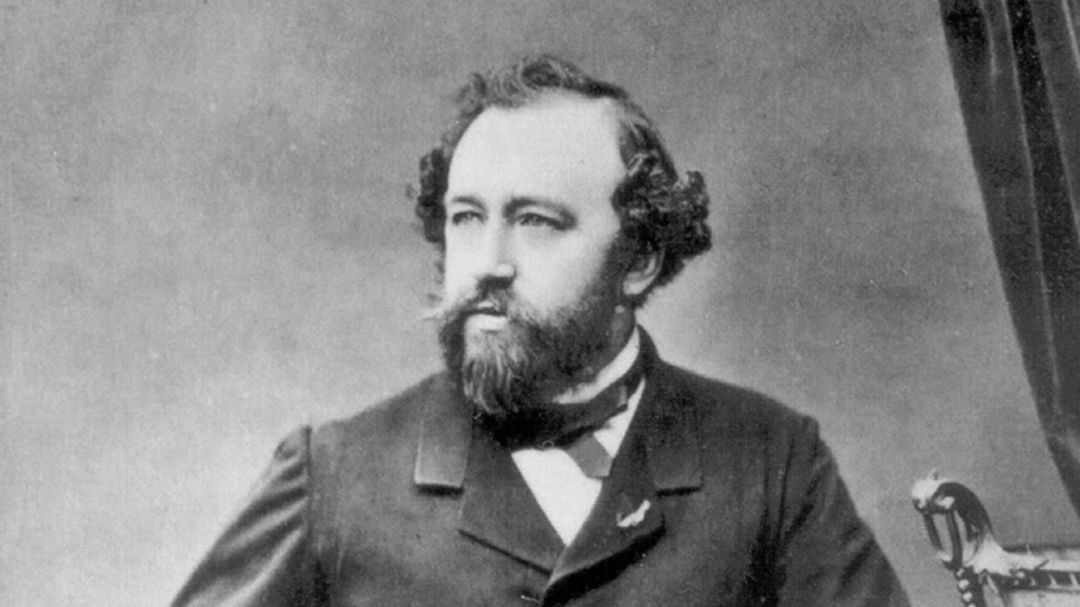
Adolphe Sax, inventor of the saxophone.
Adolphe Sax had been tinkering with musical instruments since childhood. Looking to bridge the gap between woodwind and brass, he designed the saxophone in his Parisian workshop and filed 14 patents for his design. He zealously promoted it around the country, even coaxing Berlioz to compose a wind sextet, Chant Sacré, to showcase the instrument, and was awarded a lucrative contract to supply the French army. This proved a mixed blessing, soon arousing envy among rivals, some of whom plagiarised his design. The snowball of lawsuits meant Sax saw little return. He was virtually penniless when he died in 1894, many years before the instrument became synonymous with the new sound of jazz, its rasp lending both wildness and sex appeal. Imagine if Charlie Parker or John Coltrane had chosen the cor anglais instead of the saxophone. Sonny Rollins, whose mother bought him his first saxophone at the age of seven, passed away as I was writing this piece. “I went into the bedroom and I started playing,” he is quoted as saying. “That was it. I was in seventh heaven.”
Just one solitary tasting note from 1846 is included in this report — then again, I did not predict a flurry of 1846s. Tasted blind at the conclusion of the "Six" dinner at Domaine de Chevalier, the wine was obviously a Madeira and, given that 1846 is Madeira’s most renowned vintage, I immediately guessed that it had to be 180 years old. Perhaps there was déjà vu? I had encountered the 1846 Terrantez by H M Borges, who bottled it in 1900, once before. Given that only 42 bottles have ever appeared at auction, I count myself a lucky fellow. Proving Madeira’s immortality and the calibre of a variety on the cusp of extinction, the 1846 was the perfect conclusion to the bacchanalia. To borrow a phrase from Michael Broadbent upon tasting this very 1846: “What great Madeira is all about.”
1896 – The Escalator
The Old Iron Pier on Coney Island was home to the world’s first commercial escalator, designed by Jesse W. Reno. Originally a thrill ride, it ran at a gentle 25-degree incline. Two years later, the first “moving staircase” was installed at Harrods, where shaken customers were offered smelling salts or a stiff cognac to aid their recovery. (Sadly, this service is no longer offered.) When I lived in Japan, I frequented More’s department store in Kawasaki, home to the world’s shortest escalator, assisting customers up a vertiginous ascent of…83.4cm. You would assume it was pointless, yet the mere fact that the ride lasted two seconds meant it was always in use.
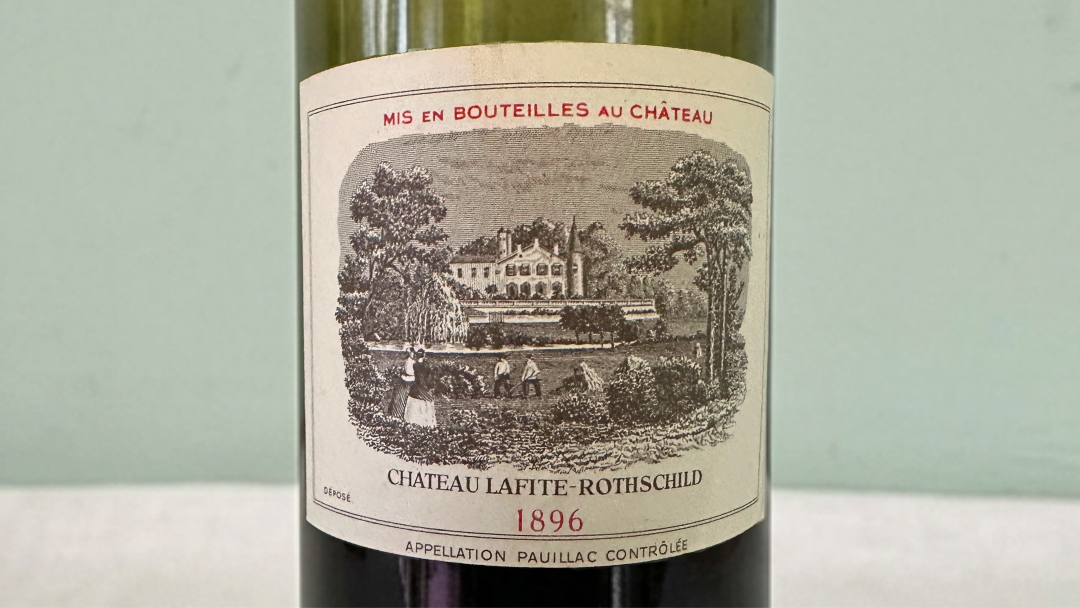
The 1896 growing season threatened to repeat the tempestuous heat of 1893, until the weather turned in early August and brought widespread rot and oïdium. Heavy rain then hampered picking. The 1896 Lafite-Rothschild is the first Bordeaux I have tasted from this fin de siècle vintage, apart from a decrepit Latour some years ago. As an aside, Michael Broadbent, in his Grand Vin, intriguingly suggested that this vintage was either bottled specifically for family use or for a favoured négociant. The wine? Utterly sublime. Elegant, poised and as fresh as a daisy, this time-bucking Pauillac cohered and gained nuance over the course of an hour. Provenance plays a role, of course. Nevertheless, this nectar was a pertinent reminder of how great claret can give pleasure across a yawning stretch of time.
1906 – Cornflakes
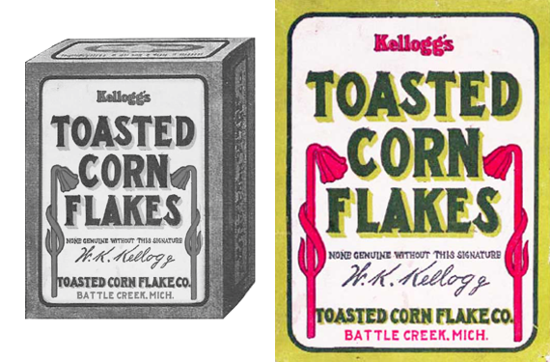
Pre-cornflakes, families wolfed down meaty breakfasts that no amount of Ozempic could rectify. The resulting mass indigestion prompted Victorian dieticians to advocate lighter ways for the proles to start their day. The genesis of cornflakes is a murky tale shrouded in protracted litigation between warring brothers. Physician John Harvey Kellogg was a pious chap, convinced that bland cereal was nutritionally beneficial and could covertly curtail a nation’s libido. He claimed the idea came to him in a dream. Another apocryphal story has him serendipitously leaving the dough out one night, only to find it had fermented by morning. His brother William figured out what had happened and invented a process to mass-produce the result, establishing the Battle Creek Toasted Corn Flake Company in 1906 to bake the first batch of Kellogg’s Corn Flakes. Hopes of improving the nation’s health backfired when rivals began coating their own cereals with sugar.
This is now a rarely seen, unforgiving vintage. A precursor to increasingly common drought-afflicted vintages, 1906 defeated producers who lacked the technology and knowhow to cope with the dry conditions and widespread heat stress. Where winemakers did succeed was in Sauternes. The 1906 Guiraud, poured at the Domaine de Chevalier “Six” dinner, was remarkably deep in hue yet spectacular on the nose: vivacious and honeyed, laden with botrytis, with exquisite balance and a long, viscous tail.
1916 – The Tank
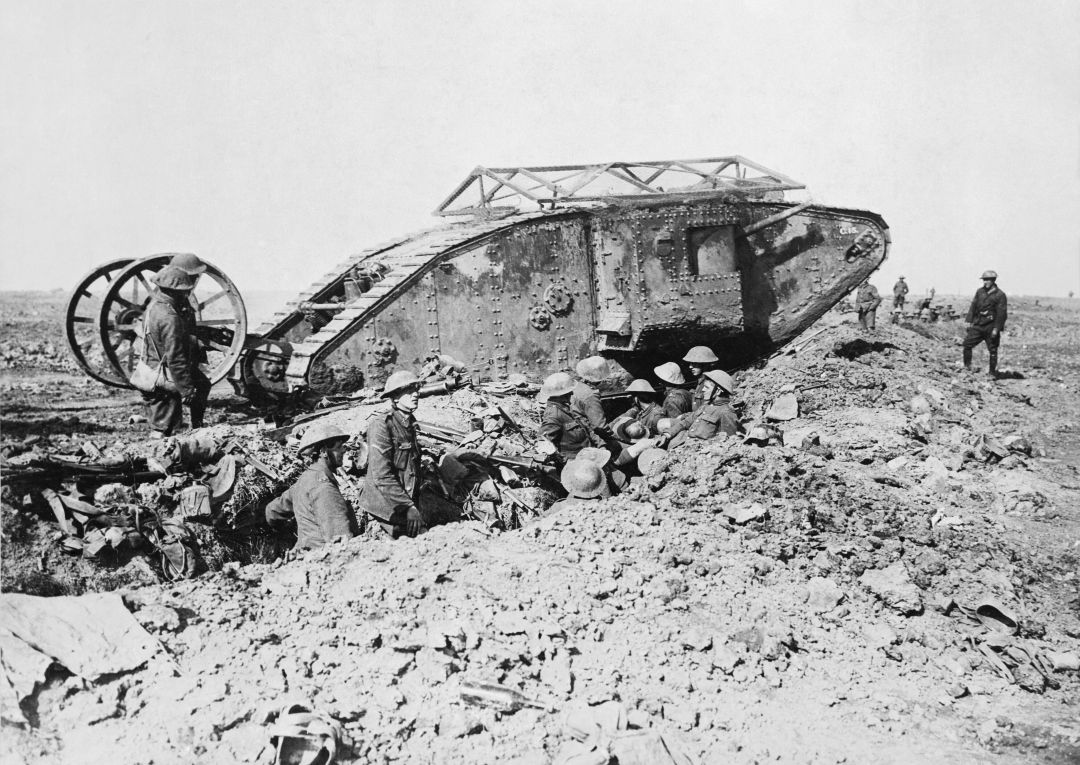
The Mark I, one of the first tanks used in World War I.
Soldiers were confronting enough horrors before the first rhomboid tanks rumbled onto the blood-soaked battlefield on the morning of September 15, 1916, during the Somme Offensive. Winston Churchill had cajoled military commanders into funding research for a vehicle that could overcome swampy terrain and smash through enemy lines. The tank was certainly effective in combat. However, apart from the risk of its fuel tank being targeted by enemy fire and incinerating the occupants, the noise was so deafening that the Mark I relied on carrier pigeons stored in a rear compartment to communicate with command. So many broke down (tanks, not pigeons) or became marooned in the quagmire that within months, the Germans had assembled an entire battalion from reconditioned British tanks emblazoned with Iron Crosses.
The year pales into insignificance against its historical context. The women and children tending the vines were gifted a relatively benevolent season. With a warm August and clement conditions through harvest, all it really lacked was manpower. What few reds I have tasted have been commendable, among them a 1916 Malartic-Lagravière that the Bonnie family served ten years earlier at the same event. The 1916 Guiraud was poured blind in tandem with the 1906 at Domaine de Chevalier. It was remarkably different in colour, this one much paler, a burnished silver-gold. It did not possess the audacity of the 1906 yet was so fresh, pretty and pure that you almost forgot the Great War was raging over the horizon. Alas, an accompanying bottle of 1916 Rauzan-Gassies had less life than a disused morgue.
1926 – The Television
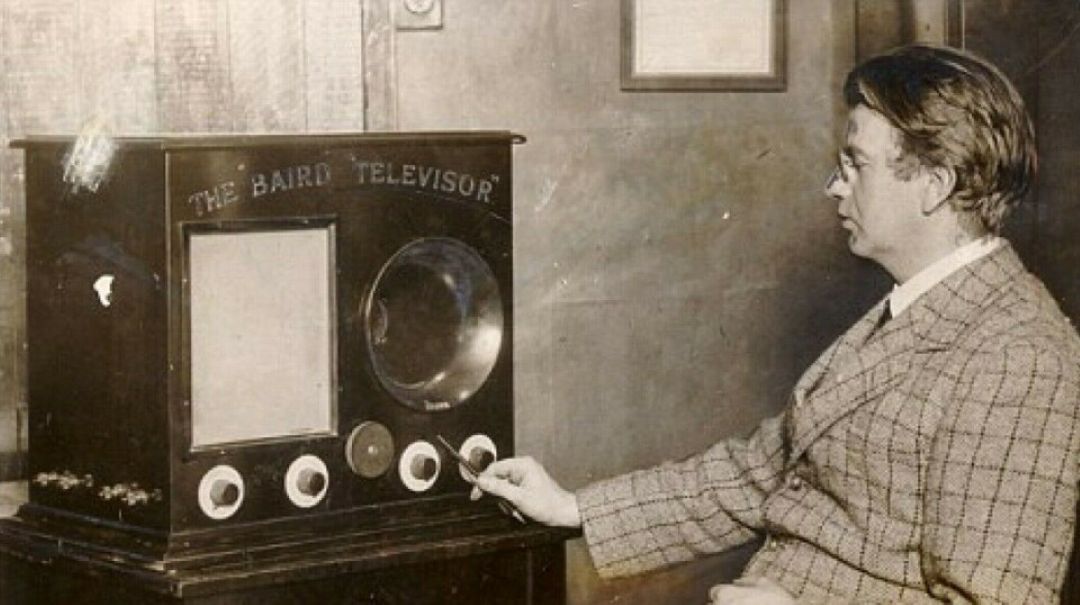
John Logie Baird, inventor of the television.
Scottish inventor John Logie Baird assembled his rudimentary “televisor” from a disused hatbox, a tea chest, sealing wax and bicycle lenses, inter alia. A prototype gave him a 1,000-volt electric shock. His landlord issued an eviction notice, fearing the building was at risk. Nevertheless, Baird managed to reproduce the moving image of a ventriloquist’s dummy in 1925. Then, on January 26, 1926, in his laboratory on the site now occupied by Bar Italia in Soho, Baird presented his invention to a group of reporters from The Times and members of the Royal Institution. He continued to contribute to television’s development as it moved from mechanical to electronic. Had he sat through a single episode of the BBC’s risible Mrs. Brown’s Boys or vapid Love Island, I suspect he would have cancelled his presentation.
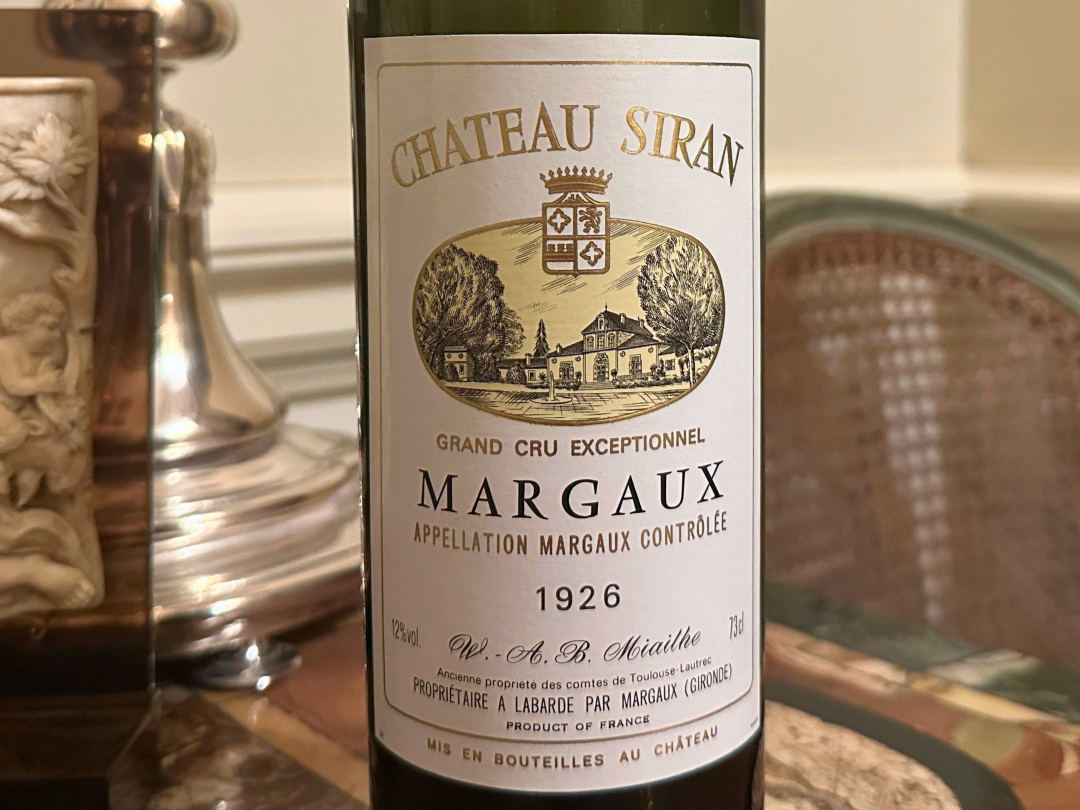
The 1920s were fecund for great claret, though 1926 is overshadowed by 1928 and 1929. The summer saw poor flowering followed by heat spikes and stressed vines, foretelling a small crop. André Simon described the wines as “coarse” on release; they were also expensive, owing to a revaluation of the franc, while the US market was non-existent under Prohibition. The passing of a century and diminished volumes make 1926 an elusive vintage. Edouard Miailhe served a 1926 Siran at the château as a test run for another poured at the Académie du Vin dinner the following week. I had encountered the ’26 Siran twice before and this was the best example, a spectral beauty. A 1926 Calon-Ségur, poured blind at Domaine de Chevalier, was stolid, balanced and beguilingly complex, replicating my one previous encounter. Likewise, my second and third encounters with the 1926 Talbot, poured blind from magnum at Château Meyney’s centenary celebration in April 2025, and again blind a year later at Domaine de Chevalier, confirmed this to be a time-defying marvel determined to keep giving pleasure. Naturally, some bottles fell by the wayside: a 1926 Mouton d’Armailhacq, as Château d’Armailhac was then labelled, was not faulty but had simply reached the end of its mortal coil. A 1926 Bonnezeaux from Domaine de Terrebrune would have been made by the Renou family. It was so oxidative that, while others were enamoured, I found it barely drinkable.
1936 – The VW Beetle
The VW Beetle is the cutest car ever made. Had Disney cast Herbie as a Ford Cortina in The Love Bug, it wouldn’t have worked. The VW is just so anthropomorphic, with those big round headlights, those cuddly curves. No wonder it achieved the longest production run of any vehicle in history, some 65 years. Of course, the Beetle has a dark origin. Volkswagen was conceived by Adolf Hitler, who demanded an affordable car for the people. On July 11, 1936, the first were driven to the Führer for inspection. One doubts his first reaction was: “Oh, how cute.” The final Beetles rolled off the production line in 2003, after 21 million sales. None of them came to life quite like Herbie.
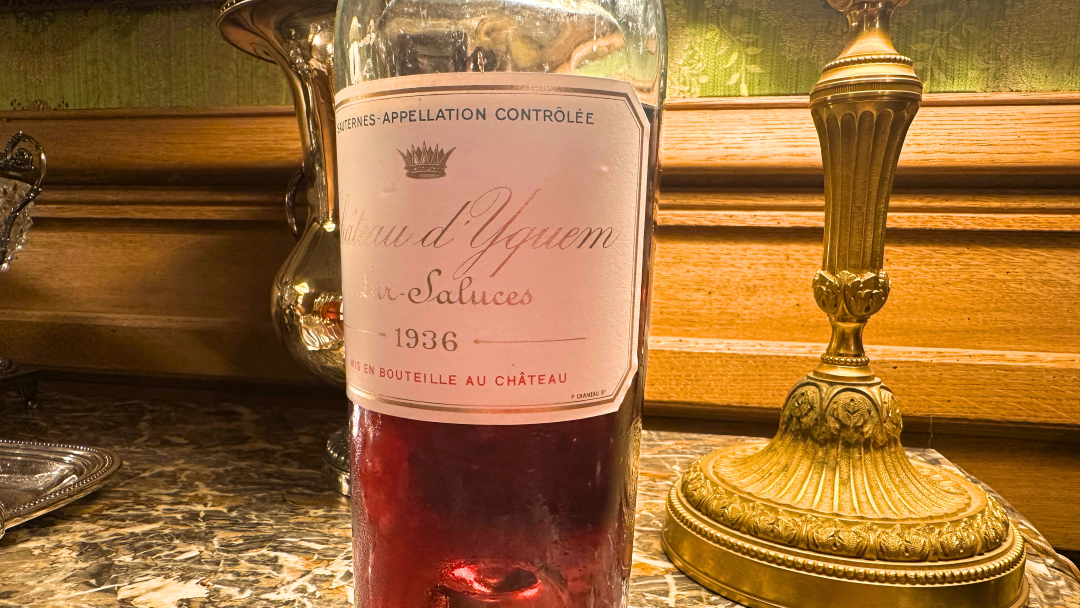
Poor flowering, hail, incessant rain and lack of sun put the kibosh on the 1936 vintage. Conditions were clement by the time of the late harvest, but the damage had been done. I doubted I would ever find a wine from this elusive vintage, so I am grateful to Lorenzo Pasquini for pouring a 1936 Yquem alongside other wines from the decade.
To be fair, the 1936 Yquem was one of the weaker wines in this tranche, clearly deprived of botrytis by the unfavourable growing season. At least it took me one step closer to drinking 100 vintages of Yquem.
1956 – Play-Doh
You are either Lego or Play-Doh. I was the former. Noah McVicker was working at a soap manufacturer in Cincinnati where demand for their wallpaper putty was in decline. Consequently, the company faced bankruptcy. His nephew’s sister-in-law was a kindergarten teacher and read about kids’ art projects using putty. So, the putty was rebranded as a children’s toy and given the name Play-Doh. McVicker’s nephew presented Play-Doh at an educational convention in 1956 and a year later, the repurposed putty was raking in $3 million annually. Many hours of fun have been spent making animals of indeterminate taxonomic origin out of Play-Doh, as well as stuffing it up nostrils and, let’s be honest, becoming addicted to its sweet odour. At least that’s better than glue (see 1976).
The year commenced with the infamous long winter freeze that froze vines to their core and destroyed swathes of prime vineyard. The devastation is synonymous with Bordeaux more than Burgundy, indicative of the former’s eminence in that era. Yet Burgundy endured its coldest winter since 1709 and suffered accordingly. Consequently, bottles from 1956 are rarely seen, and I have tasted only a handful. In fact, this vintage was omitted from this piece until the last moment when a 1956 Grands-Echézeaux from Domaine de la Romanée-Conti materialised. How was it? A sip was plenty. In the words of Ariana Grande, “Thank you…next.”
1966 – The PIN Number
Bank cards are fast becoming antiquated in our cashless, contactless society. The aptly named Scotsman James Goodfellow was given the task of finding a means for customers to access money after banks closed their Saturday doors. Inspired by chocolate bar dispensers, he invented and patented the first freestanding ATM using encrypted code, which was installed in branches of the Westminster Bank. Despite revolutionising the high street and how the world accessed money, like Adolphe Sax, Goodfellow never earned a penny. Actually, that’s not quite right — he pocketed ten quid. Goodfellow took umbrage when, 40 years later, a rival Scotsman received an OBE for inventing the cash dispenser (albeit using different technology). This prompted Goodfellow to set the record straight with a blitz of interviews, and he finally received his own OBE in 2006.
The last primeur saw around two dozen 1966s poured, predominantly at the Académie du Vin and the "Six" dinner at Domaine de Chevalier. It was a benign vintage marked by drawn-out flowering and moderate summer temperatures, shy of sunshine and late to harvest, with most of the Left Bank picked in early October. The wines are renowned for being unapologetically classic and tannic, though at 60 years, most have finally softened and vindicated Broadbent's assertion that they were "long-distance runners." I do wonder, though, whether the 1966s are beginning to lose the freshness they exuded 15 or 20 years ago.
It was an unlucky occasion Domaine de Chevalier, one where the big guns, the 1966 Pétrus, Palmer and Latour, simply did not fire. Nothing faulty, just not the best examples I have encountered. The most enjoyable was the 1966 Magdelaine, one of the few '66s to have previously eluded me. Refined, elegant and bright, the Magdelaine is another to add to the canon of ancient wines from this Saint-Émilion château that was subsequently absorbed into Bélair-Monange. Staying on the Right Bank, three 1966s — Clos Fourtet, Larcis-Ducasse and Figeac — all varied in quality. I list them in ascending order, the Figeac from the halcyon days when Thierry Manoncourt could do little wrong.
Readers will find a dozen or so reviews from the Left Bank. The 1966 Bel-Air Marquis d'Aligré was my own contribution to a dinner bejewelled with a bevy of legendary bottles in Hong Kong. The Margaux is chugging along nicely in its own rustic way like its nonagenarian owner, Jean-Pierre Boyer. Two solid, if not quite spectacular, wines from Saint-Julien: the 1966 Gruaud Larose, opened at the "old claret" bacchanal at Moon Bay restaurant, had the audacity to surpass one opened at the château a few months earlier, while the 1966 Ducru-Beaucaillou, shaded perhaps by the '61, still retains the density and vitality to give pleasure. Better still was a magnum of 1966 Domaine de Chevalier poured by Olivier Bernard at the Académie du Vin dinner, a wine that epitomises everything I love about mature wines from this estate. The 1966 Yquem remains the only post-1959 vintage I have never tasted. In its absence, I’ve included a 1966 Doisy-Védrines that appeared in January 2025 at a lunch celebrating the late Harry Gill of The Arches, at which this oft-overlooked Barsac acquitted itself extremely well.
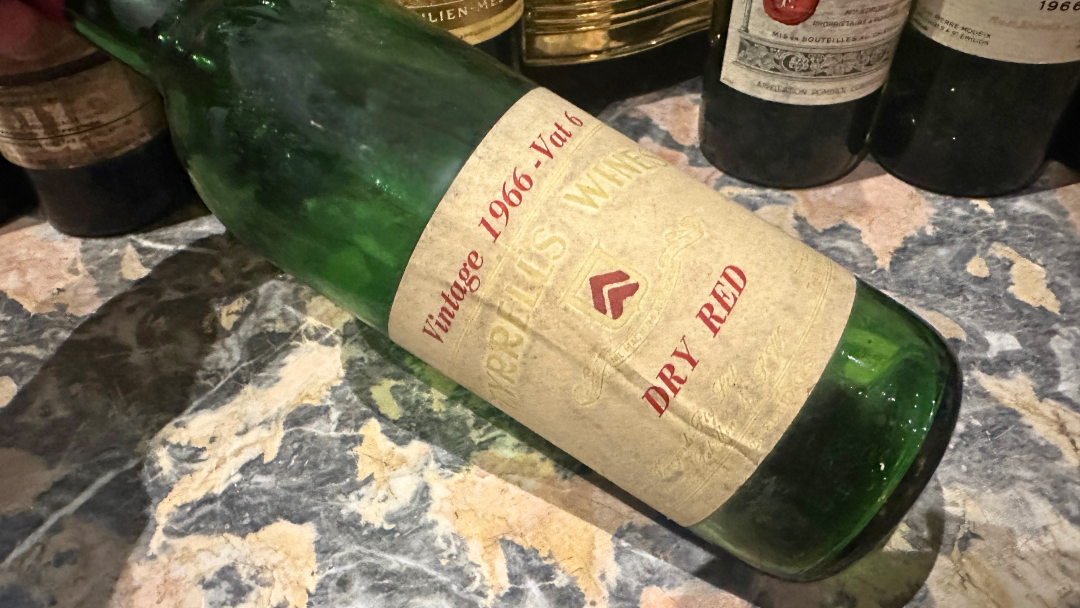
Beyond Bordeaux, the 1966 Unico from Vega Sicilia seems a rare misstep in an otherwise glorious decade for the Ribera del Duero icon, while my own bottle of 1966 Vat 6 Dry Red from Tyrrell's in Australia’s Hunter Valley fooled a few seasoned palates when pitted blind against august Bordeaux company. This bottling would have benefitted from the influence of the young Len Evans, who was working at the famous Australian estate at the time.
However, nothing among the aforementioned could approach an astounding bottle of Riesling poured by Egon Müller himself at a La Paulée in Beaune last November. The 1966 Scharzhofberger Riesling was made by Müller's father from a vintage in which cold and wet weather in November precluded a vast number of sweet wines. The label bore no Prädikat level because, as my colleague Anne Krebiehl, MW, explained, it predates the 1971 law that tied German wines to Prädikate and must weight. “If you had a Scharzhofberger from 1966 that was made without noble rot,” she told me, “it was just off-dry and not particularly ripe or sweet.” For what it's worth, I felt the 1966 was around Spätlese level. The wine itself was almost ineffable. I liken it to an iridescent star beaming in the night sky, eclipsing the smorgasbord of rare Chardonnays and Pinot Noirs that littered the afternoon. Riesling at its absolute pinnacle.
1976 – Punk Music
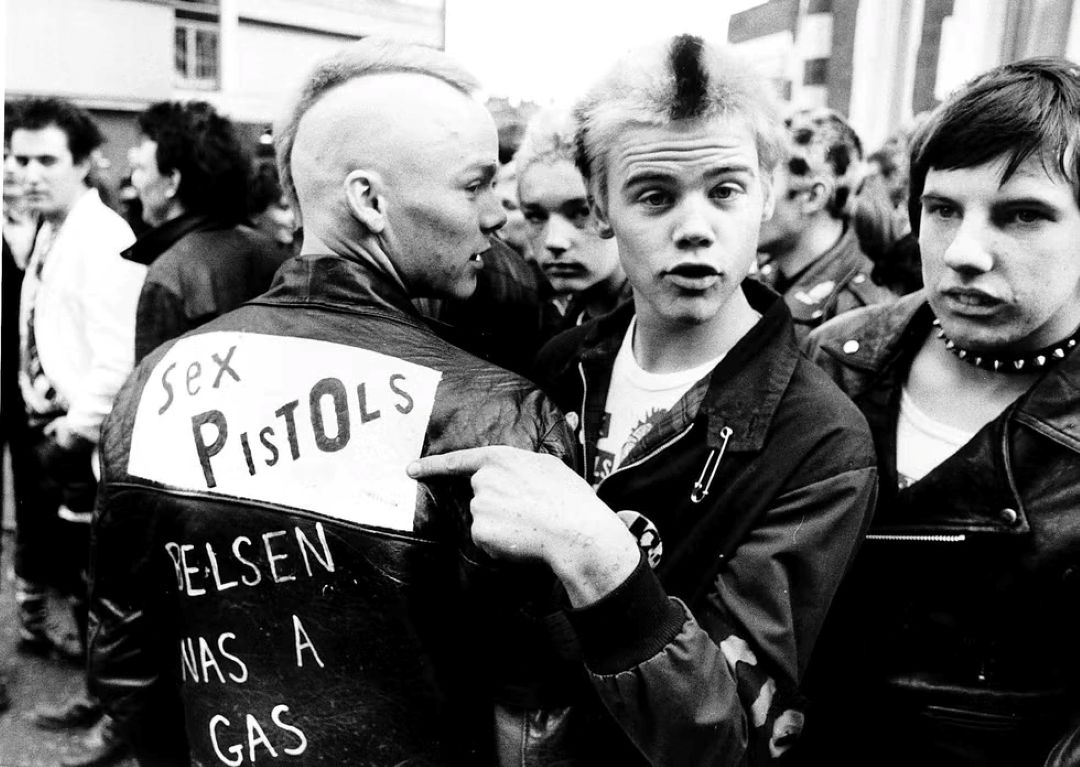
The Sex Pistols were a pivotal part of the punk movement.
Punks were scary. They festered on Southend High Street outside WH Smith’s, opposite Barclays' cash machine, a snotty mass of fluorescent green Mohawks, swastikas, bondage pants, brothel creepers and bin liners. Some of them sniffed glue, probably nicked from WH Smith’s. Who invented punk? Most would say the Sex Pistols, though the first punk single, “New Rose,” was released by The Damned. Or was it The Ramones? Or going further back, The Stooges or MC5? What became of all those punks? I wager most now run Fortune 500 companies, doubtless reading this article while wistfully recalling Poly Styrene singing “Oh Bondage! Up Yours!” — the rare instance of a punk song that features the saxophone.
The 1976 season is synonymous with the notorious sizzling summer that brought unprecedented temperatures across Europe. Bordeaux was already struggling with a run of lacklustre vintages, the oil crisis, its knock-on effects on economies, overproduction partly through overuse of chemical fertilisers, and wineries unchanged since the war. So, the last thing winemakers needed was unrelenting heat that sapped vines of energy and grapes of acidity. Temperatures reached 40°C in mid-July, and many vines shut down due to stress. The heavy showers of late August caused some bloated berries, parched vines having greedily guzzled up the water.
Unsurprisingly, the reds are known for being baked, with only one or two intermittent successes, Lafite Rothschild and Ausone among them. Neither cropped up here, though you will find notes in the Vinous database. The handful of 1976 Médoc wines I tasted were all unexciting and past peak, including châteaux I admire such as Beychevelle and Lafon-Rochet. The vintage was far kinder to Sauternes, and I would have wished to taste more than just the 1976 Yquem, imbibed not at the château but blind at Domaine de Chevalier. In recent years, I have found the ‘76 pulling away from the ‘75, though this was not the best bottle.
1986 – The Laptop
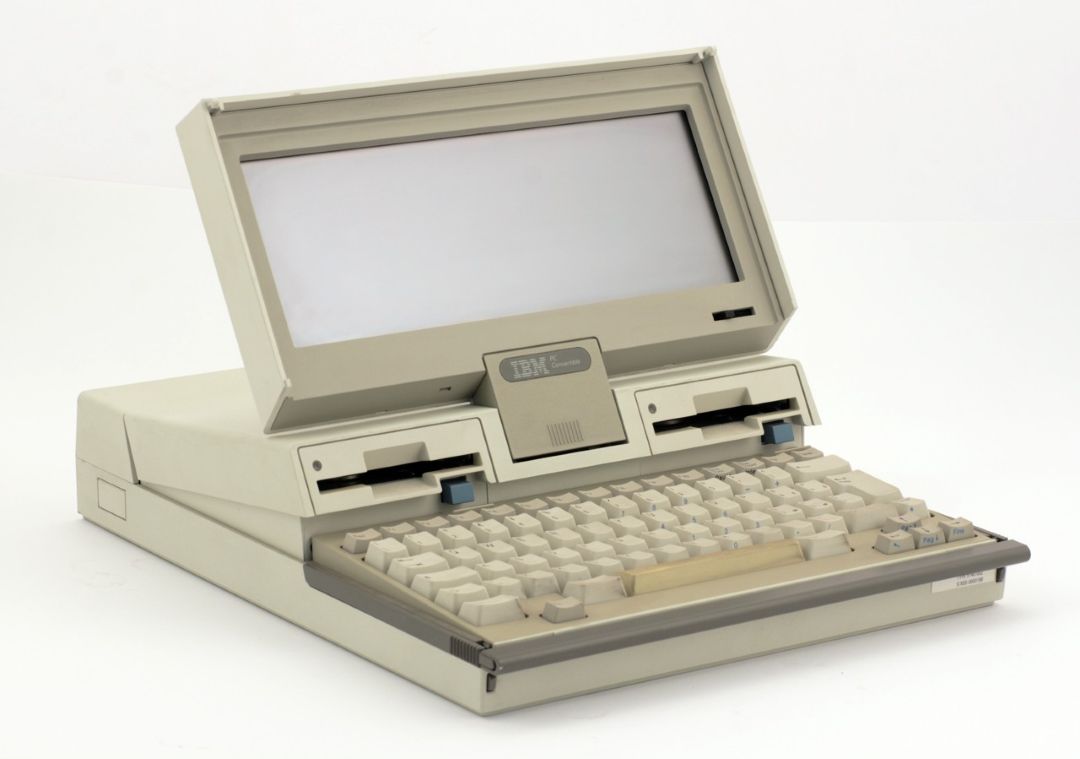
The PC Convertible from IBM.
I was one of the first wine journalists to pack a laptop in my rucksack, one of those chunky Apple models that left your right shoulder aching for days. It was around the millennium. Fellow scribes would stare in curiosity as my strange contraption whirred into action, then sharpen their pencils to commence scrawling in their leather-bound notebooks, as if such technology should never besmirch the world of wine writing. In April 1986, IBM launched the “PC Convertible” equipped with 256 kilobytes of RAM, 0.000064% of the memory that powers the iPad on which I am writing this paragraph. Thankfully, it weighs less than the PC Convertible, which tipped the scales at six kilos and would have left me hunchbacked for life.
I have been an advocate of the 1986 vintage for my entire career, disagreeing with those who claimed the wines would dry out before their obdurate tannins softened. "Just wait," was my reply, convinced that 1986 was a very different kettle of fish from 1975. The 1986 season saw a long, hot and dry summer until September 14 and 15, when the region was doused with 40 to 60 millimetres of rainfall, scuppering the earlier-ripening Merlot. Clement conditions returned thereafter, benefitting the Cabernet Sauvignon and allowing winemakers to wait for ripeness. It ended up being one of the largest harvests on record.
This is a vintage I would love to taste in depth, and I frustratingly had to miss two 1986-themed Bordeaux dinners in London due to diary clashes. I have faith that this vintage pushes oenophiles' patience to the limit, and a 1986 Mouton Rothschild tasted last year was a pertinent reminder that good things come to those who wait. I did manage to taste ex-château 1986 Haut-Brion and La Mission Haut-Brion in London in March — the former earthy and glorious, the latter a little frayed. I tasted the 1986 Lafite Rothschild from both bottle and imperial, at the château and the Académie dinner, both occasions testifying to a regal yet denser-than-normal wine, not as flattering as Mouton Rothschild yet revelling in its inherent classicism. Staying in Pauillac, the 1986 Grand-Puy-Lacoste is not unlike the Lafite Rothschild, with tobacco-infused black fruit and impressive length. Some reds have proven the naysayers right. Neither the 1986 Gloria nor Saint-Pierre was particularly likeable, more a reflection of the winemaking than the season itself. The wines from both estates are far superior now, as later vintages such as 1996 and 2006 attest — though even those don't hold a candle to the quality today.
A decade on, another splendid vintage for botrytis. The 1986 Yquem poured at the château was the best of a dozen examples I have tasted over the years, delivering everything you want from a botrytised wine. I was also treated to a rare 1986 Y de Yquem, certainly one of the best vintages I have tasted from that decade, and proof of the ageability of Yquem's dry-styled Sauternes. Another highlight was the 1986 Domaine de Chevalier Blanc. A bottle served by owner Olivier Bernard was out of sorts, but the magnum at the Académie du Vin soirée was one of the evening's highlights, sadly overlooked by many who headed straight for the reds.
1996 – Tamagotchi
Without warning, upstanding members of society were suddenly spending every waking moment fretting over whether they had fed their virtual pet, checking its happiness meter and not minding that their own was plummeting as a result. The man to blame is Akihiro Yokoi, inspired by a young boy trying to take his pet turtle on holiday, which surely involves less stress than sustaining the life of a Tamagotchi. My partner at that time brought one of the first back from Japan. It died within a fortnight. She went into mourning. I made a mental note that we shouldn’t have children.
Ninety-six was the year my wine career began, so it stands as a temporal demarcation between vintages I’ve known since their birth and those that preceded my baby steps into wine. I remember visiting Bordeaux for my first en primeur in March 1997 and meeting the likes of Bill Blatch, registering the positivity that surrounded the vintage. That positivity was skewed towards the Left Bank and the Cabernets, the Merlots having been nixed by early September showers.
I have updated my scores for many of the major 1996 Bordeaux thanks to various vertical tastings in recent years, and I’ve added another dozen or so wines here, though I would love to do a more comprehensive overview of one of the standout vintages of that decade. The two best wines have been the 1996 Mouton Rothschild, the gem in what was otherwise a comparatively inconsistent decade for the First Growth, and the 1996 Montrose, which is drinking very well, even if it comes across as rustic compared to the recent precision-tooled wines. Staying in Saint-Estèphe, I admire the sapidity of the gutsy 1996 Cos d'Estournel, both of these ahead of the 1996 Lafon-Rochet, even though what was then Michel Tesseron’s estate keeps its head held high and probably offers bang for buck for those seeking a 30-year-old claret. Others are beginning to feel a little rough-hewn, the 1996 Pape-Clément and Gloria both illustrating how tannin management has improved since that time.
Finally, a sublime bottle of 1996 Châteauneuf-du-Pape Réserve from Château Rayas formed a highlight of a Rayas dinner in London. Grenache at its peak. Jacques Reynaud, who died the following year, managed to imbue his wines with an irresistible umami sensation that cannot be replicated elsewhere. Magical.
2006 – Twitter
Initially named twttr, this social media platform was born on March 21, 2006, when co-founder Jack Dorsey sent the first tweet. It was not as eloquent or profound as Neil Armstrong's "One giant leap for mankind." Dorsey's first message was a mundane "just setting up my twttr." By 2013, the service was handling over half a billion tweets a day, among them celebrities, heads of state such as Barack Obama (an early adopter who joined just a year after launch) and even the Pope. I enjoyed Twitter myself until I became embroiled in a petty wine-related squabble and realised that my time was better spent with my young daughters. Following Elon Musk's acquisition of the company, it was rebranded as X. One assumes that this has nothing to do with the punk bands “X” or “X-Ray Spex.”
To my own surprise, I tasted far more wines from this vintage than from 1996. Perhaps this is partly because winemakers feel that 2006 does not get its fair due and remains overlooked. The wines are maturing better than many predicted and, I aver, do not deserve to be overshadowed by the 2005s. Two thousand and six was actually a very hot and dry season until the weather turned in mid-August, disrupting véraison and producing variegated levels of ripeness. Case in point: the 2006 Mouton Rothschild, a splendid First Growth elevated by then-winemaker Philippe Dhalluin. I have tasted it three times, including from magnum. Perhaps the most intriguing showing was at a re-enactment of the Judgment of Paris in Washington, D.C., where I scored it highest by some margin. A magnum of 2006 Haut-Brion was glorious at the Académie du Vin dinner. Sprightly and delicately spiced, there was something joyful about this Pessac-Léognan. Philippe Bascaules poured a 2006 Château Margaux, pointing out that it was cropped at 49 hl/ha compared to a paltry 22 hl/ha in 2025. For those on a tighter budget, the 2006 Pavillon Rouge is still drinking well despite a slightly ferrous finish. Saint-Julien wines are in good shape too, with creditable performances from Talbot, Léoville Barton and Poyferré.
I have interspersed a handful of Burgundies from this vintage, including a wonderful 2006 Puligny-Montrachet Les Referts Premier Cru from Arnaud Ente, which I preferred to the 2006 Meursault Les Chevalières from Coche-Dury served blind at Domaine de Chevalier. The most impressive wine, however, was neither Bordeaux nor Burgundy, but a sublime 2006 Merlot Buri from Miani. I have little experience with mature bottles from this Friuli estate, but this matches any Pomerol or Saint-Émilion from that vintage.
2016 - The Drone
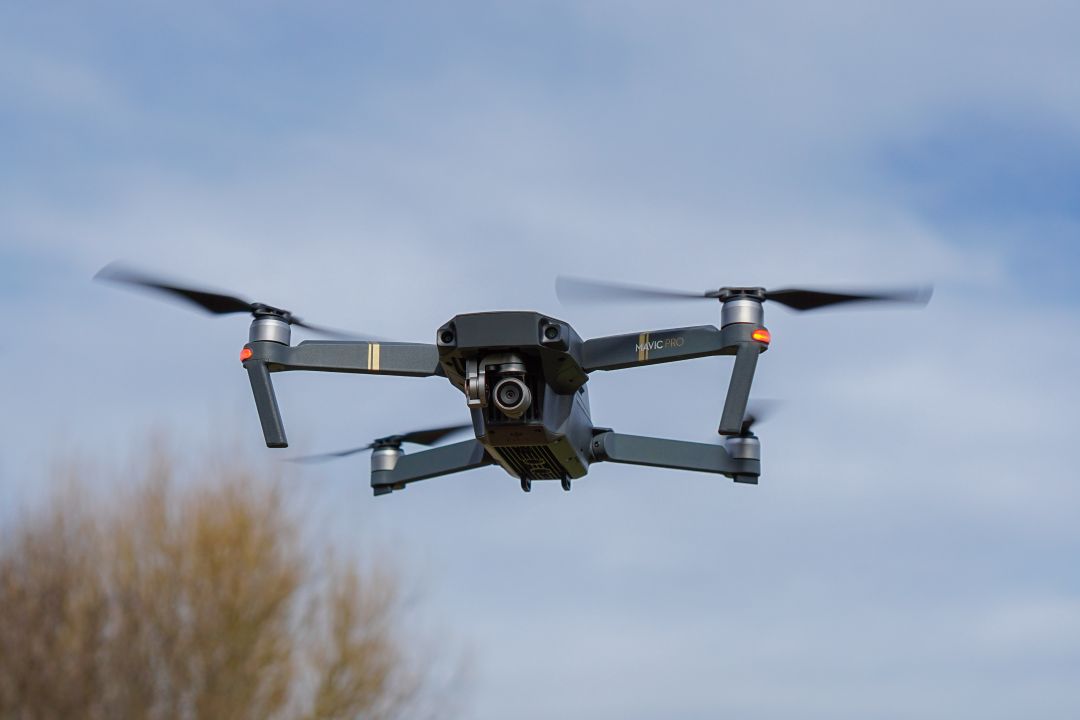
Launched, quite literally, in September 2016, the DJI Mavic Pro was the first commercially successful foldable compact drone, opening an entirely new consumer market, especially for nosey parkers wishing to spy on their neighbours’ gardens. I wonder whether project leader Darren Liccardo foresaw that within a decade, entire armies of his creation would be hovering over multiple war zones. Drones have altered military engagement much as the tank did, obviating the soldier from the front line, combat conducted via joystick in a secret bunker. Drones have revolutionised how we see the world from the air and transformed the search for missing persons. Now, they are even encroaching on viticulture, increasingly deployed as an efficient, economical means of vineyard mapping and spraying.
I separated out the 2016 Bordeaux tasting notes as I have done in previous years, because of the sheer number of wines, although you will find a smattering of châteaux that I wanted to revisit because I suspected bottles were not representative. Similarly, see my recently published examination of South African wines at the ten-year stage.
The bulk of the included 2016 tasting notes come from Burgundy, when winemakers opened a 2016 of their choice after I tasted the latest vintage from barrel. The Côte d’Or is a vastly different landscape from Bordeaux in that it is infamous for spring frosts, which devastated vast tracts of vineyard in 2016. The second half of the growing season was textbook. The result was a small harvest in which some cuvées had to be blended together to form generic Premier Crus. I have found that many 2016s are drinking supremely well, actually more youthful than anticipated. I particularly admire their purity of fruit and succulence, as if the low yields intensified the wines while retaining balance. Highlights include the 2016 Vosne-Romanée Les Beaux Monts 1er Cru from Domaine Jean Grivot, 2016 Chassagne-Montrachet La Boudriotte 1er Cru from Domaine Jean-Claude Bachelet and 2016 Volnay Clos des Ducs 1er Cru from Marquis d’Angerville.
Final Thoughts
With respect to the wines, the biggest takeaway from this year’s tranche is the underestimated quality of 2006 Bordeaux. Factor in market prices, and these wines are well worth investigating. The finest 1986s are reaching their peak, though you must tread carefully and generally avoid the Right Bank. The 1966s, long a favourite of mine, are just beginning to show their age. No, the sixes are not as fecund as the fives, bedevilled as they are by seasons where nature was at its most malevolent. That imbalance was redressed in 2016 by a wonderful raft of clarets that unfairly overshadow their Burgundy counterparts whose volumes were depleted by spring frosts. If only there were an invention to counteract that.
Apropos inventions, what did I learn? A successful invention does not necessarily lead to riches, or even gratitude, from the millions whose lives are enhanced by a single man or woman's vision and perseverance, never mind the obstacles in getting a product to market. Invention can cause stress and recrimination, even leave you destitute. Inventors are not necessarily born with business acumen. Their minds are preternaturally wired for creativity and thinking outside the box, the mundanity of running a business perhaps so tedious that they ignore important matters. The minority born with entrepreneurial nous — Thomas Edison, Steve Jobs and, yes, Elon Musk — become household names and amass vast fortunes, while others remain historical footnotes and quite possibly watch others profit from their work. Indeed, that almost seems to be the norm. Given the rise of artificial intelligence, are we perhaps in the twilight years of human invention? Right now, somewhere, a supercomputer may be cooking up something that will enhance all our lives…or wipe us out.
© 2026, Vinous. No portion of this article may be copied, shared or redistributed without prior consent from Vinous. Doing so is not only a violation of our copyright but also threatens the survival of independent wine criticism.
You Might Also Enjoy
Southwold: 2016 Bordeaux, Ten Years On, Neal Martin, April 2026
Steenwold Returns! South Africa’s 2016s, Neal Martin, July 2026
A Century of...Fives, Neal Martin, June 2025
A Century of...Fours, Neal Martin, June 2024
A Century of Bordeaux: The Threes, Neal Martin, August 2023
Show all the wines (sorted by score)
- Angélus
- Beychevelle
- Bodegas Vega Sicilia
- Calon Ségur
- Camille Giroud
- Canon
- Chasse-Spleen
- Château Margaux
- Château Rayas
- Clerc Milon
- Clos Fourtet
- Clos René
- Cos d'Estournel
- d'Armailhac
- de Fieuzal
- de Rayne-Vigneau
- Desmirail
- d'Issan
- Doisy-Védrines
- Domaine Amiot-Servelle
- Domaine Arnaud Ente
- Domaine Bernard & Thierry Glantenay
- Domaine Bruno Clair
- Domaine Cécile Tremblay
- Domaine Comte Armand
- Domaine Comte Georges de Vogüé
- Domaine de Chevalier
- Domaine de l'Arlot
- Domaine de la Romanée-Conti
- Domaine Denis Mortet
- Domaine de Terrebrune
- Domaine Dubreuil-Fontaine
- Domaine du Comte Liger-Belair
- Domaine Dujac
- Domaine Follin-Arbelet
- Domaine Fontaine-Gagnard
- Domaine Fourrier
- Domaine François Buffet
- Domaine Gérard Mugneret
- Domaine Henri Gouges
- Domaine Henri Magnien
- Domaine Heresztyn-Mazzini
- Domaine Hudelot-Noëllat
- Domaine Jean-Claude Bachelet
- Domaine Jean et Jean-Louis Trapet
- Domaine Jean Fournier
- Domaine Jean-François Coche-Dury
- Domaine Jean Grivot
- Domaine Jean Tardy
- Domaine Jérôme Galeyrand
- Domaine JJ Confuron
- Domaine Marquis d'Angerville
- Domaine Méo-Camuzet
- Domaine Michel Bouzereau
- Domaine Michel Gros
- Domaine Michel Lafarge
- Domaine Michel Mallard
- Domaine Morey-Coffinet
- Domaine Mugneret-Gibourg
- Domaine Nicolas Faure
- Domaine Olivier Leflaive
- Domaine Pierre-Yves Colin Morey
- Domaine Pierrick Bouley
- Domaine René Engel
- Domaine Rossignol-Trapet
- Domaine Simon Bize
- Domaine Sylvie Esmonin
- Domaine Thierry & Pascale Matrot
- Domaine Tollot-Beaut
- Ducru Beaucaillou
- du Tertre
- Egon Müller Scharzhof
- Figeac
- Giodo
- Giscours
- Gloria
- Grand-Puy-Lacoste
- Gruaud Larose
- Guiraud
- Haut-Brion
- H M Borges
- Lafaurie-Peyraguey
- Lafite Rothschild
- Lafleur
- Lafon-Rochet
- La Gaffelière
- Lagrange
- La Mission Haut-Brion
- Langoa Barton
- Larcis Ducasse
- Latour
- Léoville Barton
- Léoville Las Cases
- Léoville Poyferré
- Magdelaine
- Maison Leroy
- Marquis Bel-Air d'Aligré
- Marquis d'Alesme Becker
- Mauvesin Barton
- Miani
- Montrose
- Mouton Rothschild
- Mouton-Rothschild
- Palmer
- Pape Clément
- Pavie
- Penfolds
- Perrier-Jouët
- Petrus
- Pichon Baron
- Pichon-Longueville Comtesse de Lalande
- Poujeaux
- Rauzan-Gassies
- Rauzan-Ségla
- Saint-Pierre
- Siran
- Smith Haut Lafitte
- Suduiraut
- Talbot
- The Sadie Family Wines
- Trotte Vieille
- Tyrell's Wines
- Vincent Girardin
- Yquem