
Browse using the new Vinous website now. Launch →
Printed by, and for the sole use of . All rights reserved © 2015 Vinous Media
Steenwold Returns! South Africa’s 2016s
BY NEAL MARTIN | JULY 2, 2026
Following last year's inaugural blind tasting of 2015s from South Africa's New Wave producers, it was time to reconvene for the second edition to examine the 2016 vintage at the ten-year mark. This annual tasting dubbed "Steenwold," a portmanteau of the Southwold tasting and the local term for Chenin Blanc, signifies a coming of age for the country's wine industry. Longevity is surely a prerequisite of fine wine, and South Africa has reached a juncture where that metric can be measured en masse. South African wines’ relatively low prices give the false impression that even feted names are somehow inferior, predestined for short-term consumption. Nothing could be further from the truth. Last year's tasting would convince the most diehard skeptic that the best of South Africa can match the elite from any classic region. The peaks are world-class, even if prices imply otherwise.
The 2026 Growing Season
A brief recap of the 2016 season: it was the first in a series of unprecedentedly hot, drought-afflicted seasons. I remember hearing local radio stations count down the number of days until there would be no running water. The drought hit Swartland, Paarl and Stellenbosch particularly hard. Sugar levels risked galloping ahead of phenolic ripeness, a bifurcation that could be difficult or impossible to bridge. Moisture-deprived berries were small, hence the low yields. Balmy nighttime temperatures caused vine fatigue, not unlike Bordeaux in 2003, though the absence of the “Cape Doctor” southeasterly wind moderated evapotranspiration levels. With irrigation hotly debated in the context of global warming (a subjected heightened today by the imbroglio over Château Lafleur), drought exacerbated differences between dry-farmed and irrigated vineyards. Swartland, in the former camp, lost 50% to 60% of the crop; Franschhoek, in the latter, fared better. Many winemakers chose to pick two or three weeks earlier than usual, risking phenolic immaturity to avoid excessive alcohol and potential spoilage during fermentation and barrel maturation. Many also applied gentler macerations due to high skin-to-juice ratios. In short, the 2016 vintage was a test of mettle for vineyard and winemaker alike.
This tasting was a more rigourous examination of South African wines’ longevity, a hard bump down to earth after the touted 2015s. That said, trickier vintages are a litmus test for both viticulture and winemaking. South Africa’s reputation would be sullied if it suffered wild swings in quality between vintages, and the crème de la crème should be able to overcome challenges in difficult vintages, affirmation of superior terroir and/or winemaking talent. The standing of any wine region is built as much on difficult growing seasons as great ones, and as it transpired, based on this selection at least, I might prefer the 2016s to the 2015s!
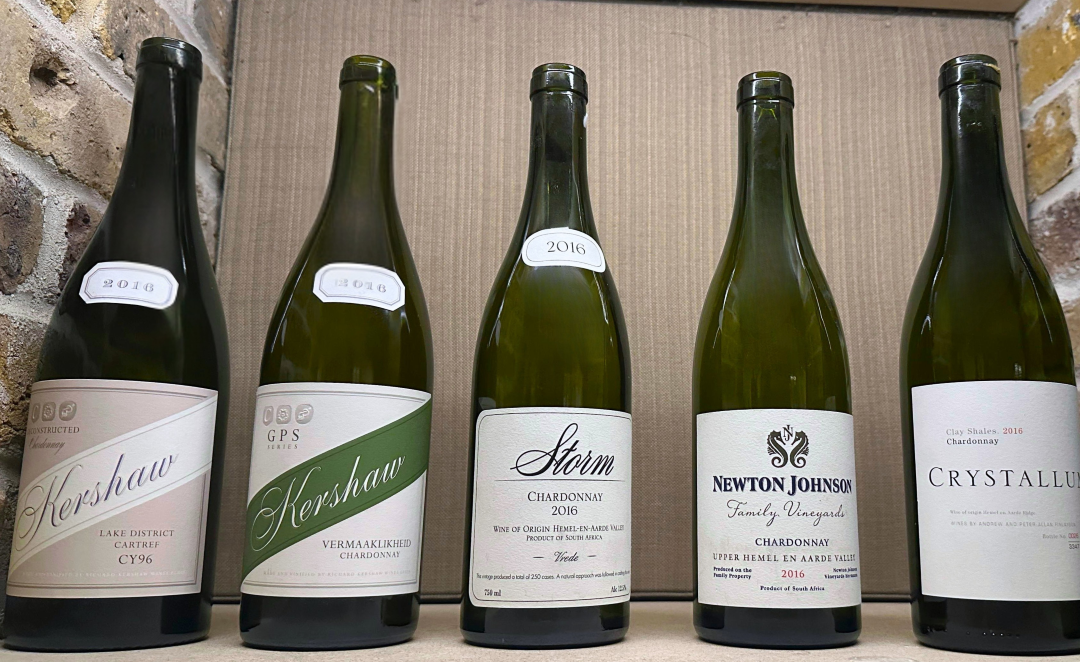
The quality of the whites was occasionally breathtaking. Many had not merely withstood the test of time but were actually in the opening chapters of long and prosperous lives that may well exceed 20 or 30 years. Varietal Chenin Blancs and Chenin Blanc blends excelled, edging ahead of the Chardonnay flight, partly due to the breadth of compelling stylistic interpretations on display. Highlights included the 2016 Kamedarie from Van Loggerenberg, Hope Marguerite from Beaumont and Mary Delaney from Botanica. The flights of field blends and multi-variety wines offered some scintillating examples: Mullineux's Old Vines White Blend, the cerebrally taxingly named Orbitofrontal Cortex from BLANKBottle and a stunning 2016 Terrasse from Keermont. I would happily include any of these in a lineup of top Burgundy. Without being facetious, the combined price of all these wines is probably less than that of a single Grand Cru.
That is not to disparage the Chardonnays, especially when they are of the calibre of Richard Kershaw’s 2016 Chardonnay GPS Vermaaklikheid (I recall last December when one of his Chardonnays matched a sensational 2010 Corton-Charlemagne from Pierre-Yves Colin Morey poured blind). It’s just that this flight did not deliver the showstoppers that bejewelled the others.
The reds opened with a flight of Pinot Noirs. In retrospect, these were a little underwhelming compared to other vintages. They were not bad, but a couple misfired, Van Loggerenberg's Geronimo and the Mabalel from Crystallum among them. I put that down to the growing season and Pinot Noir's sensitivity to drought, and to a lesser extent, how much winemaking techniques have improved in the interim. The red blends were also inconsistent, though I was deeply impressed by the 2016 Red from Sijnn, which evoked the garrigue of the Northern Rhône as much as the fynbos of the Cape.
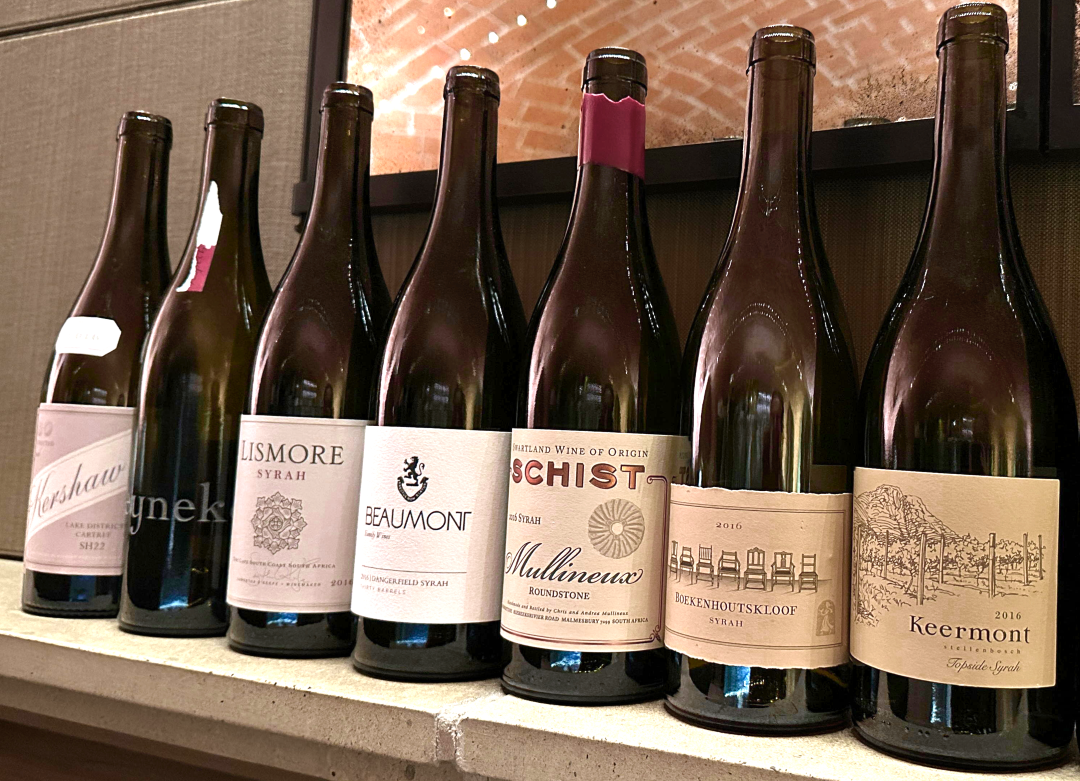
As one might expect, the Syrahs performed better, a variety well equipped for Mediterranean climes. There were impressive showings from Kershaw’s 2016 Syrah Deconstructed Lake District SH22, Mullineux's 2016 Schist Syrah, the 2016 Steepside from Keermont and the 2016 Reserve Red from Reyneke. I was surprised by a less impressive 2016 Porseleinberg, which seems to have suffered from the dry conditions more than most. However, you can always enjoy the 2016 Chocolate Block, also from Boekenhoutskloof, proof that a mass-market cuvée can cellar just as well as more prestigious names.
Final Thoughts
This was an educational and enlightening tasting of a vintage that was dismissed in some quarters at the time, unfavourably sandwiched between the lauded twins of 2015 and 2017. Whilst it was not smooth sailing throughout, especially with respect to the Pinot Noirs and, to a lesser extent, the Cabernets, there is much to admire about the Syrahs and especially the whites. Among the latter, the white blends shone brightest, not least the alluring combination of Chenin Blanc and Sémillon, Clairette, Colombard or Viognier. Field blends, the seemingly random hodgepodge of grape varieties, often ended up greater than the sum of their parts in 2016, as if growers instinctively knew what to plant decades ago. The 2016 whites display such energy and vitality that they should be allowed further bottle age. The best will continue to evolve into something special.
This tasting was further evidence that the best South African wines repay cellaring. The challenge is persuading consumers to think likewise. When even regions like Bordeaux actively encourage drinking their wines young (or prematurely?), what chance does South Africa have at showing what their finest can do with time on their side? I have written before that in 10 or 20 years, these wines will be highly sought-after. Maybe, as with Burgundy, oenophiles will rub their eyes in disbelief at original asking prices, ruing that they did not buy more and cellar them away.
Roll on the 2017s in 12 months’ time.
© 2026, Vinous. No portion of this article may be copied, shared or redistributed without prior consent from Vinous. Doing so is not only a violation of our copyright but also threatens the survival of independent wine criticism.
You Might Also Enjoy
Day by Day: South Africa in 2025, Neal Martin, October 2025
Steenwold! South Africa: Ten Years On, Neal Martin, July 2025
South Africa: Where Are We Now?, Neal Martin, September 2024
White-on-White: Porseleinberg 2010-2020, Neal Martin, November 2023
The A to Z of South Africa, Neal Martin, November 2023
Show all the wines (sorted by score)
- Badenhorst Family Wines
- Beaumont Family Wines
- BLANKBottle
- Boekenhoutskloof
- Botanica Wines
- Craven Wines
- Crystallum
- David & Nadia
- DeMorgenzon
- Hamilton Russell Vineyards
- Hogan
- Keermont
- Keermont Vineyards
- Leeu Passant
- Lismore Estate Vineyards
- Lukas Van Loggerenberg
- Miles Mossop
- Momento
- Mullineux
- Mullineux & Leeu Family Wines
- Newton Johnson Family Vineyards
- Patatsfontein Wines
- Porseleinberg
- Restless River
- Reyneke Wines
- Richard Kershaw Wines
- Sadie Family Wines
- Saurwein Wines
- Savage Wines
- Sijnn
- Storm
- Storm Wines (South Africa)
- Tesserlaarsdal Wines Pty
- The Sadie Family Wines
- Thorne & Daughters
- Van Loggerenberg Wines
- Vilafonté