
Browse using the new Vinous website now. Launch →
Printed by, and for the sole use of . All rights reserved © 2015 Vinous Media
The Hothouse: La Serre 2001-2022
BY NEAL MARTIN | NOVEMBER 10, 2026
No matter how many times I visit the village of Saint-Émilion, its beauty never fails to stop me in my tracks. Every building looks as if it received planning permission in medieval times. You just have to ignore the swarms of tourists. Conveniently, you can visit many fine châteaux within close proximity to the town: Clos Fourtet, Canon and Ausone, to name but three. A less well-known gem lies five minutes from the town centre: Château La Serre. Like many wine writers, I became acquainted with La Serre via J-P Moueix, who distributes the wine. Ritually positioned towards the beginning of Moueix’s Saint-Émilion/Pomerol lineup, La Serre has a handy habit of nearly always punching above its weight. It was high time that I got to know the château better, so when owner Arnaud d’Arfeuille extended an invitation in early September, I dropped by.
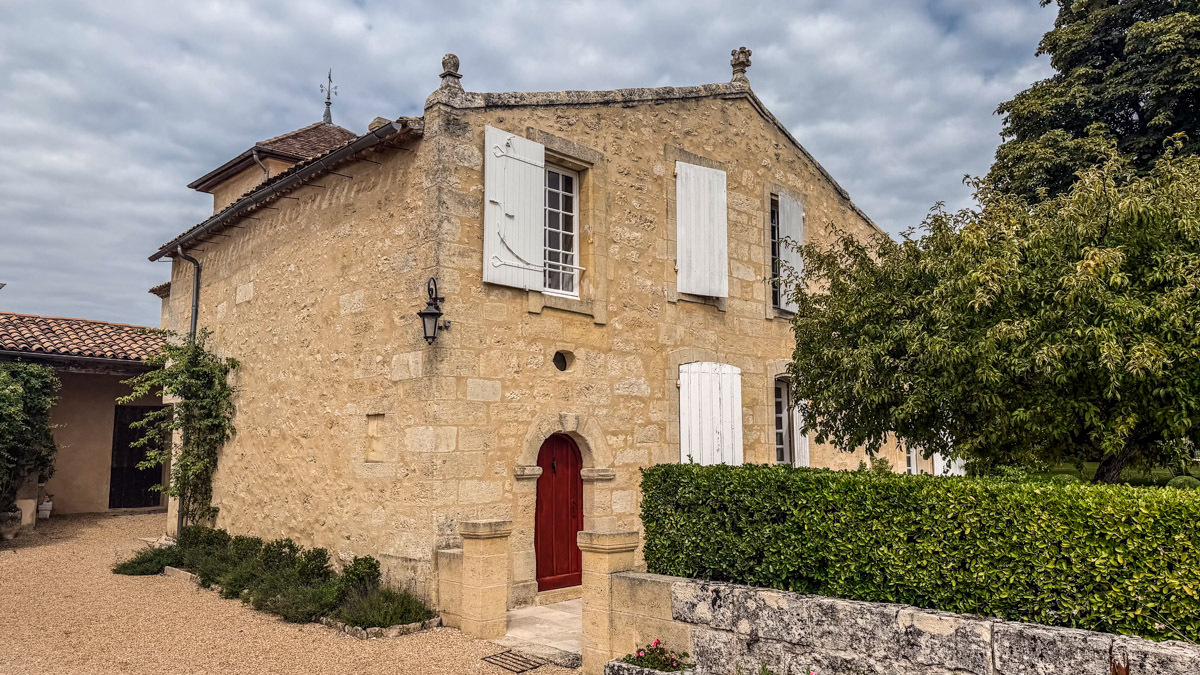
La Serre is located in the Fongaban valley, which looks over towards Pavie-Macquin. Trotte Vieille also owns a few plots in the same valley. The site has probably been planted with vines since Roman times; there is evidence that Franciscan monks cultivated grapes here in the fifteenth century for the Couvent de Cordeliers. Shaded behind a large cedar, the bijou château itself was constructed by Romain de Labayme in the seventeeth century. The name “Serre” comes from French for “hothouse,” inspired by the property’s south-facing, sun-drenched slopes. The vineyard passed through several families’ hands: the Marcons from 1868, then Albert Macquin, who purchased and absorbed it into Château Pavie in 1887. The 1898 edition of Féret lists the cru as “Ch.-La-Serre et Puygenestou.” According to La Serre’s website, Yves de Coulon took ownership beginning in 1948, though perusing my Féret guide from 1949, it lists one Pierre Charlot. Whoever was the owner, they must have thrown in the towel after the devastating freeze in the winter of 1956 that killed so many of the region’s vines.
That year, Bernard d’Arfeuille bought La Serre. The d’Arfeuille family’s roots on the Right Bank run deep, having installed themselves in Libourne in the eighteenth century. Bernard d’Arfeuille’s wife, Martine, co-owned and served on the board of Cheval Blanc up until 1998. The family also owned La Pointe in Pomerol.
Bernard’s son, Luc d’Arfeuille, took over at La Serre in 1970 and was celebrating his 91st birthday when I arrived at the estate. It was a pleasure to hear him recalling his early years at La Pointe, and I sincerely hope to be in as fine a fettle if I reach my tenth decade. Incidentally, his wife, Béatrice, served as mayor of Saint-Émilion between 1989 and 2001. In 2012, Luc was joined by his nephew, Arnaud d’Arfeuille, who runs the family’s two estates, La Serre and Château Tessendey (in Fronsac). His wife is the granddaughter of the merchant — and to my mind, one of Bordeaux’s finest writers — Bernard Ginestet.
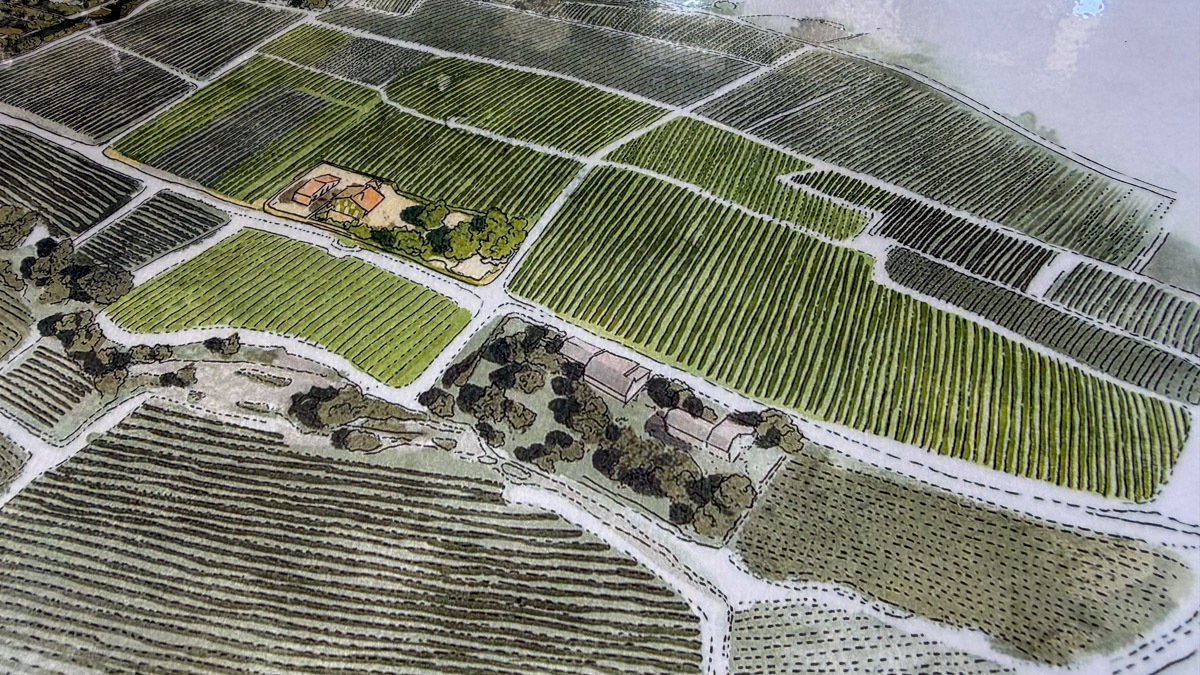
La Serre’s vineyard covers around seven hectares. The thin clayey topsoil ranges from 30 to 100 centimetres, underneath which lies the bedrock of asteriated limestone that imparts freshness and tension to the wines. Apart from the parcels in the Fongaban valley, there is another cluster on blue clay soils. As you would expect, a majority of vines are Merlot, though between 2015 and 2021, parcels were replanted with Cabernet Franc that currently represent 25% of plantings. According to Arnaud d’Arfeuille, the vineyard was fully reconstituted after the 2020 vintage.
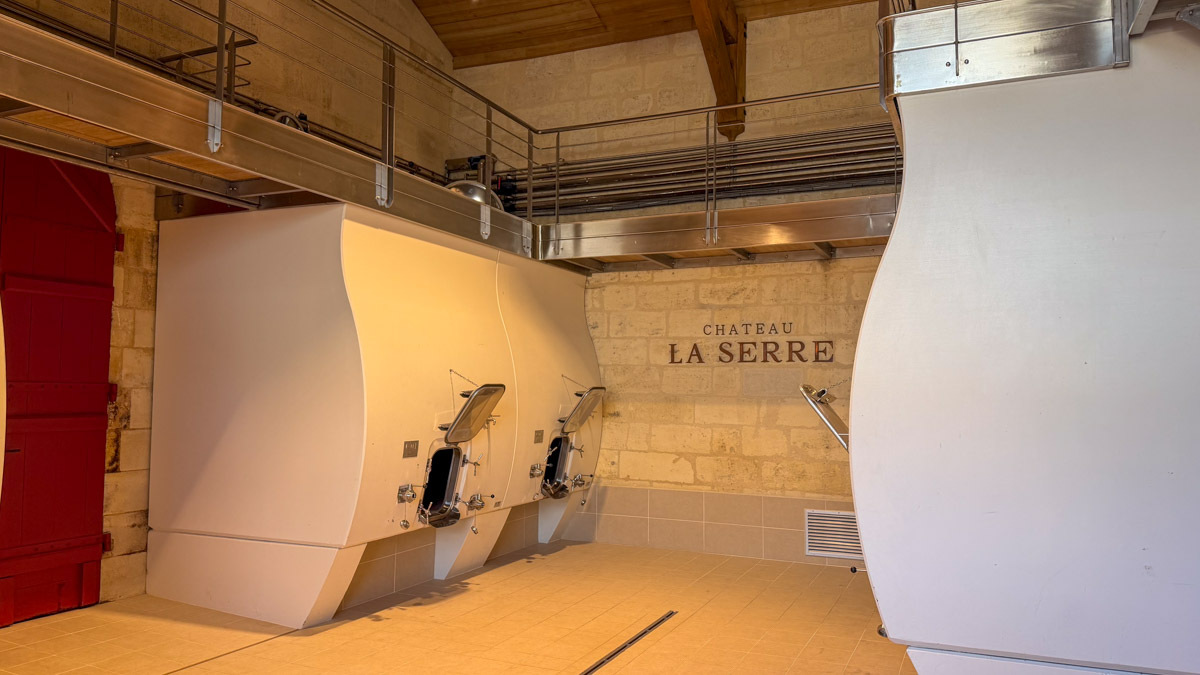
A new winery was constructed in 2018, with seven curved concrete vats from CLC in Italy, similar to those you find at Cheval Blanc — maybe no surprise given the family connection. These are tailored to match the size of individual plots, from 50 to 81 hectolitres, enabling more precise vinifications. Pressing is done with a small vertical press, and the wine matures in barrels from the Taransaud, Darnajou and Demptos cooperages for between 13 and 15 months with around 50% new oak. Consultant Thomas Duclos now helps oversee the winemaking.
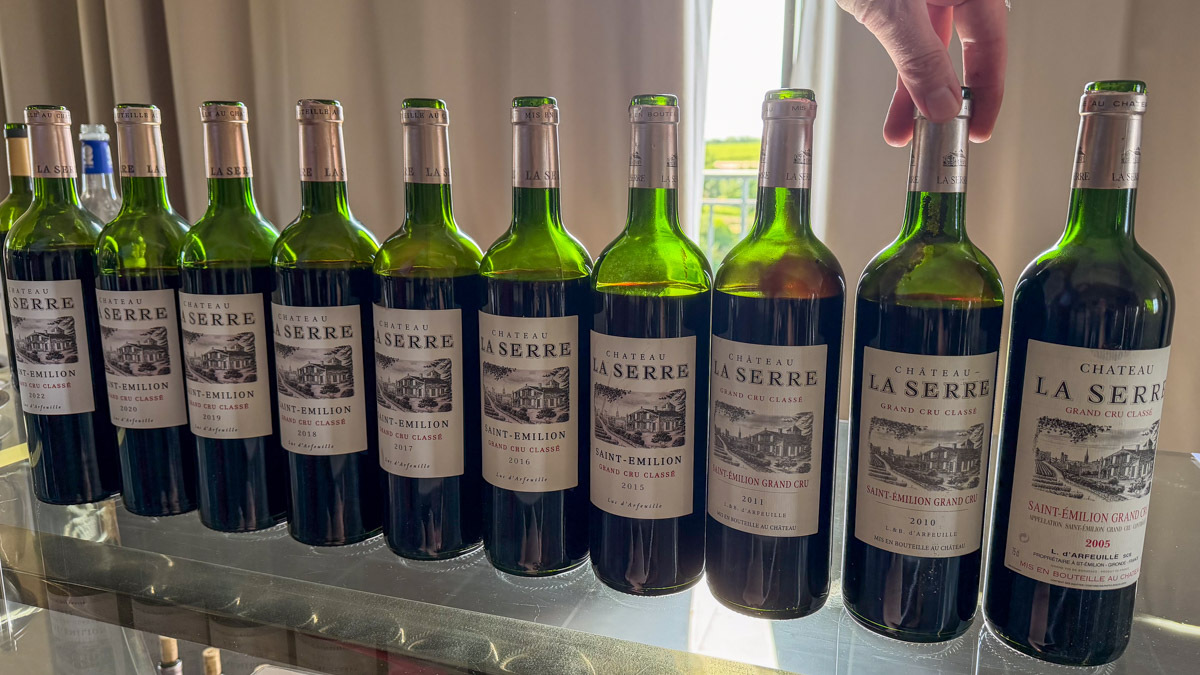
I tasted two mini-verticals of La Serre and Tessendey. La Serre is a straight-down-the-line, fleshy, ripe, red-fruited wine with a little more structure than its peers. That limestone is crucial in terms of counterbalancing richness, something that will inevitably become more important in light of climate change. Improvements in the vineyard and a tilt towards Cabernet Franc certainly imbue La Serre with greater complexity. Indeed, the wine seemed to step up a gear with more dimension and nuance around 2019/2020, peaking with the 2019 and 2022 vintages that both deserve time in bottle — five to seven years, preferably. Tessendey is also worth a look, especially considering impressive showings from the 2019 and the superb 2020.
© 2026, Vinous. No portion of this article may be copied, shared or redistributed without prior consent from Vinous. Doing so is not only a violation of our copyright but also threatens the survival of independent wine criticism.
You Might Also Enjoy
Hot Body, Cold Blood: 2025 Bordeaux En Primeur, Neal Martin, May 2026
2025 Bordeaux En Primeur: Le Freak, Antonio Galloni, April 2026
2023 Bordeaux: Signed, Sealed, Delivered, Antonio Galloni, March 2026
Bordeaux 2023 in Bottle: Coming Around Again, Neal Martin, February 2026
Event Horizon: Bordeaux 2024 Primeur, Neal Martin, May 2025