
Browse using the new Vinous website now. Launch →
Printed by, and for the sole use of . All rights reserved © 2015 Vinous Media
2023 Bordeaux: Signed, Sealed, Delivered
BY ANTONIO GALLONI | MARCH 13, 2026
Left Bank: Saint-Estèphe | Pauillac | Saint-Julien | Margaux | Moulis and Listrac | Pessac-Léognan and Graves | Left Bank Satellites | Sauternes
Right Bank: Pomerol | Saint-Émilion | Right Bank Satellites
Bordeaux’s bottled 2023s enter the world during an especially volatile time. I say “enter” because over the last decade or so, the market for Bordeaux wines has changed radically. En primeur is relevant only for a few dozen wines that might appreciate significantly from the time they are first offered from barrel. That applies to fewer and fewer wines with each passing vintage. For all other properties, which means the overwhelming majority, the real market is the market for bottled, finished wines.
Typically, an article like this would lay out a summary of growing conditions and then extrapolate how various properties performed. Simple enough, right? Well, it used to be, when virtually all properties had the same means, both technical and financial. Today, the gap between well-financed estates and those with limited economic resources has never been wider. In simple terms, quality is increasingly a function of chateaux-specific factors rather than weather. This is especially evident in challenging vintages, years in which conditions push vineyard managers and technical directors to the maximum. Readers are better off focusing on specific chateaux they like rather than giving too much importance to how good or not any given vintage is perceived to be based on the weather.
In short, my thinking on 2023 has not changed much over the last two years. It’s a year with many highlights and a lot of very good wines. The peaks don’t reach the highest of highs, but the best wines come close.
“It was a very warm vintage, so the goal was to preserve freshness,” Vincent Millet explained at Calon Ségur. “We picked the Merlots especially early. In the winery, our goal was to be as gentle as possible during vinifications and élevage, where we favored low-impact barrels.”
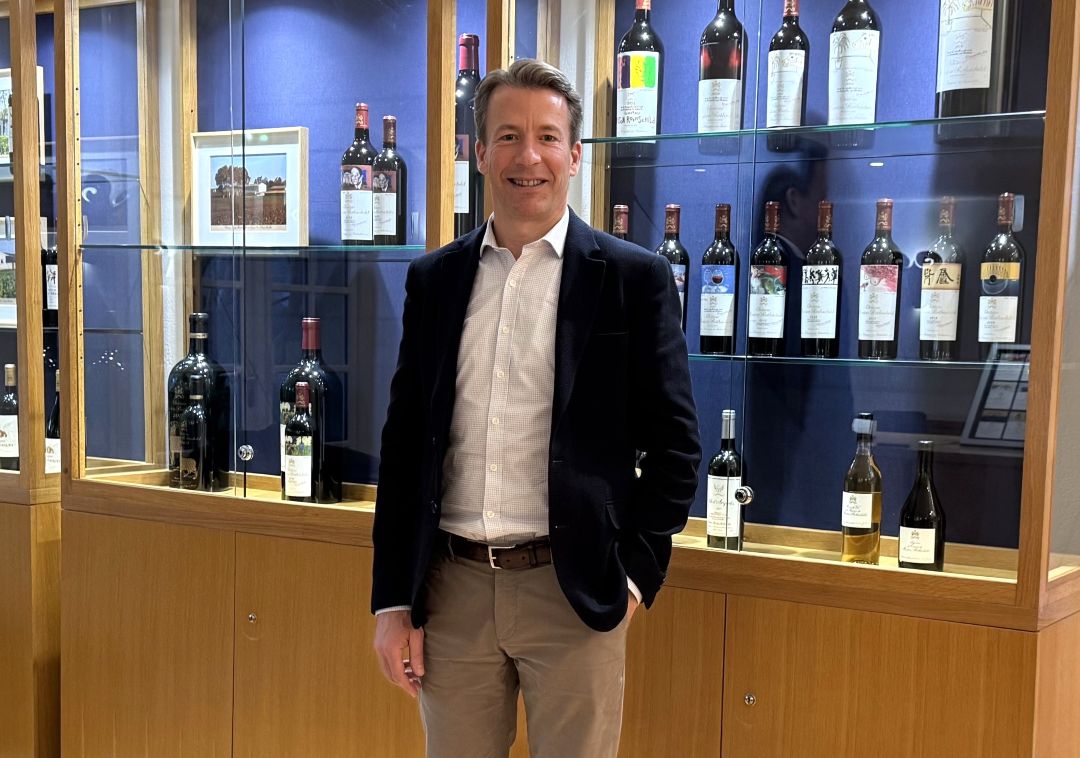
Technical Director Jean-Emmanuel Danjoy and his team at Mouton-Rothschild made one of the wines of the vintage.
The Growing Season & Wines
The details of the growing season have obviously not changed in the last two years. Much of this section is based on my article, Bordeaux at the Crossroads: 2023 En Primeur.
Two thousand twenty-three was the hottest year on record in France, although that was not the case in Bordeaux. The growing season got off to an early start. A dry winter and warm temperatures in March led to early bud break. Flowering took place under especially favorable weather as vines set a generous crop. June brought heavy rain and elevated temperatures—unfortunately, the very conditions that are ideal for mildew. Vineyard managers had to be especially vigilant and ready to intervene quickly, decisively and often with greater frequency than in most years. Compared to other recent vintages with similar disease pressure, damage from mildew was relatively contained, at least at the top estates.
Farming costs inevitably increase in challenging vintages, those where greater work is required. Some proprietors have the financial wherewithal to absorb those costs. But not all do. In the face of a weak market and a world where so much feels uncertain, only those owners with plenty of resources and a clear vision for the future can make the difficult decisions needed in years like 2023.
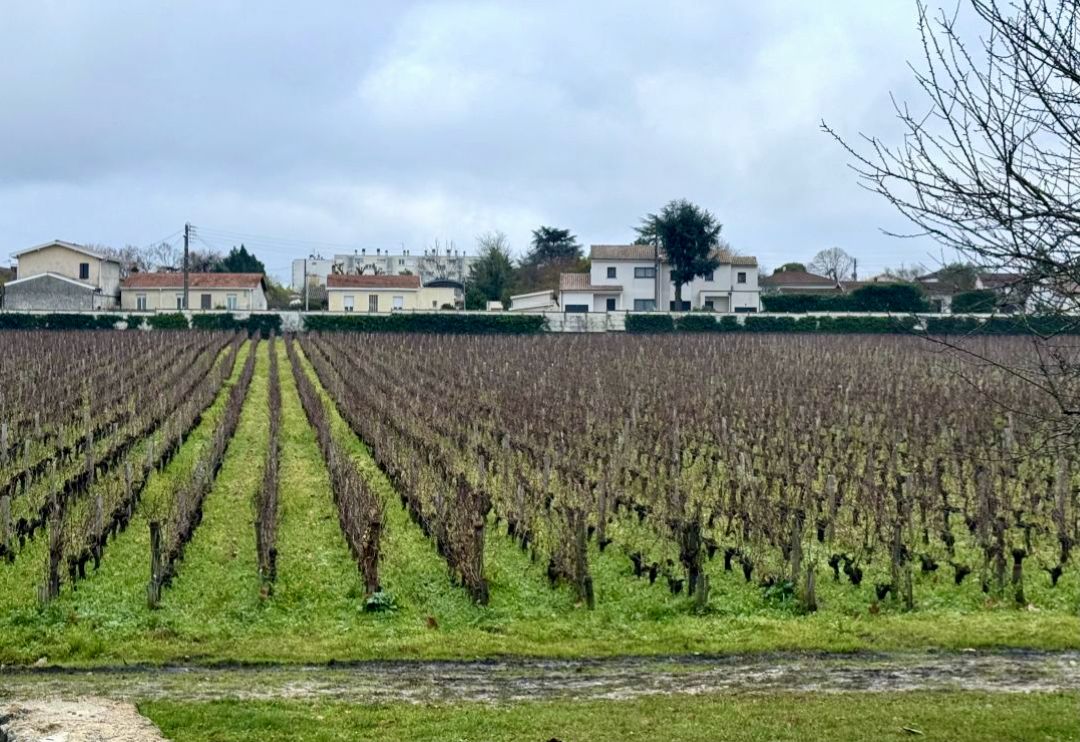
The walled-in vineyard at Les Carmes Haut-Brion, an
example of a world-class vineyard nestled in a suburban neighborhood.
“We had to treat frequently,” Technical Director Juliette Couderc told me at L’Évangile. “The key was really managing crop loads on different types of soils at the property. We had ten people focused just on this task. Ultimately, our yields were higher for Merlot than Cabernet Franc,” she added. Technical Director Guillaume Pouthier at Les Carmes Haut-Brion shared a similar view: “The whole year came down to managing water in the vineyards. We had to make very specific decisions for each site pretty much in real-time as the season unfolded.”
The rest of the summer was relatively cool and lacking in sunlight, to the point that winemakers started to worry if fruit would ripen properly. "We were unsure of quality all the way through August because vegetative growth continued," CEO Thomas Duroux explained at Palmer, echoing the thoughts of many of his colleagues. From mid-August, two heat waves and well-timed rains caused the outlook to shift. “It was hot and dry, but also quite cloudy during the middle of August,” Henri Lurton relayed at Brane-Cantenac. "We had some issues with mildew. That final blast really changed the style of the year.”
“August storms were incredibly localized,” Technical Director José Sanfins explained at Cantenac Brown, just outside the château’s gleaming new winery. “For example, one parcel might have gotten some rain while the adjoining blocks saw none.” This further heightened irregularity in ripening. Cantenac-Brown provides a telling example of how technology is shaping so many wines today. Working with much smaller fermentation tanks, the team was able to harvest in micro-picks, bringing in only fruit that was ripe on any given day. In the past, larger fermentation tanks obligated the team to harvest the larger volumes required to fill those tanks, inevitably leading to compromises in the field and then decisions in the winery to compensate. As a general rule of thumb, today’s largest tanks correspond in size to the smallest from the previous generation. Here, too, the ability of some owners to invest in new winemaking facilities makes an enormous difference at a time when weather patterns are shifting from historical norms.
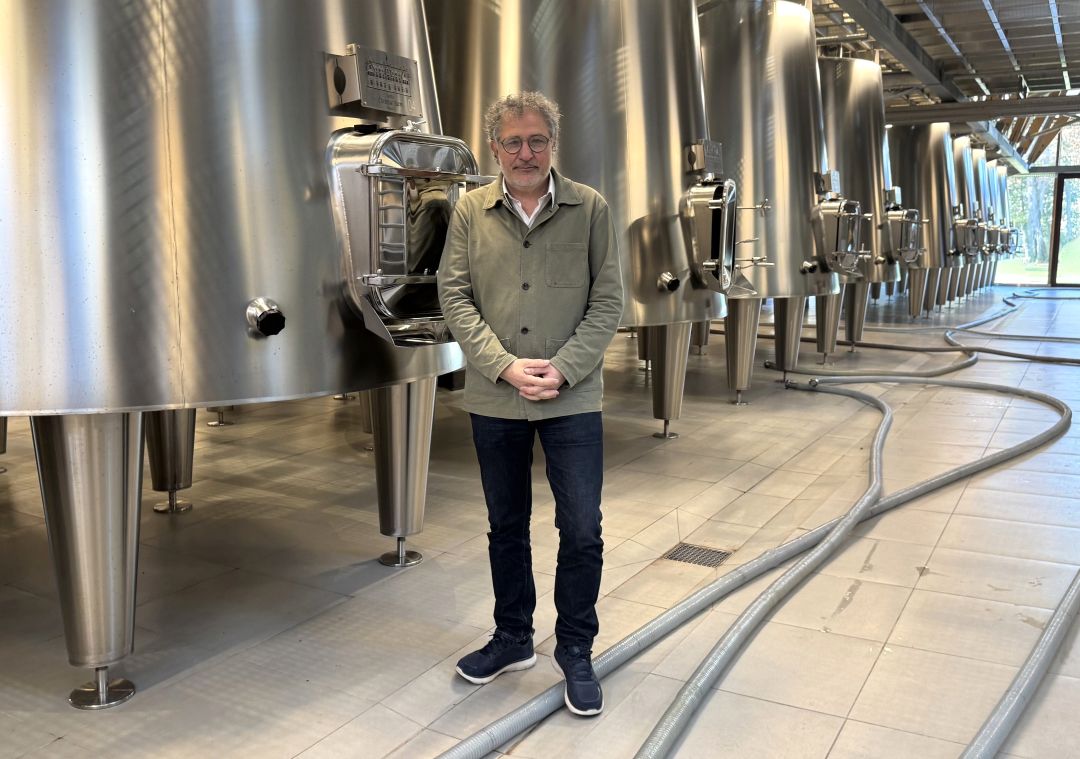
Technical Director José Sanfins in the new Cantenac-Brown winery.
Green harvesting was critical, especially for the Merlots, to compensate for large berry sizes and high yields. Forecasts called for heavy rain around September, as much as 100 millimeters. Some estates picked ahead of the rains, while others waited it out. As it turned out, the total amount of rainfall was a fraction of that. “We picked a few lots ahead of the rains,” Guillaume Thienpont told me at Vieux Château Certan. “Ultimately, none of those lots made it into the Grand Vin.”
With a few exceptions, yields are generous. This is especially true in the more prestigious appellations, as properties generally have the financial means to deal with challenging meteorological conditions. Production is quite a bit lower in satellite appellations, where estates typically work with much tighter budgets.
Yields are most often expressed as hectoliters per hectare, a measure of volume of wine per unit of surface area. On a single property basis, this measurement can be deceptive, as it does not consider several key factors, such as vine density and missing plants. A more accurate description of yields is production per vine, but that metric is not commonly used. Nevertheless, hectoliters per hectare is useful when looking at appellations—as the influence of outliers will be lessened in a group—and for comparing production across vintages at either the estate or appellation level. In my view, the relatively high yields of 2023 are one of the reasons many wines exhibit very fine, almost classical, balance.
In the cellar, many winemakers opted to bleed the musts (saignée) to enhance concentration for their Merlots. Fermentations were cool and long in the style that has become the norm in Bordeaux. Winemakers reported that the wines extracted easily. “We had high solid-to-juice ratios,” Technical Director Olivier Berrouet explained at Petrus. He added, “Typically, we have 3 grams per liter of tannin. In 2023, we had 4. The goal was to control extractions through longer macerations and slower, more gradual pumpovers.”
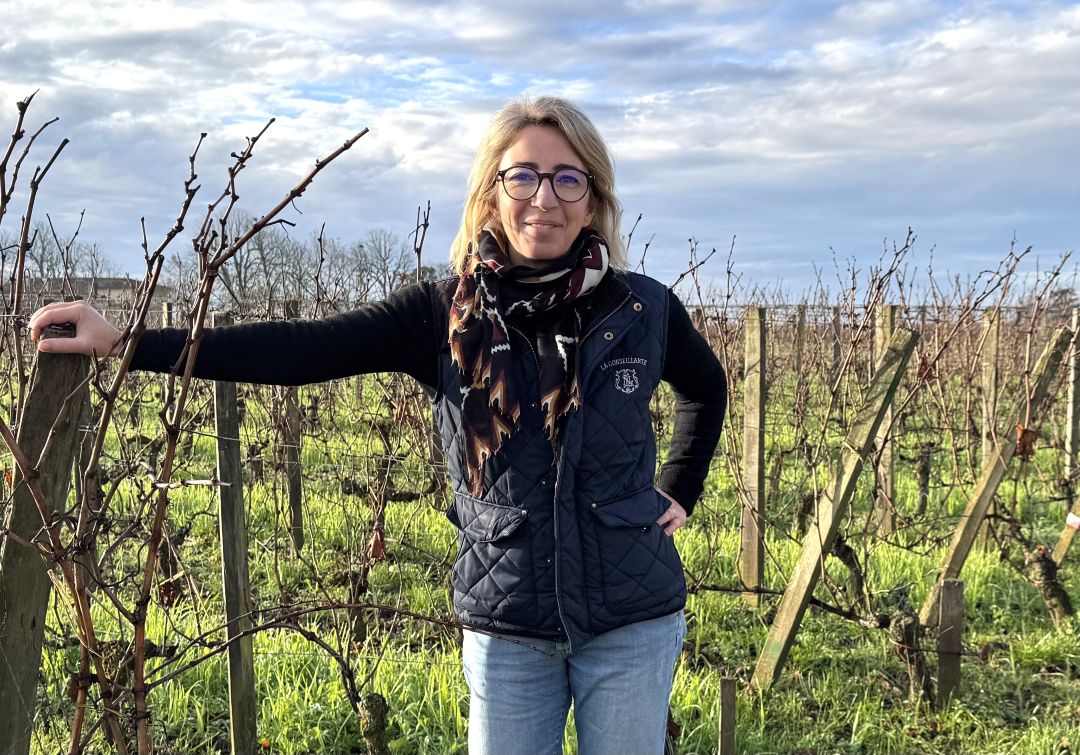
Technical Director Marielle Cazaux and her team made one of the wines of the vintage at La Conseillante.
The 2023s from Bottle
Now in bottle, the finished 2023s have turned out largely as I anticipated. There are some surprises, which is always the case, as en primeur samples capture wines at a very early stage. Selection was key. For example, at Montrose, the Grand Vin represents just 35% of the estate’s production and is focused on the château’s historic Cabernet Sauvignon parcels in Saint-Estèphe’s Terrasse IV.
The best 2023s are intensely aromatic and perfumed. Many wines are marked by bright acids, vibrant fruit and polished tannins. The wines often present the generous fruit that is typical of warmer years, but with more modest alcohols than what has become the norm in Bordeaux in very warm vintages of the last 25 years. The stylistic shift that is currently underway at many leading properties is another factor that drives the character of the wines. This is something that can’t be underestimated. Pichon Baron, Lascombes and Stephan von Neipperg’s La Mondotte and Canon-la-Gaffelière come to mind as wines that offer much more precision and vibrancy than in the past, to a degree that often supercedes the personality of specific vintages.
On the Left Bank, Cabernet features more heavily in blends than it does in most years because Merlot was more impacted by mildew and dilution. There are plenty of stars on the Right Bank, too. It is a vintage with very clear markers of place. For example, within the Moueix portfolio, Hosanna and Trotanoy are archetypes—wines that are exactly what they are supposed to be. The same is true of several of the top performers. Where the vintage is less successful, the 2023s can feel light and/or vegetal.
Highlights
Choosing one or two favorites is next to impossible in 2023. These are a few wines that really impressed:
Beau-Séjour Bécot – A stellar wine from proprietors Juliette Bécot and Julien Barthe.
Cos d’Estournel – An exceptional wine that balances textural richness and vibrancy with modest alcohol.
Ducru-Beaucaillou – All class and finesse.
Figeac – A grand Figeac that showcases the personality of a Saint-Émilion with strong Cabernet/Left Bank inflections.
Giscours – An epic wine from one of Bordeaux’s new stars.
La Mission Haut-Brion – A rare Grand Vin with a high percentage of Cabernet Franc.
Le Pin – Seamless, elegant and incredibly polished.
Mouton-Rothschild – A truly moving Mouton.
Palmer – As memorable as it was en primeur.
Suduiraut – A total looker. Contemporary Sauternes at its most profound.
Sleepers
While famous wines get most of the attention, Bordeaux is brimming with wines that seldom see much of the spotlight. Many of these wines offer exceptional quality while also delivering tremendous value and pedigree.
Belgrave – This Haut Médoc estate just outside Saint-Julien turned out a magnificent 2023.
Clos du Marquis – A very strong vintage for this Saint-Julien.
Clos Floridène – The red is especially fine in 2023, but both wines are superb.
Couhins – One of the most under-the-radar properties in Bordeaux.
Doisy-Daëne Blanc Sec – A new standard for dry whites in Bordeaux.
Ferrande – Superb quality and an exceptional value.
Gloria – One of the most consistently delicious and affordable wines in Bordeaux.
Les Perrières – A captivating effort from the Guinaudeau family.
Phélan Ségur – Delicious, affordable and ageworthy. Only Bordeaux can make wines like this.
Samion – The Berrout family’s Lalande-de-Pomerol leads the way in a range of exquisite wines.
I tasted most of the wines in this report in Bordeaux in December, with follow-up tastings in my office in January and February 2026. A handful of late-arriving samples and a few family matters resulted in this article being published a bit later than I would have otherwise preferred.
© 2026, Vinous. No portion of this article may be copied, shared or redistributed without prior consent from Vinous. Doing so is not only a violation of our copyright but also threatens the survival of independent wine criticism.
You Might Also Enjoy
Bordeaux 2023 in Bottle: Coming Around Again, Neal Martin, February 2026
Event Horizon: Bordeaux 2024 Primeur, Neal Martin, May 2025
2024 Bordeaux En Primeur: The Razor’s Edge, Antonio Galloni, April 2025
A Place Beyond Praise: Bordeaux 2022, Neal Martin, February 2025
2022 Bordeaux in Bottle: Living in the Present, Antonio Galloni, January 2025
The Dalmatian Vintage: Bordeaux 2023, Neal Martin, April 2024
Bordeaux at the Crossroads: 2023 En Primeur, Antonio Galloni, April 2024
Show all the wines (sorted by score)
- Adaugusta
- Alcée
- Angélus
- Arnauld
- Ausone
- Bad Boy
- Badette
- Barde-Haut
- Barrail Saint André
- Batailley
- Beaumont
- Beauregard
- Beau-Séjour Bécot
- Beauséjour J. Duffau-Lagarrosse
- Beau-Site
- Bel-Air (Lussac-Saint-Émilion)
- Bélair-Monange
- Bel-Air (Pomerol)
- Belgrave
- Bellefont-Belcier
- Berliquet
- Beychevelle
- Bonalgue
- Bourgneuf
- Bouscaut Blanc
- Boutisse
- Branaire-Ducru
- Branas Grand Poujeaux
- Brane-Cantenac
- Cadet-Bon
- Calicem
- Calon Ségur
- Canon
- Canon La Gaffelière
- Canon-Pecresse
- Cantelys
- Cantenac Brown
- Cantin
- Capbern
- Cap de Faugères
- Cap d'Or
- Capet-Guillier
- Cap Saint-Georges
- Carlmagnus
- Cartillon
- Castera
- Certan de May
- Chambrun
- Chante Alouette
- Charmail
- Chasse-Spleen
- Château des Sabines
- Chauvin
- Cheval Blanc
- Cheval Noir
- Clarisse
- Claud-Bellevue
- Clerc-Milon
- Clinet
- Clos Badon-Thunevin
- Clos Beauregard
- Clos Bertineau
- Clos de la Molénie
- Clos de la Vieille Église
- Clos de l'Oratoire
- Clos de Sarpe
- Clos des Jacobins
- Clos des Lunes
- Clos du Clocher
- Clos du Marquis
- Clos du Roy
- Clos Floridène
- Clos Fourtet
- Clos L'Église
- Clos Lunelles
- Clos Manou
- Clos Marsalette
- Clos Puy Arnaud
- Clos René
- Clos Romanile
- Clos Saint-Julien
- Clos Saint-Martin
- Clos Saint-Vincent
- Clos Vieux Taillefer
- Corbin
- Cos d'Estournel
- Cos Labory
- Côte de Baleau
- Couhins
- Coutet
- Couvent des Jacobins
- Croix Cardinale
- Croix de Labrie
- d'Agassac
- d'Aiguilhe
- Dalem
- d'Arce
- d'Armailhac
- Dassault
- de Candale
- de Carles
- de Chantegrive
- de Fieuzal
- de Fonbel
- de la Cour d'Argent
- de la Huste
- de Malleret
- de Millery
- de Pez
- de Pressac
- de Sours
- des Rêves
- Destieux
- Deyrem Valentin
- Doisy-Daëne
- Domaine de Cambes
- Domaine de Chevalier
- Domaine de la Solitude
- Domaine de l'Aurage
- Domaine de L'Eglise
- Domaine des 4 Vents
- Domaine Simon Blanchard
- Duclos
- du Courlat
- Ducru-Beaucaillou
- Duhart-Milon
- Durfort-Vivens
- Enclos de Viaud
- Enclos Tourmaline
- Faizeau
- Faugères
- Fayat
- Ferrande
- Ferrande Blanc
- Ferrière
- Feytit-Clinet
- Figeac
- Fleur Cardinale
- Fonbadet
- Fonplegade
- Fonroque
- Fontenil
- Font Renard
- Fougas
- Fourcas Dupré
- Franc Lartigue
- Franc-Mayne
- Garraud
- Gazin
- Giscours
- Gloria
- Grand Barrail La Marzelle Figeac
- Grand Corbin Despagne
- Grand Destieux
- Grand Faurie
- Grand-Mayne
- Grand-Puy Ducasse
- Grand Village (Lafleur)
- Greysac
- Grissac
- Gruaud Larose
- Guadet
- Guillot-Clauzel
- Haura
- Haut-Bages Libéral
- Haut-Bages Monpelou
- Haut-Bailly
- Haut-Batailley
- Haut-Beauséjour
- Haut-Brion
- Haut-Brisson
- Haut Condissas
- Haut Gros Caillou
- Haut Rocher
- Hauts-Conseillants
- Haut Selve
- Haut-Simard
- Haut-Surget
- Haut Veyrac
- Hosanna
- Hostens-Picant
- Hyon La Fleur
- JCP Maltus - Laforge
- JCP Maltus - Le Dôme
- JCP Maltus - Mazerat
- JCP Maltus - Teyssier
- Jean Faure
- Joanin Bécot
- Kirwan
- Labégorce
- La Brande
- La Chénade
- La Clemence
- La Clotte
- La Commanderie
- La Communion
- La Confession
- La Conseillante
- La Création
- La Croix
- La Croix du Casse
- La Croix Lartigue
- La Croix St. Georges
- La Croix Younan
- La Dauphine
- La Dominique
- Lafaurie-Peyraguey
- Laffitte-Carcasset
- Lafite Rothschild
- Lafleur
- La Fleur
- La Fleur de Boüard
- Lafleur-Gazin
- La Fleur-Pétrus
- La Fleur Pourret
- Lafon La Tuilerie
- Lafont-Fourcat
- La Gaffelière
- La Garde
- La Grace Dieu
- Lagrange (Pomerol)
- Lagrange (Saint-Julien)
- La Grave
- Lagrave Martillac
- La Gurgue
- La Louvière
- La Marzelle
- La Mission Haut-Brion
- La Mondotte
- Lamothe-Bergeron
- Langoa Barton
- La Patache
- La Pointe
- Larcis Ducasse
- L'Argenteyre
- Larmande
- Laroque
- Larose-Perganson
- La Rose Perrière
- Larose-Trintaudon
- La Rousselle
- Larrivaux
- Larrivet Haut-Brion
- Lascombes
- La Serre
- Latour
- Latour à Pomerol
- La Tour de Mons
- La Tour Figeac
- Latour-Martillac
- Laujac
- Laurence
- La Violette
- Le Bonnat
- Le Bon Pasteur
- Le Boscq
- Le Chatelet
- Le Chemin
- Le Clos du Beau-Père
- Le Coteau
- Le Crock
- Lécuyer
- Le Gay
- L'Eglise-Clinet
- L'Enclos
- Léoville Barton
- Léoville Las Cases
- Léoville-Poyferré
- Le Pin
- Le Prieuré
- Les Carmes Haut-Brion
- Les Champs Libres
- Les Charmes-Godard
- Les Clauzots
- Les Cruzelles
- Les Gravières
- Lespault-Martillac
- Les Perrières
- Lestage Simon
- Les Trois Croix
- Les Valentines
- Le Thil
- L'Évangile
- Leydet-Valentin
- L'Hêtre
- L'If
- Liouner
- L'Isle Fort
- Liversan
- Loudenne Le Château
- Louis
- Lucia
- Lussac
- Lusseau
- Lynch-Bages
- Lynch-Moussas
- Lynsolence
- Magnan La Gaffelière
- Maine Chaigneau
- Malartic-Lagravière
- Malescot St. Exupéry
- Mangot
- Margaux
- Marjosse
- Marjosse Blanc
- Marquis d'Alesme
- Marquis de Terme
- Mauvesin Barton
- Mazeyres
- Meaume
- Meyney
- Milens
- Moine Vieux
- Monbousquet
- Moncets
- Mondesir-Gazin
- Monlot
- Monregard La Croix
- Montlabert
- Montlandrie
- Montrose
- Montviel
- Moulin du Cadet
- Moulinet
- Moulin Haut-Laroque
- Moulin Riche
- Moulin Saint-Georges
- Mouton Rothschild
- Nénin
- Olivier
- Ormes de Pez
- Palais Cardinal
- Palmer
- Passe Craby
- Patache d'Aux
- Pauillac by Pascale Peyronie (formerly (Chateau Pauillac)
- Paveil de Luze
- Pavie
- Pavie-Macquin
- Pavillon Beauregard
- Péby Faugères
- Petit Faurie de Soutard
- Petit Gravet Ainé
- Petit Soutard
- Petit-Village
- Petrus
- Pey La Tour
- Peymouton
- Peyrabon
- Phélan Ségur
- Pibran
- Pichon Baron
- Pichon-Longueville Comtesse de Lalande
- Pilet
- Plain-Point
- Plince
- Poesia
- Pontet-Canet
- Porte Chic
- Potensac
- Poujeaux
- Preuillac
- Prieuré-Lichine
- Prieuré Sainte-Anne
- Puyfromage
- Puygueraud
- Quintus
- Rahoul
- Rauzan-Ségla
- Reignac
- Reynon
- Reysson
- Rieussec
- Ripeau
- Roc de Calon
- Roc de Cambes
- Roc de Montpezat
- Rochers de Joanin
- Rollan de By
- Rol Valentin
- Ronan by Clinet
- Rouget
- Roylland
- Saamlong
- Saintayme
- Saint-Pierre (Saint-Julien)
- Samion
- Sanctus
- Sansonnet
- Seguin
- Simard
- Siran
- Smith Haut Lafitte
- Soutard
- Soutard-Cadet
- St. Georges Cote Pavie
- Suduiraut
- Tayac
- Tertre Roteboeuf
- Tessendey
- Todeschini
- Tour Bayard
- Tour de Capet
- Tour de Pez
- Tour des Termes
- Tour Maillet
- Tour Saint Christophe
- Tour Seran
- Trapaud
- Treytins
- Trianon
- Trigant
- Tronquoy (formerly Tronquoy-Lalande)
- Troplong Mondot
- Trotanoy
- Trotte Vieille
- Une Saison En Enfer
- Valandraud
- Valois
- Vieille Cure
- Vieux Château Certan
- Vieux Château Saint André
- Vieux Maillet
- Villa Bel-Air
- Villemaurine
- Vin Blanc de Rieussec
- Virginie Thunevin
- Vrai Canon Bouché
- Vray Croix de Gay