
Browse using the new Vinous website now. Launch →
Printed by, and for the sole use of . All rights reserved © 2015 Vinous Media
5 Savile Row
London W1S 3PB
United Kingdom
BY NEAL MARTIN | MAY 29, 2026
The Food:
Canapés: “Cheese & onion,” Louët-Feisser oyster, Isle of Barra cockles, Cornish bluefin tuna, Inverness langoustine
Orkney scallop
Singapore native lobster
Turbot “au poivre”
Dorset Sika deer
Colston Basset Stilton
Black truffle
Shizuoka crown melon
Tea & cake
Oswaldo 71%
Petits Fours
The Wines:
| 2024 António Maçanita Verdelho o Original | 92 |
| 2021 Momento Tinta Barocca | 90 |
| 2016 Philippe Pacalet Moulin-à-Vent | 92 |
Freshly minted two stars, gunning for a third. A wunderkind chef. Star-studded wine list. Award-winning sommelier. If ever a new restaurant was earmarked for the Vinous Table treatment, it is Row On 5. It ticks a lot of boxes. It also screws up a major one.
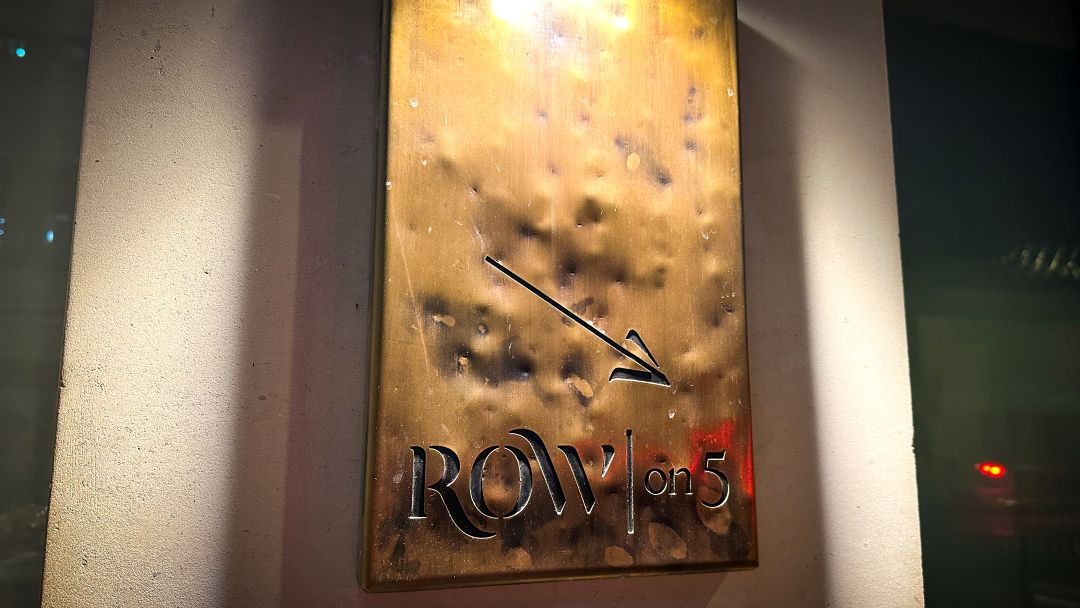
The exterior sign on Savile Row.
Row On 5 is the jewel in restaurateur Jason Atherton's crown. No points for guessing that the name is inspired by the address, though "row" is, in fact, a tailoring acronym for "refinement of work." That ethos underlies chef Spencer Metzger's cuisine. The Roux Scholar worked for a year at L'Enclume before establishing his name at The Ritz in 2021. That same year, he entered the ever-popular BBC competition “Great British Menu,” where Metzger was crowned Champion of Champions. Having upped sticks to Dubai, where he won two stars within six months, he returned to captain Row On 5 when it opened in November 2024.
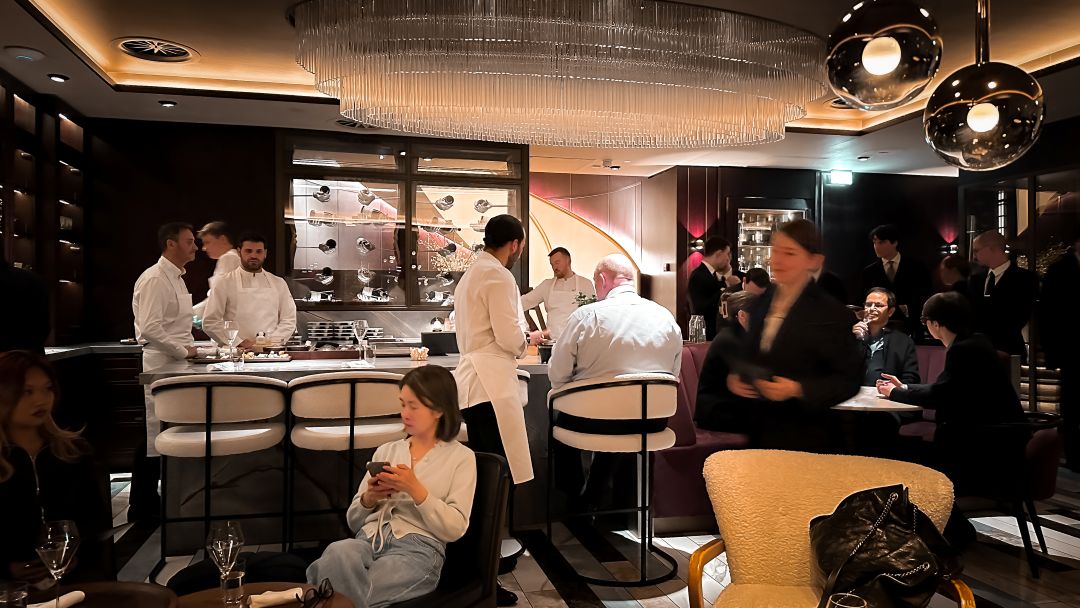
The basement reception area.
A Mayfair location is nothing new for a destination restaurant with big ambitions, but Savile Row is known for its tailored suits, not petits fours. Inner seams were measured here for many years before its gastronomic reincarnation. Now, they measure out ingredients. A discreet basement entrance belies the capacious two-floored space. Ring the doorbell, hand over your coats and…yes…I would like them dry-cleaned please. No joke—they actually do dry-clean coats as an homage to Savile Row’s past. Y you are escorted down to a buzzy reception area—a chic interior dressed for chic clientele, a bijou designer fireplace lending a touch of cosiness. To the right stands a marble island where a small armada of smartly dressed wait staff puts the final touches on amuse-bouches.
It looks like a million bucks. Must have cost more.
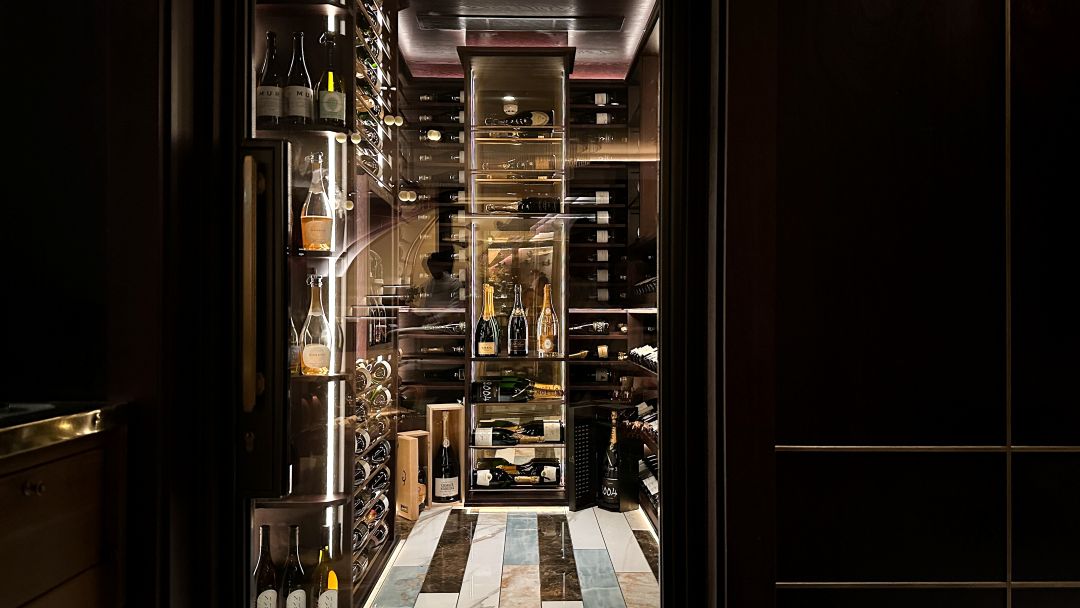
One of the wine cellars.
Before we sit down, Executive Sommelier Roxane Dupuy, fresh from winning this year's prestigious Michelin Sommelier Award, invites me to tour the cellars. Yes, plural. With a 2,400-strong wine list, there is a separate walk-in Champagne cellar plus a standalone glass cabinet housing dismembered silver hands, each brandishing a bottle of DRC. I was reliably informed that these hands are moulded from Jason Atherton's own, which I find just a tad creepy. We take our seats and set about the 15-course tasting menu at a cool £250 per head, similar to The Ledbury or Restaurant Gordon Ramsay—in other words, reassuringly expensive. Bet you it will cost more this time next year.
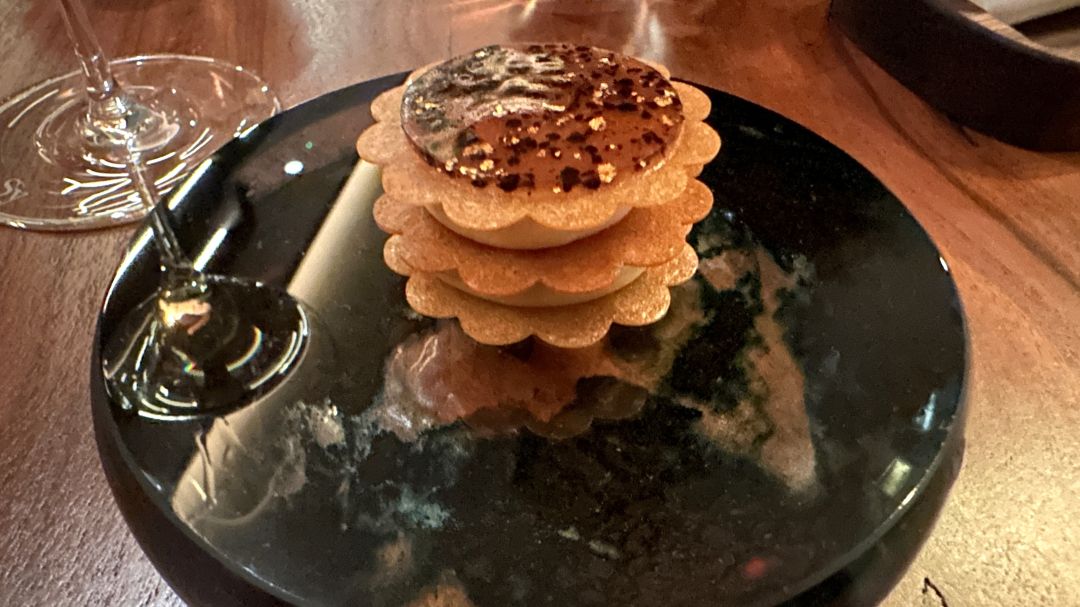
"Cheese & onion.”
Like many chefs these days, Metzger's dishes have a strong Japanese influence. Like at L'Enclume and many others at this rarefied level, there is only a single meat course. As such, you leave feeling “nicely full” rather than stuffed.
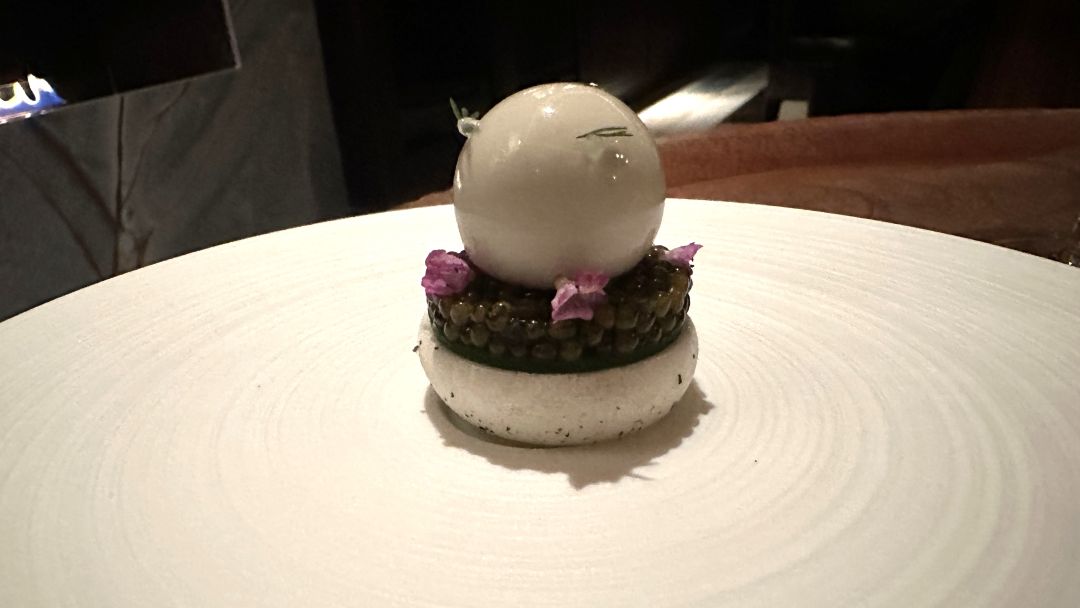
Louët-Feisser oyster.
Five canapés are served in the downstairs holding area. "Cheese & onion" is a rich way to begin: three onion crisps sandwiching Lincolnshire cheese and a Roscoff onion jam of remarkable sweetness. Delicious, though I personally might have placed it later in the meal. The first highlight is the Louët-Feisser oyster, fished off Carlingford on the east coast of Ireland. A small map presented at the table pinpoints the exact location, a bit of Heston Blumenthal-style theatre that is as playful as it is informative. Served with Osteria caviar from supplier N25, atop a miniature macaron with a thin sheet of Japanese nori in between, the oyster arrives shaped into a sphere that seems to pop in the mouth, the caviar and tartlet delivering a revivifying saltiness that conjures windswept coastlines. Stunning.
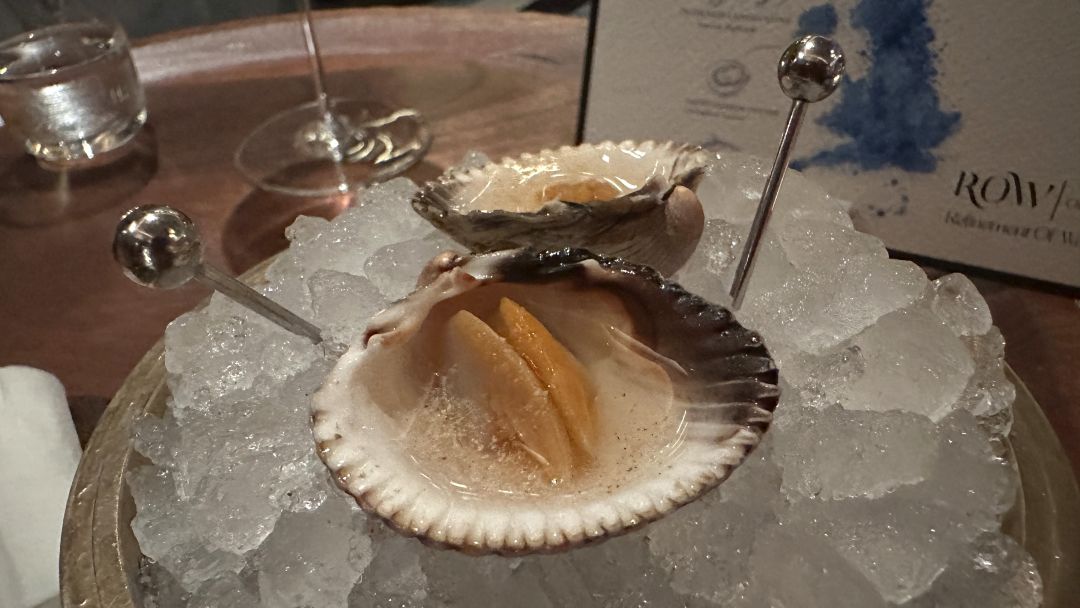
Isle of Barra cockles.
The cockles came from Isle of Barra and had been cooked in sake, served with reduced grapefruit juice and white Penja pepper. The cockles were a bit “wee,” i.e. too small. Its fleetingness kind of denuded the dish of flavour. Can I have that large please?
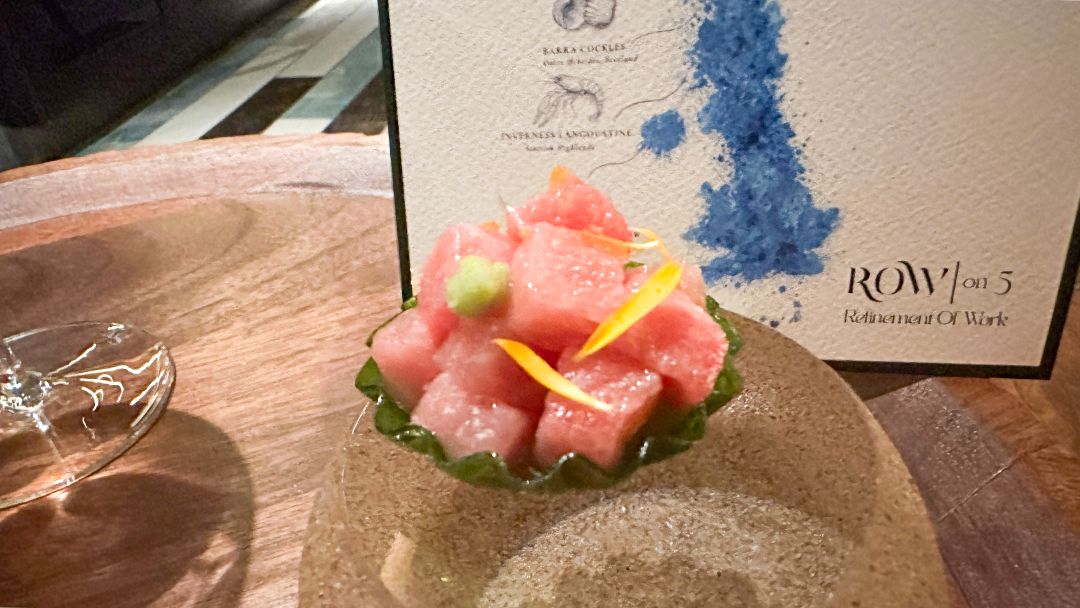
Cornish bluefin tuna.
The Cornish bluefin tuna was the second outstanding canapé. The tuna had been dried for nine or ten days and was served with ponzu cream and English wasabi in a seaweed tartlet. My bar is set high given the tuna I ate in Japan, and this really delivered—the flavour and texture were just heavenly. Tuna is all about sourcing the best. This was outstanding.
Lastly, the Inverness langoustine was served “in two parts,” the first downstairs and the second upstairs. The first langoustine came from the breast rather than the claws and was cooked in a shell stock with chawanmushi (Japanese custard) and shiso leaf. Very tasty, though perhaps not as memorable as the aforementioned oyster or tuna.
Canapés over, we are invited upstairs. We take the lift; our waiter takes the stairs and greets us at the top. With only 32 covers, there is plenty of space between tables, but I had pre-booked a counter seat. That was a great decision. Unless you plan to whisper sweet nothings into your lover's ear, bag a counter seat. The kitchen is completely open with no barrier whatsoever, allowing counter diners to eavesdrop on Metzger's intermittent exchanges with his brigade and observe him close-up as he surgically puts the finishing touches on each course. Behind him, his young team man their stations and occasionally emerge to present dishes. Waiting at my seat is a wax-sealed envelope with my name artfully handwritten on the front. A nice personal touch. Inside I found that evening's menu and quickly graffitied it with notes.
The music is a notch too loud for my liking. Background music is fine, but customers are not paying a small fortune to listen to someone's playlist. If music is to form a part of the experience, it must be curated. There is an art to the playlist, one that discreetly shapes a room's ambiance. Frankly, the choices are mundane. I love Oasis and the Stones, but Liam and Mick's vocals are intrusive and occasionally distracting.
Back to the menu. I am a bit surprised to discover that the five canapés actually formed the first of the 15 courses. We are already a third of the way through. Maybe I am quibbling, but this should be made clearer, especially as other restaurants at this level separate the amuse-bouches from the main event.
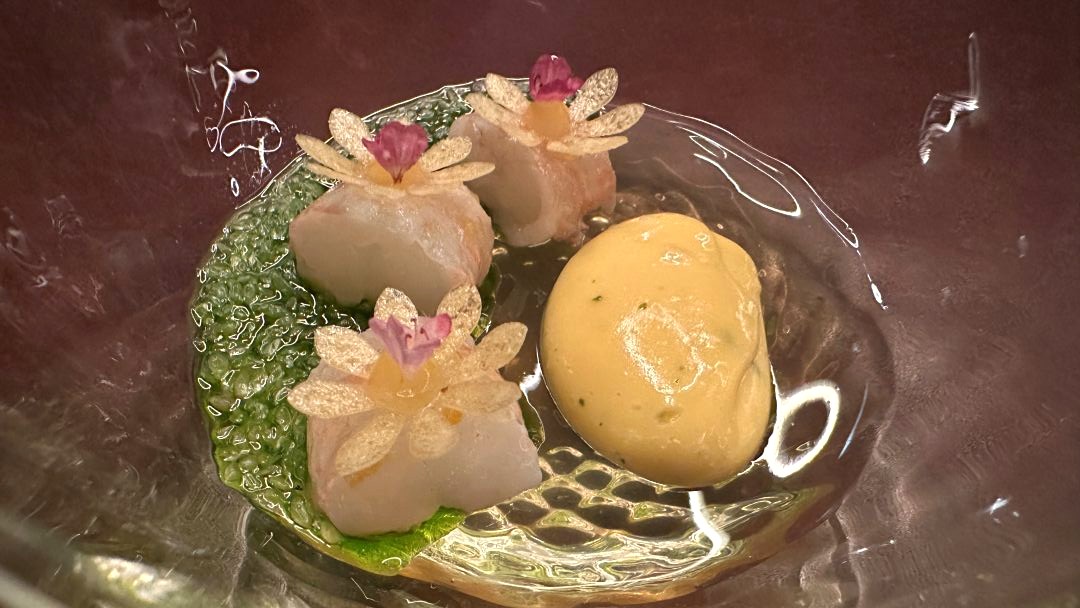
Inverness langoustine.
The second langoustine dish is one of the prettiest dishes I have set eyes upon. It is sliced and glazed, served with a salted duck egg sabayon, finger lime zest, shiso leaf and an Amela tomato jelly from Shizuoka. This second iteration is absolutely sublime, a kaleidoscope of texture and flavours, that sabayon to die for.
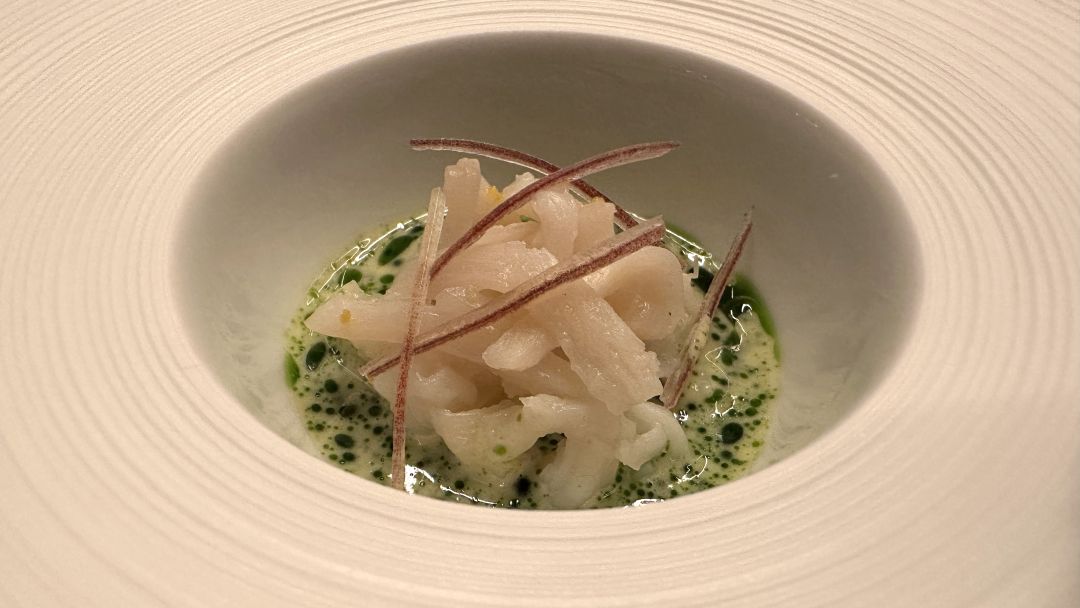
Orkney scallop.
Hot on its heels comes another breathtaking dish. The XL Orkney scallop is sliced into ribbons. We eat it like noodles with chopsticks engraved with our names, souvenirs to take home and a lovely personal touch. Cooked at 39°C and served with kanzuri chilli paste, shiso vinegar and myoga (Japanese ginger) flower, it has exquisite balance: subtle flavours discreetly gain intensity in the mouth, yet it is paradoxically imbued with lightness.
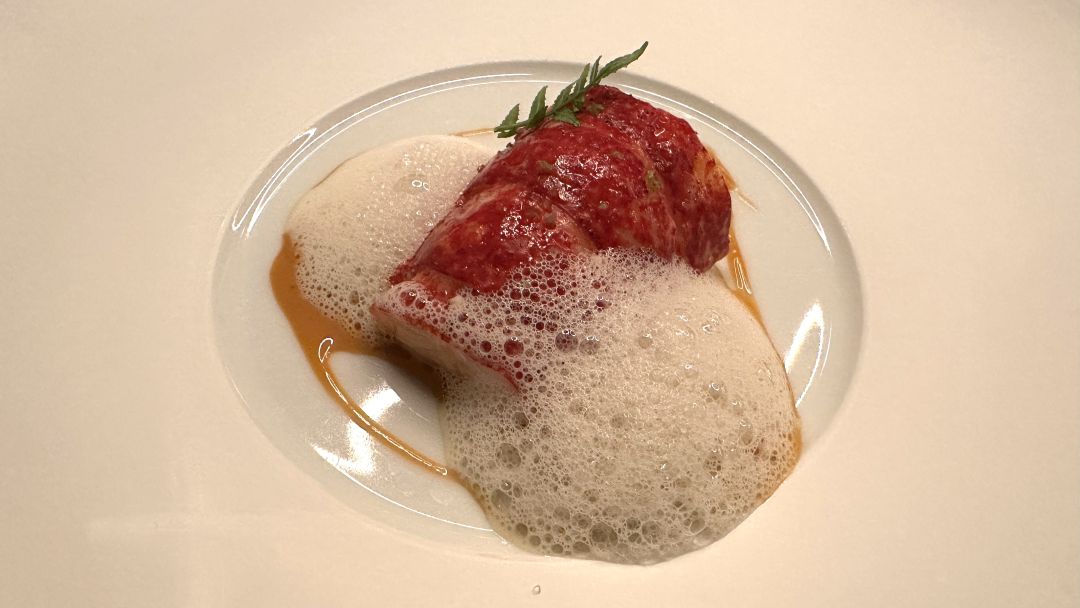
Singapore native lobster.
The Singapore native lobster is inspired by chilli crab, but the lobster tails are Cornish. It comes with a chilli lobster sauce and white miso foam. The lobster itself has just the right amount of chewiness and the foam proves a neat counterfoil.
The turbot "au poivre," the quotation marks signalling that it uses caviar rather than pepper, came with bonito flakes, lovage oil and hakurei (Japanese turnip), the fish sourced from Flying Fish and aged for four or five days. It was as good as you will find anywhere, the caviar lending a salinity that lifted all the ingredients, the kohlrabi supplying the requisite bitter edge. Alongside, Shokupan bread (Japanese milk bread) with a fermented honey butter provides the perfect doughy texture for mopping up the sauce.
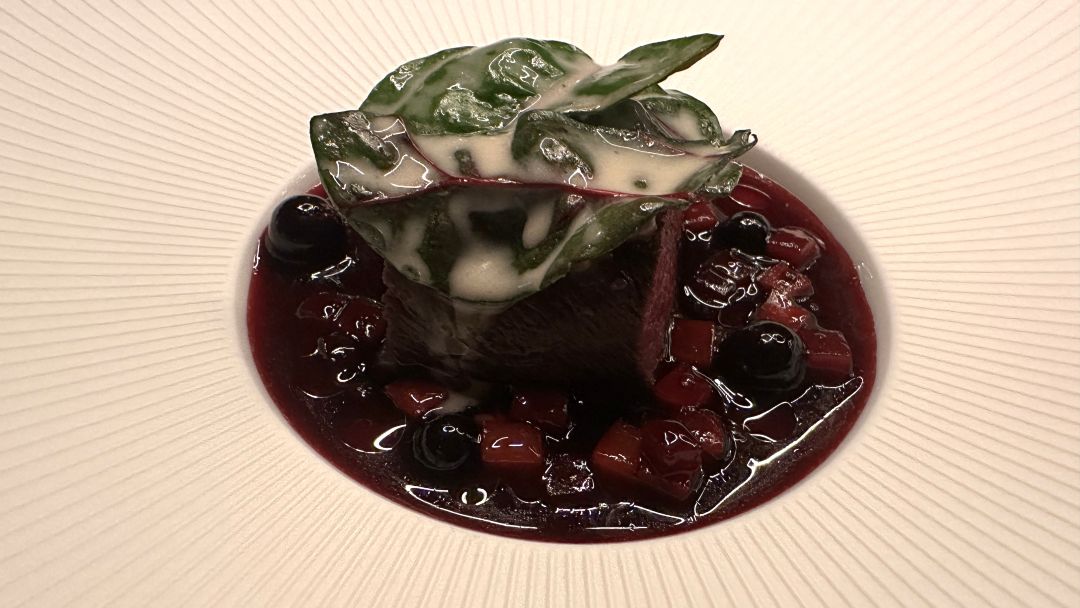
Dorset Sika deer.
The sole meat course is a Dorset-bred Sika deer with venison stock, blackcurrant, smoked bone marrow and sansho—pink, tender and beautifully cooked. I could quibble that the sauce is fractionally too rich, threatening to overshadow the wonderful meat, but overall this is a delight. Flanking it is an oxtail taro puff that has a lip-licking barbecue-like quality.
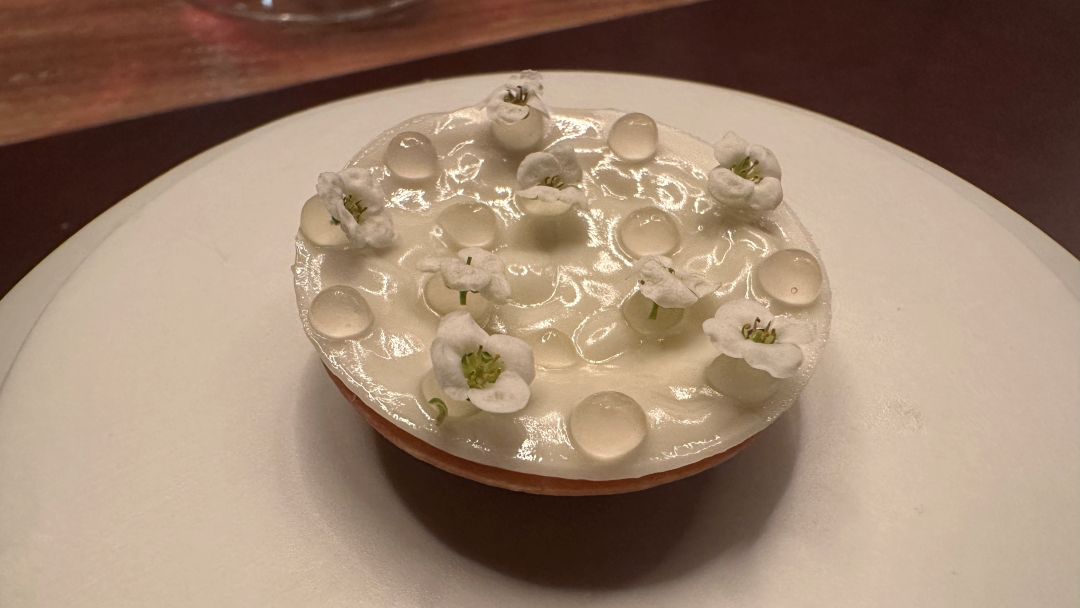
Colston Basset Stilton.
There is no cheeseboard at Row On 5, not that one is mandatory. Instead, an oat tartlet of Colston Bassett Stilton, handmade and aged three years by cheesemaker Billy Kevan in Nottinghamshire, is topped with white chocolate, apple cider gel and tiny white flowers. A warming melted quality marries perfectly with the pastry. The black truffle from Umbria comes with miso cream, toasted Marcona almonds and a barley mousse. Fabulous, though the almond flavours threaten to steal the limelight.
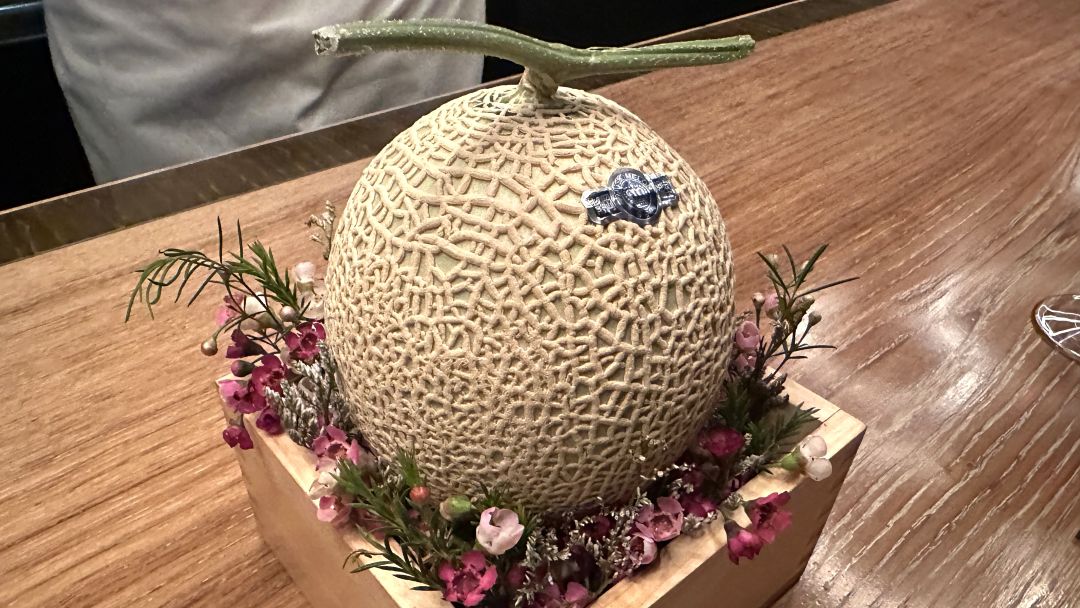
Shizuoka crown melon.
The Shizuoka Crown Melon is renowned the world over, commanding extraordinary prices in Japan and giving the false impression of an expensive country when it is quite the opposite. Grown on a one-tree, one-fruit basis in greenhouses to achieve a 14% sugar content, this delicacy is specially imported to the restaurant and served kakigori-style on ice shavings with salted Jersey milk. It is a dish of simplicity and restraint, though to be frank, I am not a passionate fan of melon and unlike others dishes, this did not quite move me. The dinner finishes back downstairs for "tea and cake": Earl Grey and bergamot madeleines, the Oswaldo 71%—a tartlet of chocolate with astonishingly intense flavours—and a miniature stand of petits fours.
Now, the wines. Dupuy hands me the list; she must have extraordinarily strong arms because it is four inches thick. This is a wine list with intent. Just about every icon is accounted for: Romanée-Conti, Leroy, Pétrus, Cuvée Cathelin, Dagueneau’s Astéroïd. Every country, not merely the obvious but esoterica from Syria, China and the Azores. Ancient vintages abound: Yquem 1927, Haut-Brion 1928, to name but two—Dupuy tells me all are sourced directly from producers. A large selection is available by the glass, not just entry-level labels but, for a commensurate supplement, Yquem and Pétrus. The Champagne selection alone takes several hours to leaf through. There are sections devoted to sake and orange wines, the latter divided into light and intense. (I choose neither.) There are mini-verticals of Prieuré-Roch, Château-Chalon and Hartmann's La Chapelle, and a wine from Luxembourg, a nod to Dupuy's birthplace. It is an astonishing list not just in size, but by its sheer scope.
What’s the catch?
The mark-ups are horrendous. Even by London's standards, these are among the most egregious I have encountered. Some, I calculated, are ten times their release price. An oenophile with a working knowledge of ex-cellar prices will find the list both temptation and punishment, like waving a bag of sweets in front of a sweet-toothed child and demanding their pocket money. For life. Unlike L'Enclume, Row On 5 is extremely resistant to corkage. I understand the reasoning, given the effort they put into sourcing and curating the list. Who am I to dictate how they run their business? And yet I am made to feel like easy prey, held hostage by my vinous passion, gouged for every hard-earned pound, supplementing the more abstemious diners around me. Other restaurants operate a discretionary corkage policy that appeases both sides: high mark-ups for those with deep pockets, relief for the minority of genuine oenophiles. At least the list's depth and breadth mean that those unwilling to spend the GDP of a small equatorial nation on fermented grape juice will find gems among the less expensive bottles. My white and red selections were just above three figures and delivered in the only place that counts.
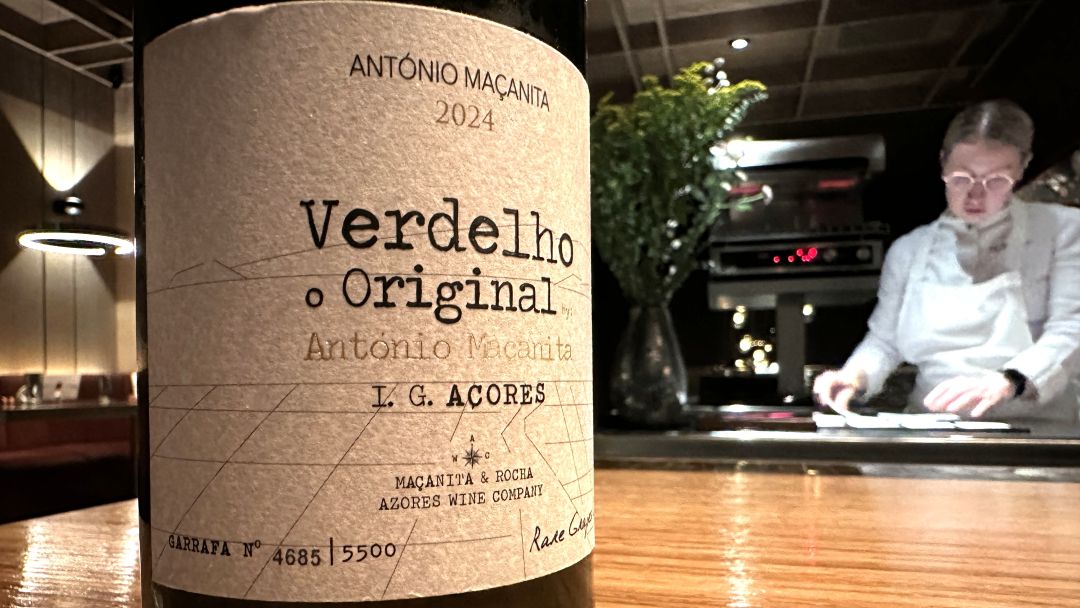
For the white, we venture to the mid-Atlantic island of the Azores. I believe this is the island's first review on Vinous, and hopefully not the last. It was so good I almost ordered a second bottle. The 2024 Verdelho o Original comes from the island of Pico, a UNESCO World Heritage Site, and was made by António Maçanita, co-founder of the Azores Wine Company. Grown on volcanic soils and naturally influenced by the ocean, the variety seems to thrive here. One sniff and your mind fills with visions of a roiling sea, crushed stone and sea spray, so beautifully defined and focused is the nose. The palate continues that theme, crisp on the entry with a pleasing cut of acidity. It is bright, lively and unapologetically saline with deft touches of Anjou pear and clementine on the finish. Wonderful.
For the red, I return to the Cape: the 2021 Tinta Barocca from Momento, which Dupuy decanted on my advice. Revisiting my earlier note, I think I was a touch mean to talented winemaker Marelise Niemann. The aromatics are more coalescent now, the 15% whole bunch imparting a lovely underlying pepperiness to the fleshy raspberry and blackcurrant fruit, which opens to reveal Provençal herbs with aeration. The palate is considerably more harmonious as well, the bitterness I found a couple of years ago now gone, leaving a finish that is velvety and sensual. Seek this out.
The gentleman next to us, with whom we struck up a conversation, suggests ordering a couple more wines by the glass. Fresh off my trip to Beaujolais, I order a 2016 Moulin-à-Vent from Philippe Pacalet that shows barely any sign of age. Bright red cherry and cassis leap from the glass, as though from the latest vintage. The palate delivers the weight and complexity you expect from this cru. Clean and fresh with pliant tannins on the finish, it is precisely what makes this region so compelling right now and disprovesthe theory that Beaujolais cannot age.
Row On 5's ambitions were clear from day one: two stars minimum, and with that achieved, how long before a third? The interior and ambiance cannot be faulted. Metzger is a preternaturally talented chef, and Row On 5 showcases his artistry and execution with a money-is-no-object approach to sourcing. The wine list, which you can peruse at leisure on their website, is brilliant, right down to the accompanying artwork and poems. In Dupuy, they have a sommelier of rare knowledge and approachability, a major talent who fully deserves her accolades. But the mark-ups stick in my craw. Though Row On 5 is not the only offender, as a wine lover, their pricing stops me from venturing toward more interesting selections and makes me feel, frankly, unworthy of being here. Wine should not exist solely as a means of keeping a restaurant afloat. I could countenance that if corkage were an option, but that is not my decision to make.
I collect my coat. Freshly dry-cleaned. My personalised chopsticks are safely in my bag. I still cannot shake the image of dismembered silver hands clutching bottles of DRC. Nor certain of the incredible dishes. Nor the wine prices.
© 2026, Vinous. No portion of this article may be copied, shared or redistributed without prior consent from Vinous. Doing so is not only a violation of our copyright but also threatens the survival of independent wine criticism.