
Browse using the new Vinous website now. Launch →
Printed by, and for the sole use of . All rights reserved © 2015 Vinous Media
Sekt: The Best Four-Letter Word
BY ANNE KREBIEHL MW | NOVEMBER 17, 2026
A Raised Bar
Lovers of fine fizz looking to broaden their horizons can now safely turn to Sekt. This has not always been the case, but the growing refinement of the top wines shows how much the category has moved forward. While ambition is evident across the board, real mastery from a reliable group of stalwarts shows that a proper bar has been set.
Varietal Standard-Bearers
Once again, the Sekts featured here cover the length and breadth of Austria and Germany. I took particular joy in the pure expressions of Chardonnay and Pinot Noir. All the top scores go to these traditional varieties or blends of them. A handful of pure Rieslings also enjoy top spots. Notably, Pinot Blanc is also performing well, with some surprisingly good wines in the running.
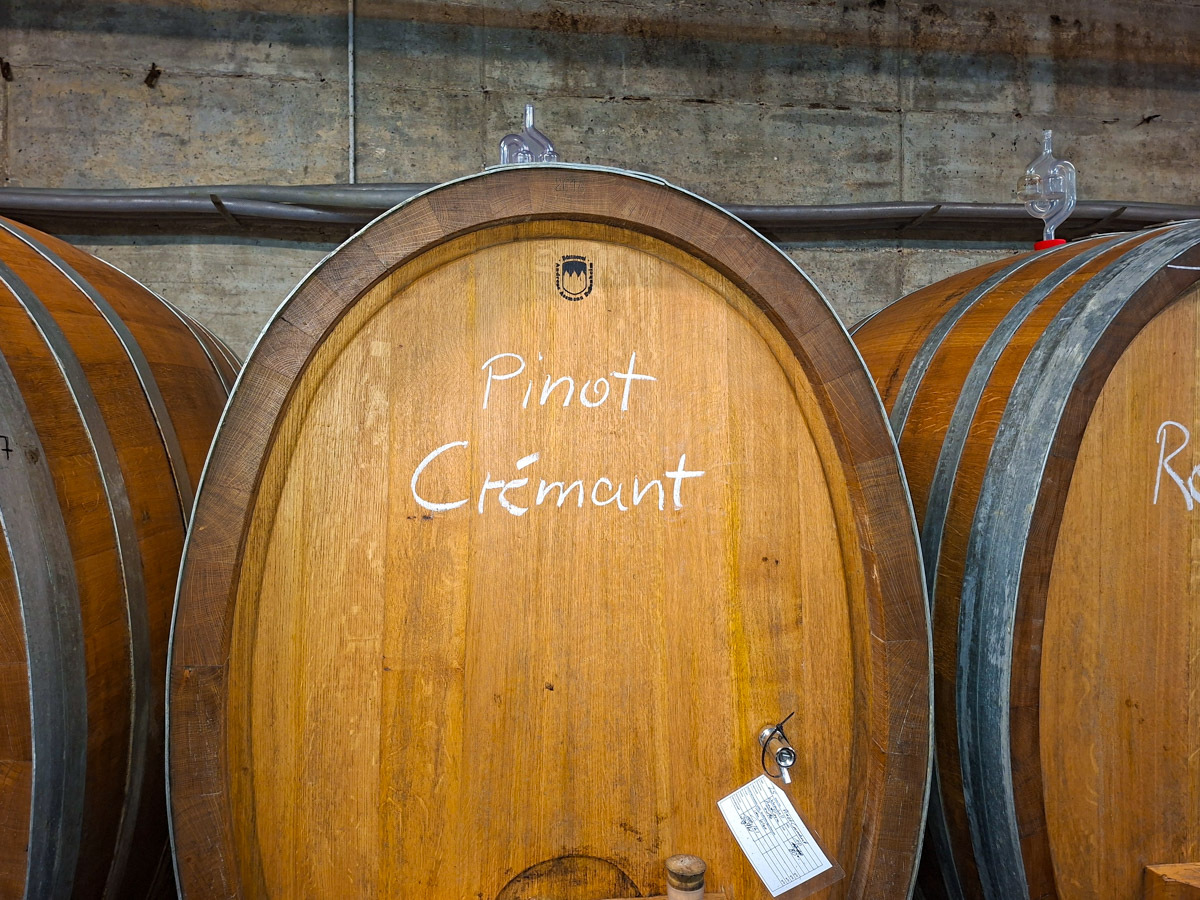
Sekt base wines often ferment and mature in various barrel sizes — for instance, in a Doppelstück at Bibo Runge in the Rheingau.
Of course, Pinot Meunier, Pinot Gris, Pinot Noir Précoce and Auxerrois also join the fray, but this being Austria and Germany, varietal diversity is a given: there is Silvaner, Zweigelt, Grüner Veltliner, Sankt Laurent, Sauvignon Blanc, Muskateller, Scheurebe, Welschriesling, Zierfandler, Neuburger and Blaufränkisch — a mixed bag in every respect. These unusual grape varieties hold some surprises but demand careful handling to be successful. Zweigelt, however, shines as Sekt base and brings forth beauty with astonishing regularity.
The Drive Towards Zero
Many of the wines I tasted for this report drive towards a bone-dry style; 48% saw no dosage, regardless of the style declared on the label. A further 24% underwent a dosage of three grams per liter or less, which amounts to a total of 72% of the wines in this report made in bone-dry styles. Moritz Jülg in the Pfalz said, “We make only Brut Nature because it is authentic. There is no makeup — it is Sekt in its purest state.” This is a sentiment shared by many producers across Austria and Germany, and may help to set Sekt apart from other quality traditional-method sparkling wines made elsewhere. The characteristic briskness of zero-dosage styles may be polarizing, but it has become a stylistic marker of the category.
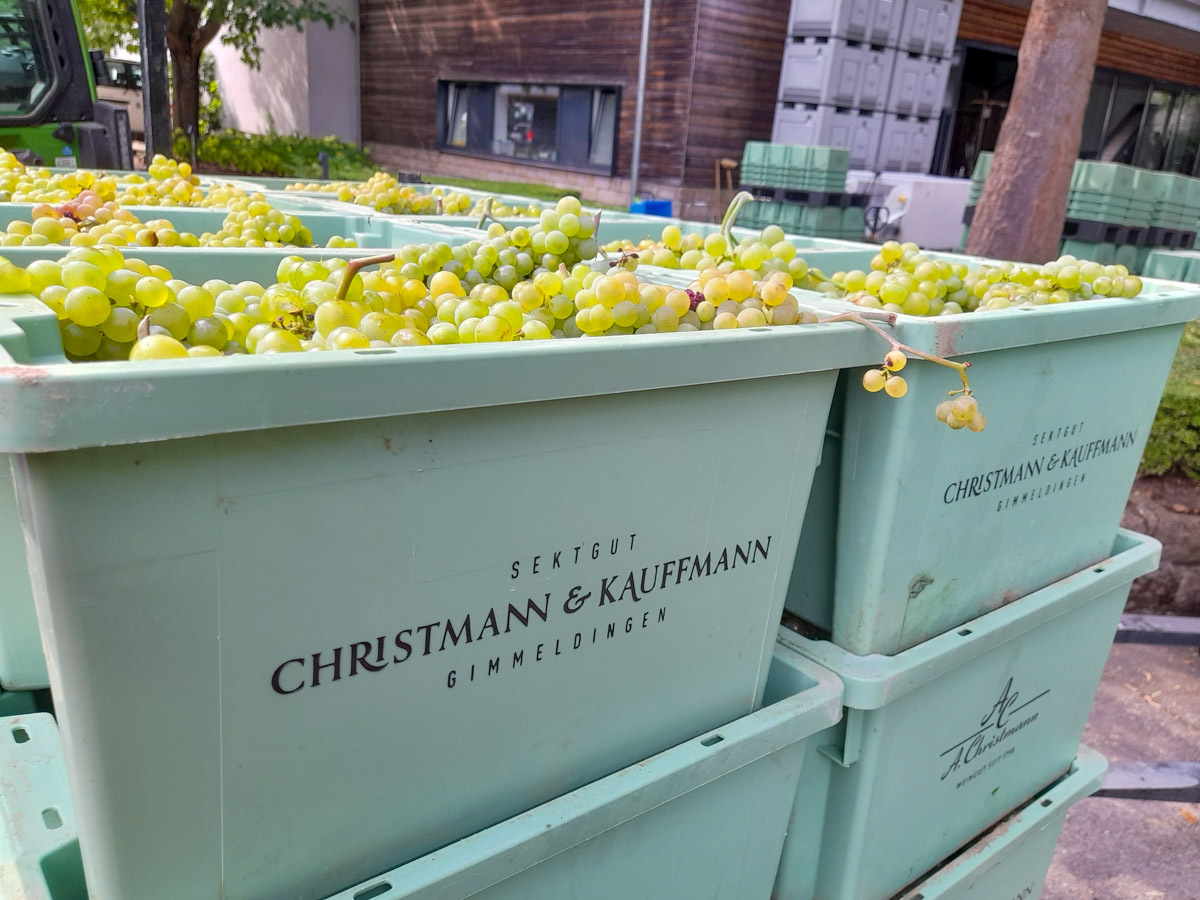
Pristine Chardonnay grapes ready to be pressed at Christmann & Kauffmann in the Pfalz.
One question that remains unanswered is how these zero-dosage Sekts will age. In Champagne, the long-term trajectory of wines bottled without dosage is a subject of debate, and Sekt has yet to accumulate a comparable track record. While some of the finest Sekts spend years on lees before disgorgement, there is much less evidence of how they evolve over extended periods afterward. For producers pursuing Sekt at the highest level, this will be an important question in the years ahead.
I tasted the wines for this report in London in September and October 2026, with a handful tasted on my various trips to Austria and Germany in spring and summer 2026.
© 2026, Vinous. No portion of this article may be copied, shared or redistributed without prior consent from Vinous. Doing so is not only a violation of our copyright but also threatens the survival of independent wine criticism.
You Might Also Enjoy
Sekt: Effervescent Germany and Austria, Anne Krebiehl MW, December 2025
Popping Corks: The Second Vinous Sekt Report, Anne Krebiehl MW, May 2025
Evoe! German and Austrian Sekt Report, Anne Krebiehl MW, March 2024
2025 Rheingau & Pfalz: Energy, Ripeness, Brilliance and Speed, Anne Krebiehl MW, September 2026
Lower Austria 2025: Back to the Future, Anne Krebiehl MW, July 2026
Show all the wines (sorted by score)
- Aldinger
- Allendorf
- Allram
- Andres Deidesheim
- August Eser
- Bassermann-Jordan
- Battenfeld Spanier
- Bercher
- Berger
- Bibo Runge
- Bickel-Stumpf
- Blankenhorn
- Braunewell
- Bründlmayer
- Buchegger
- Cantzheim
- Christmann & Kauffmann
- Dr Wehrheim
- Ebner-Ebenauer
- Ernst Triebaumer
- Esterházy
- F.B. Schönleber
- Fitz-Ritter
- Frauwallner
- Fürstlich Castell'sche Domäne
- Georg Mosbacher
- Geyerhof
- Graf Neipperg
- Griesel & Compagnie, Sekthaus Streit GmbH & Co. KG
- Gunderloch
- Gut Hermannsberg
- Hager Doris & Matthias
- Heid
- Heinrich Hartl
- Heitlinger
- Johannes Gebeshuber
- Jülg
- Jurtschitsch
- Karthäuserhof
- Keller
- Kloster Eberbach
- Knipser
- Kranz
- Künstler
- Lagler
- Loimer
- Malat
- Markus Schneider
- Maximin Grünhaus - von Schubert
- Messmer
- Meyer-Näkel
- Nikolaihof Wachau
- Nik Weis
- Odinstal
- Ökonomierat Rebholz
- Oliver Zeter
- Out of Appenheim
- Peter Jakob Kühn
- Peter Lauer
- Philipp Kuhn
- Rabl
- Rainer Schnaitmann
- Ratzenberger
- Reinhold Haart
- Riffel
- Rings
- Rudolf May
- Schäfer-Fröhlich
- Schloss Gobelsburg
- Schlossgut Diel
- Schloss Proschwitz
- Schloss Sommerhausen
- Schloss Westerhaus
- Schlumberger
- Sekthaus BurkhardtSchür
- Sekthaus Raumland GmbH
- Sekthaus Singer-Fischer
- Sektmanufaktur Momentum
- Sektmanufaktur Schloss Vaux
- Sektmanufaktur Schloss Vaux AG
- Siegrist
- Staatliche Weinbaudomäne Oppenheim
- Steininger
- Stift Göttweig
- Stift Klosterneuburg
- Stigler
- Szigeti
- Taubenschuss
- Tement
- Thomas & Claudia Hareter
- Topf
- Umathum
- Wachner
- Wagner Stempel
- Wegeler
- Weingut am Stein
- Weingut Baer
- Weingut Münzberg
- Weingut Prinz Salm
- Weingut vulgo Ritter
- Weingut Winter
- Wein- und Sektgut Barth
- Weszeli
- Wieninger
- Winzer Krems
- Wohlmuth
- Wöhrwag
- Zilliken Forstmeister Geltz
- Zuschmann-Schöffmann