
Browse using the new Vinous website now. Launch →
Printed by, and for the sole use of . All rights reserved © 2015 Vinous Media
Tuscany’s Maremma: Scenes from the Coast
BY ANTONIO GALLONI | JULY 23, 2026
The Tuscan Maremma is home to some of Italy’s most iconic estates and wines, showing what is possible in a region that was once marshland. These labels have garnered considerable critical acclaim over the years and become favorites with consumers around the world. And yet within the context of fine wine, Maremma is a very young region. Only a small handful of estates are in their third generation, and virtually all others are much younger. My most recent round of tastings revealed a region in the middle of a radical transformation.
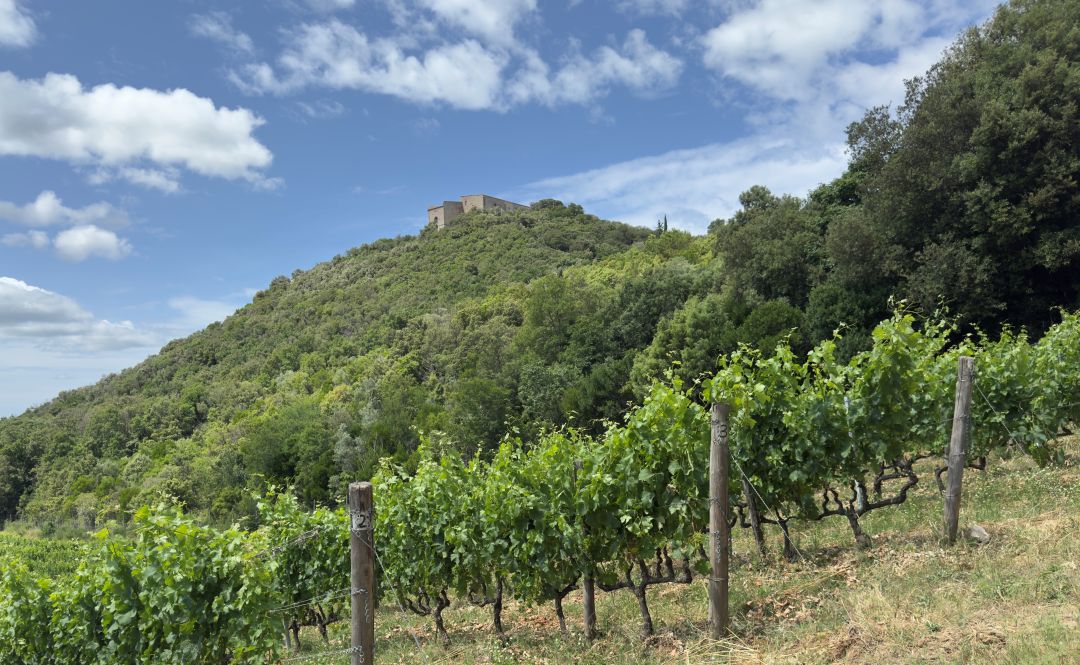
Cabernet Sauvignon at Castiglioncello, where Mario Incisa della Rocchetta first planted vines in 1944.
Maremma: Tracing the Origins
Mario Incisa della Rochetta, an aristocrat and avid Francophile of Piedmontese origins, planted Cabernet Sauvignon alongside indigenous varieties at Tenuta San Guido, his Maremma estate, in 1944. Inspired by the French wines he loved, Incisa della Rochetta set out to make a Bordeaux-styled red for his personal home consumption, nothing more. In those days, the Maremma coast was a disease-infested swamp that was considered uninhabitable. Noble families all lived in the hillsides. By the 1970s, Incisa della Rocchetta fully shifted his focus to Cabernets. A few years later, he decided to sell some wine.
First released in 1971 with the 1968 vintage, Sassicaia was an instant sensation. These were heady early days in the modern history of Italian wine. Piero Antinori, Incisa della Rochetta’s nephew, was busy at Tignanello creating iconic wines of his own. Antinori bottled and sold the first vintages of Sassicaia, one of many links between these two very influential families. Sassicaia was one of the so-called “Super Tuscans” — wines that bucked all conventions in that they were made from international grapes and produced outside of Italy’s formal appellation system. Sassicaia’s success led to the creation of a wave of new estates, including Grattamacco, Ornellaia, Le Macchiole and many others that followed.
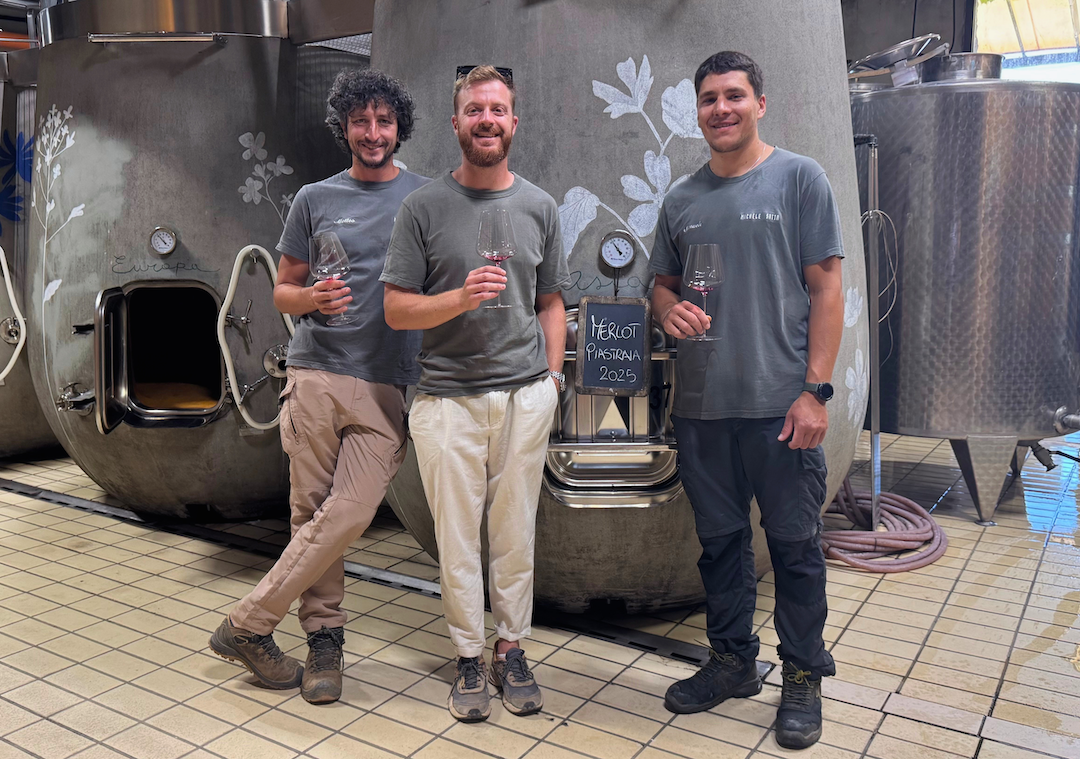
Giacomo Satta (center), flanked by Matteo Bonaguidi (left) and Samuele Danti (right). Satta is among the young producers who are confidently leading the next generation in Maremma.
Fast Forward to the Present
As I tasted through the wines this year, I could not help noticing how young Maremma is as a fine wine region, especially compared to Europe’s historic appellations. That’s somewhat shocking considering the icon status of wines like Sassicaia, Ornellaia, Masseto, Saffredi, Redigaffi, Messorio and others, but the reality is that, as a region, Maremma is a baby. Except for a few estates such as Tenuta San Guido and Grattamacco, most properties are only now transitioning into their second generation. Others are just getting started.
It’s precisely that generational transition that makes Maremma so vibrant today. I started tasting Maremma wines in the mid-1990s. It was the peak of Italy’s love affair with the international varieties that do so well on the Tuscan Coast. The wines were new and so exciting. For several decades, the wines followed a certain archetype, one that favored textural richness. In more recent times, the consumer palate has shifted away from opulence to wines of greater freshness, a challenge for a naturally warm and dry region that lives under the constant threat of advancing climate change. Whereas red wines once dominated the scene, today whites play a much larger role in Maremma’s oenological landscape.
The younger generation has different ideas than those of their predecessors. These trends have been developing for some years now, and yet the pace of change feels especially accelerated these days, perhaps because the impact of small changes becomes most evident when looking back over time. I am reminded of a visit to the Ferrari museums a few years ago with my children. Designs appear to evolve gradually when looking at them from year to year. But over longer periods, say a decade or so, changes are much more evident. It’s very much the same with wine.
A recent vertical tasting of Ornellaia back to the 1980s clearly highlighted the peak of extraction and heavy oak in the wines of the 2000s, and then a gradual move towards a more refined approach in recent years. Just across the road at Le Macchiole, proprietor Cinzia Merli and her sons Elia and Mattia Campolmi, along with winemaker Luca Rettondini, have moved away from the ultra-high-density vineyards they favored in the 1990s, seeking more freshness in the wines through earlier picking, lighter extractions and the use of lower-impact oak and more neutral vessels for aging. Today’s wines at the Gaja family’s Ca’ Marcanda estate are much more refined than those of their early days in Bolgheri. At Guado al Tasso, the Antinori family has similarly made a shift towards wines of greater vibrancy. In Suvereto, proprietor Fabio Chiarelotto has re-tooled his blends, shifted vineyard sites, moved towards earlier harvests and shortened the wines’ time in barrel. One of the most striking transformations in Maremma is at Michele Satta, where Michele’s son, Giacomo Satta, and his team have made dramatic changes in just a few years. They give the wines a much more contemporary feel that represents a striking departure from the past.
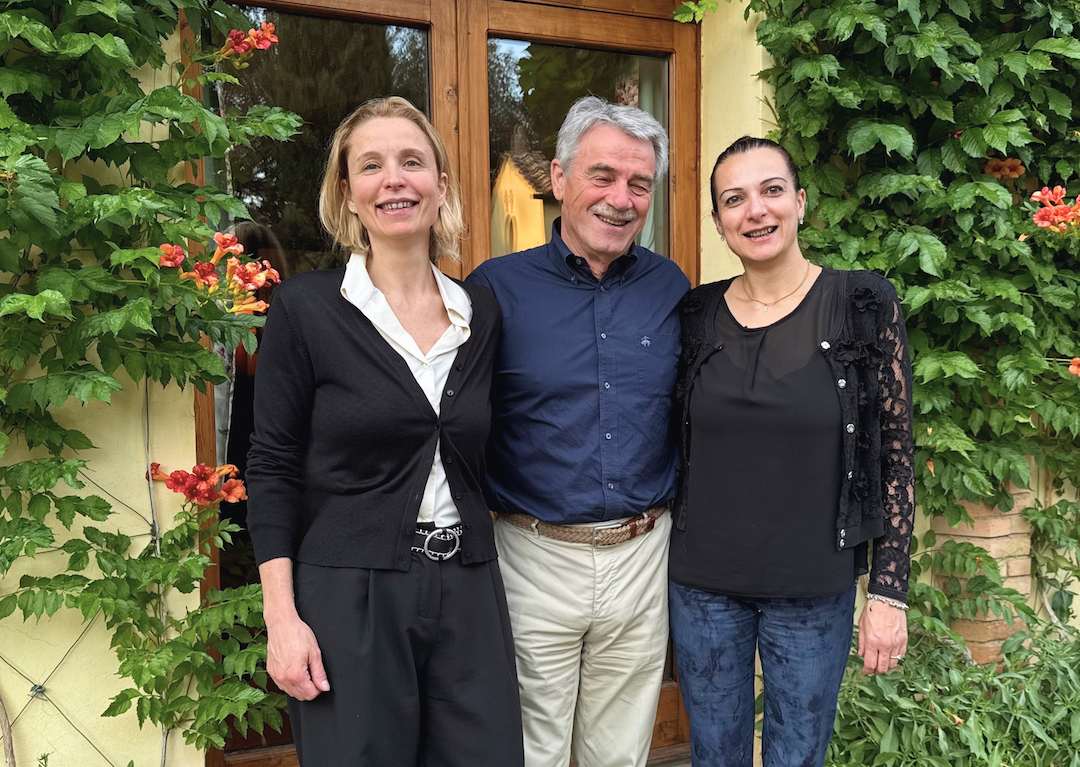
Antinori CEO and Head Winemaker Renzo Cotarella (center), together with Technical Directors Dora Pacciani (left) and Sara Pontremolesi (right), are leading the charge at all the Antinori properties, with an increasing emphasis on wines of greater energy and focus.
2025: Early Thoughts
After a trio of highly challenging growing seasons, producers welcomed 2025 with open arms. So far, only the whites and a few entry-level reds are in bottle, but I have tasted enough barrel samples to start forming a general idea of the year. My first impression is very positive. The 2025s offer gorgeous, forward fruit and a level of textural harmony found only in years where ripening is even. Tuscany’s Maremma is a very large region. There is sure to be some variability. At the same time, I am very excited to see what the vintage holds.
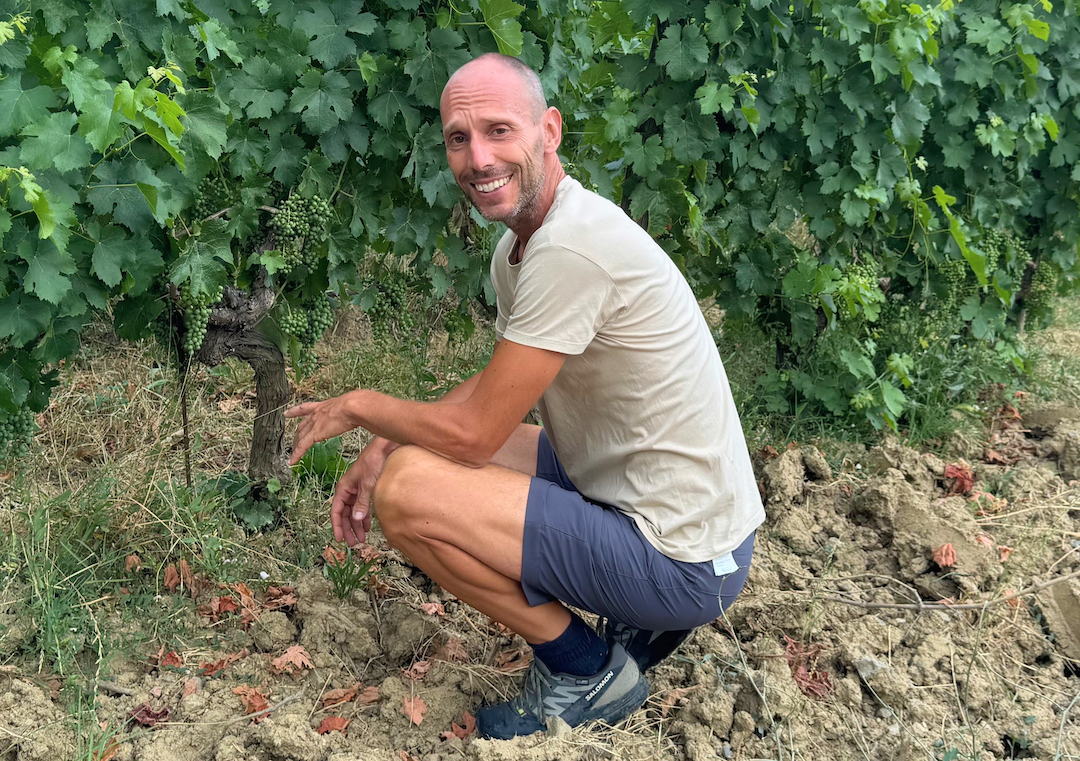
Marco Tait makes some of the most distinctive wines in Maremma at Ampeleia.
2024: Let it Rain
The growing season started much like 2023, with a warm winter and plenty of rain in the spring. If there is a positive, it is that after 2023, producers were better equipped to deal with disease pressure. Producers reported a wide range of conditions for the summer months, but one theme is a constant: uneven ripening. Rain again at the end of summer accelerated picking decisions.
Now that I have tasted more 2024s, the cautious optimism I expressed at the beginning of the year has turned out to be well placed. The 2024s are aromatic and svelte, but also quite pleasant. Their restrained style is sure to please a broad group of consumers who appreciate lighter reds. The best 2024s I have tasted so far are very pretty. What the wines lack in body, they more than make up for with their upfront appeal and accessibility. And of course, there’s a certain natural richness that comes through almost no matter what. Overall, 2024 is a highly charming vintage, and I mean that in the best sense.
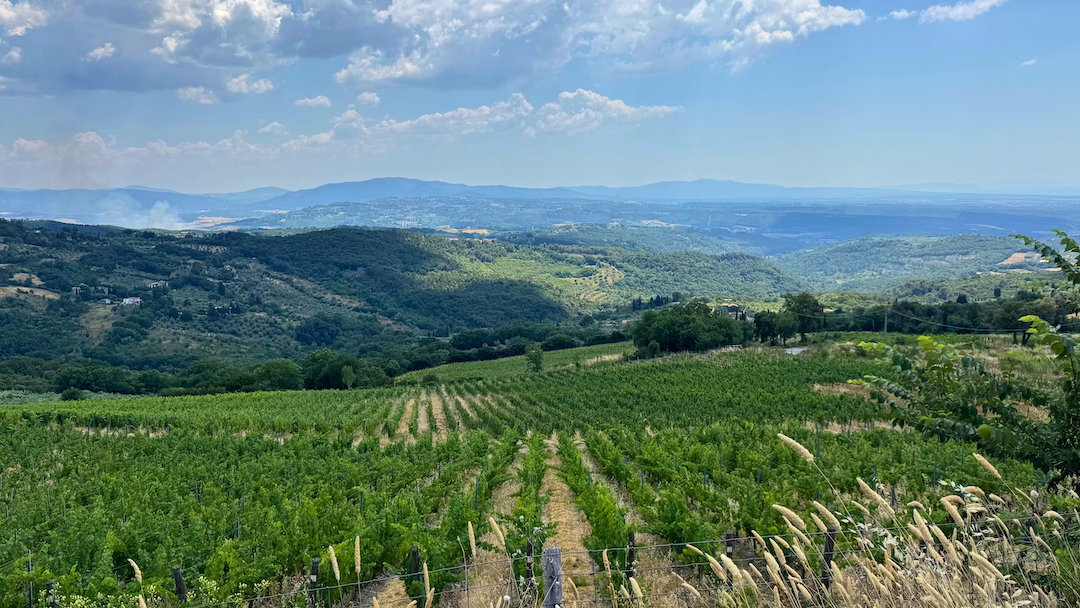
Caiarossa’s sprawling vineyards in Riparbella. The wines here have improved markedly in recent years.
2023: Ups and Downs
The 2023 growing season made headlines for the heavy rains that poured during the early part of the year and into the summer. Producers faced significant challenges in the vineyard, including elevated disease pressure and wet soils that made entering the vineyards with tractors impossible for long stretches. Peronospora (downy mildew) outbreaks were far more widespread and severe than anything most producers had ever seen. Well-drained vineyards (which often means hillside sites) clearly fared best. Certain pockets were less affected by rain than others. Conditions then changed markedly, especially in September and into October, both of which were extremely hot.
The best wines are quite successful, although they don’t represent the pinnacle of quality. Even so, the finest 2023s feature nicely prominent fruit and fine balance. The wines are structurally a bit lighter than those of truly great vintages, such as 2021, but in exchange the 2023s offer a great deal of immediacy and pure pleasure. Not all vintages can be great, and not all wines merit extremely high scores. I see 2023 as stronger across the board than 2022, but without the layers, complexity or structure of the very finest years. Production is down considerably, in the neighborhood of 30% or so for many wines.
I tasted the wines in this report in our offices in February and March 2026, followed by estate visits in June and then follow-up tastings in our offices in July 2026.
© 2026, Vinous. No portion of this article may be copied, shared or redistributed without prior consent from Vinous. Doing so is not only a violation of our copyright but also threatens the survival of independent wine criticism.
You Might Also Enjoy
2026 Tuscany Preview, Antonio Galloni, April 2026
2025 Tuscany Preview, Antonio Galloni, February 2025
New Releases from the Tuscan Maremma, Antonio Galloni, December 2024
2024 Tuscany Preview, Antonio Galloni, February 2024
Exploring New Releases from Coastal Tuscany, Antonio Galloni, August 2023
Show all the wines (sorted by score)
- Aia Vecchia
- Ampeleia
- Antinori - Guado al Tasso
- Antinori - Le Mortelle
- Antinori - Tenuta Guado al Tasso
- Argentiera
- Badia di Morrone
- Belguardo
- Bocelli 1831
- Bruni
- Bulichella
- Caiarossa
- Ca' Marcanda
- Campo alla Sughera
- Campo alle Comete
- Chiappini
- Duemani
- Fattoria Le Pupille - Elisabetta Geppetti
- Gianni Moscardini
- Grattamacco
- Le Crocine
- Le Macchiole
- Masseto
- Michele Satta
- Montepeloso
- Monteti
- Monteverro
- Morisfarms
- Orma
- Ornellaia
- Podere il Castellaccio
- Podere La Pace
- Poggio al Lupo
- Poggio al Tesoro
- Poggio Banzi
- Rocca di Frassinello
- Sassotondo
- Tenuta Casadei
- Tenuta del Nicchio
- Tenuta di Ghizzano
- Tenuta di Valgiano
- Tenuta Licinia
- Tenuta Maryamado
- Tenuta Meraviglia
- Tenuta San Guido
- Tenuta Sette Cieli
- Tenute Lunelli-Podernovo
- Terenzuola
- Tua Rita
- Villa Patrizia
- Volpaia