
Browse using the new Vinous website now. Launch →
Printed by, and for the sole use of . All rights reserved © 2015 Vinous Media
Chianti Classico: Looking Up
BY ANTONIO GALLONI | AUGUST 27, 2026
After three very tough vintages, things are looking up in Chianti Classico. The young 2025s hold significant promise, while 2024 is revealing itself to be surprisingly good in spots, despite some inconsistency. That’s a big improvement over 2023 and 2022, when so many producers were impacted by severe weather events that dramatically lowered production and negatively impacted quality. Stepping back for a broader and less vintage-centric view, I continue to be impressed with a general trend of increasing quality. That’s true not just of the top wines, but it’s also evident in entry-level bottlings that offer significant quality, value and expression of place.
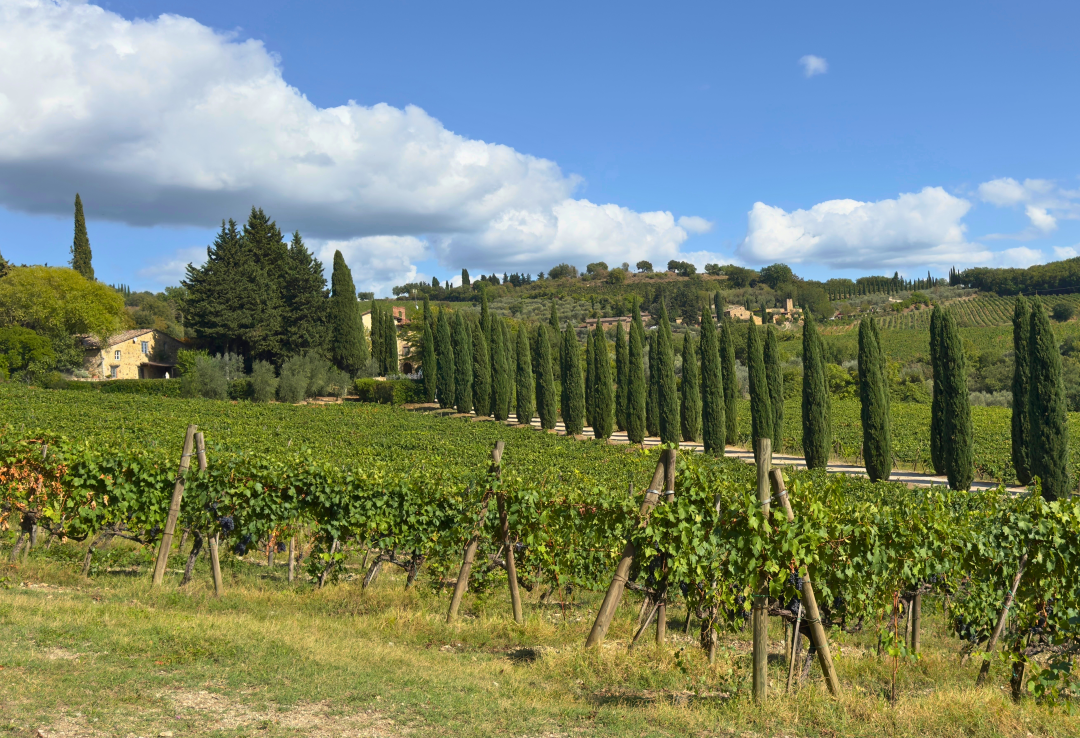
One of the core parcels in Castellare’s I Sodi di San Niccolò, Castellina in Chianti.
Keys to Understanding Vintages in Chianti Classico
Chianti Classico is a unique region in the global oenological landscape, perhaps not the easiest to understand at first, but then incredibly rewarding for those who invest the time to unlock its nuances.
I have made some of these points in previous articles, but they bear repeating given the complexities of the last few vintages. Unlike regions such as Bordeaux, Burgundy, Barolo/Barbaresco, Montalcino, Napa Valley and others, Chianti Classico does not release one vintage per calendar year. For this report, I tasted young 2025 whites and reds, 2024 Chianti Classicos, 2023 Riservas and Gran Seleziones, 2022 Gran Seleziones and a host of other current releases from 2021, 2020 and earlier. That’s a lot of vintages to keep track of. I find the exercise invigorating, but it is also a challenge, not just for critics, but also for the wine trade and consumers.
Visitors to Chianti Classico will find striking hillside towns dotted with castles, farms and vineyards. Valleys are tighter to the north and more open in the south. Most of the land, however, is forest and olive groves. One of the things local authorities have been very good at is protecting ecosystems such that vineyards are only a part of the landscape. That’s quite different from places like Bordeaux, Burgundy, Piedmont, Champagne and the central sections of Napa Valley. In these regions, vineyards are often contiguous to the point that the balance of nature has been upset in favor of the vine to the detriment of everything else. That’s a much more complex topic for another day.
In those regions, vintage generalizations can be quite helpful because they apply to broad swaths of terrain. In Chianti Classico, conditions vary widely from property to property. This is especially true in challenging years like 2024, 2023 and 2022. The following vintage summaries are a good starting point, but readers will find much more valuable and specific information in the accompanying producer commentaries and reviews. Readers will notice that some producers’ ranges appear quite small by comparison to past years. That is almost always the result of wines that were not bottled because of adverse weather conditions.
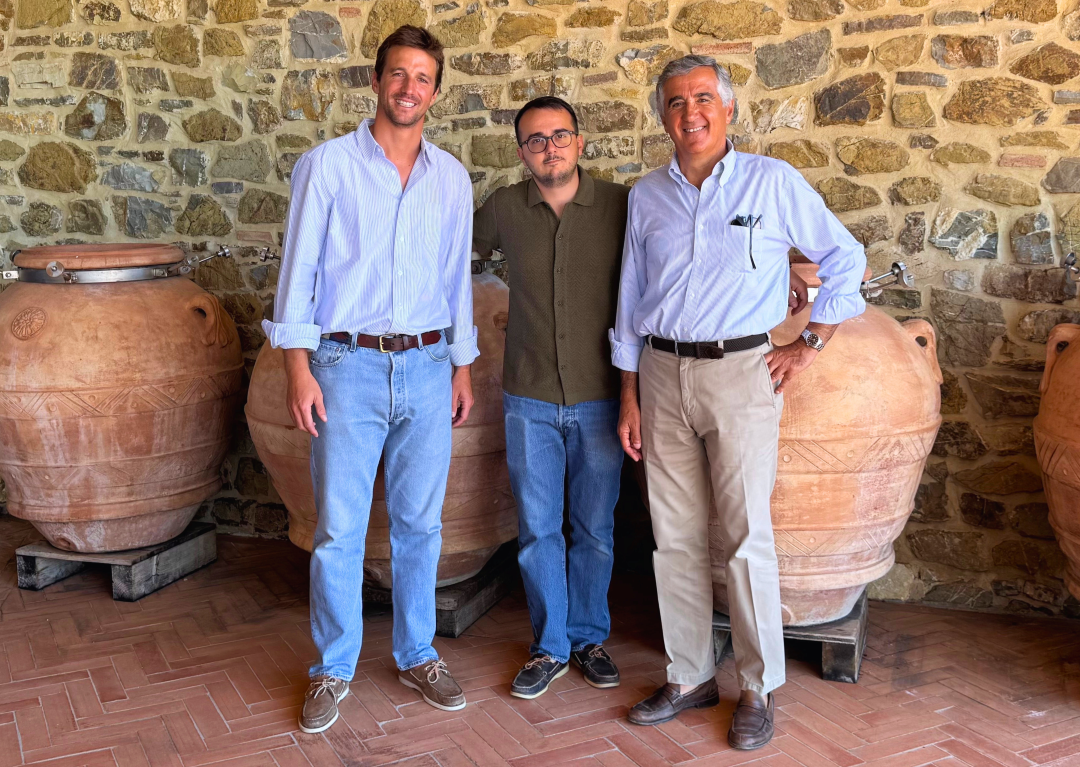
Fontodi proprietor Giovanni Manetti (right), with nephew Corso (left) and son Bernardo (center), made some of the finest wines of 2023.
A Personal Observation from a Life in Wine
As much as these vintage summaries might be helpful, I continue to believe consumers are best served by focusing on producer more than vintage. This is something I was taught many years ago when I was just getting into wine. It’s a useful rule of thumb that still holds. The reasons are simple: A diligent producer whose wines you enjoy will almost always make wines that are suited to your personal taste regardless of vintage. Some years the wines might be a little stronger, some years the wines might be a little weaker. That’s part of what comes with small-production, artisan wines. In many cases, a top producer will overachieve in a difficult growing season through hard work, dedication and sacrifice. Interestingly, the reverse is very rarely true. A modest producer will rarely make an exceptional wine in a great year. They might make a slightly better wine, but that’s about the extent of it. More importantly, a wine that has never been to your liking is not going to suddenly become appealing just because of a strong vintage.
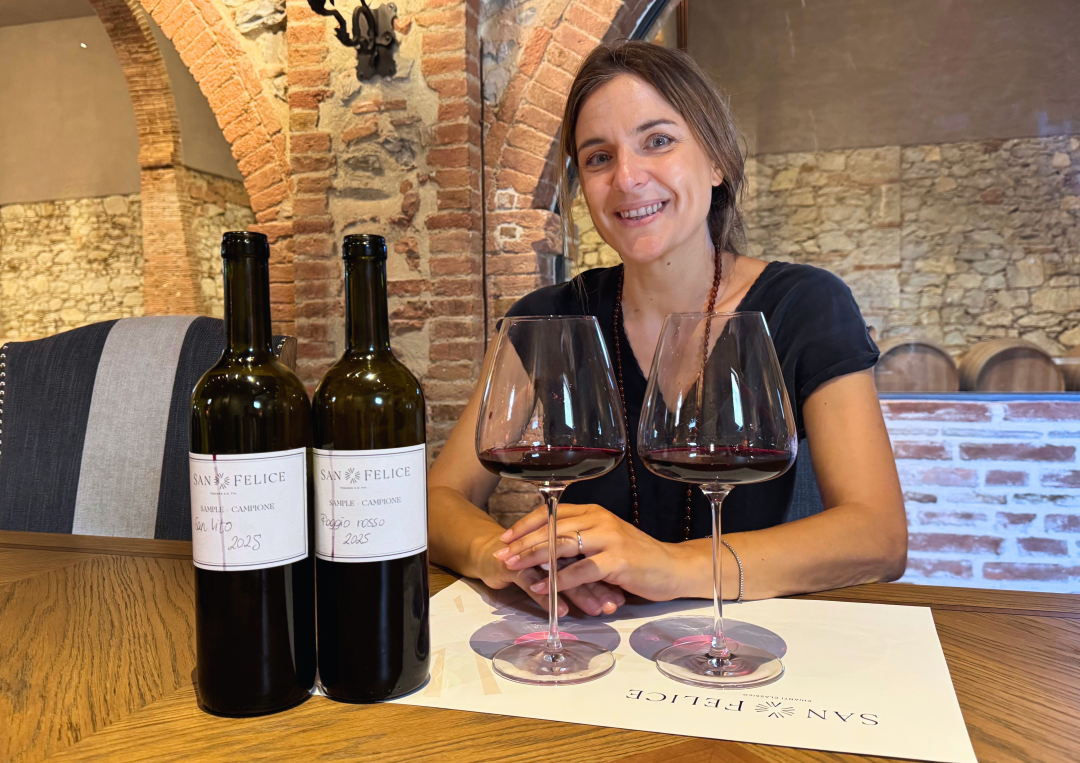
San Felice Winemaker Francesca Giuggioli with two of her 2025s, the first vintage she made in collaboration with Bordeaux-based oenologist Thomas Duclos.
2025: Light at the End of the Tunnel
After three very tumultuous growing seasons, producers are naturally quite excited to start talking about 2025, a vintage graced with mostly moderate conditions and no significant shock events. So far, I have tasted mostly whites, a few young reds and some more important 2025s from barrel. In its first impression, 2025 offers a striking combination of ripeness and freshness, with elements that today are reminiscent of vintages such as 2016, 2020 and 2021. It is clearly a very strong year with the potential to be much more than that. How much more? Only time will tell. There is little question that 2025 is the best vintage in Chianti Classico since 2021.
Many wines have a natural radiance to them that is impossible to miss, like bottled sunshine, but a good deal of complexity and layers as well. “We had some rain during harvest, not unlike 2020, but with very cold temperatures in the morning. It felt like grapes were coming out of a refrigerator when we started picking.” Luca Martini di Cigala explained at San Giusto a Rentennano.
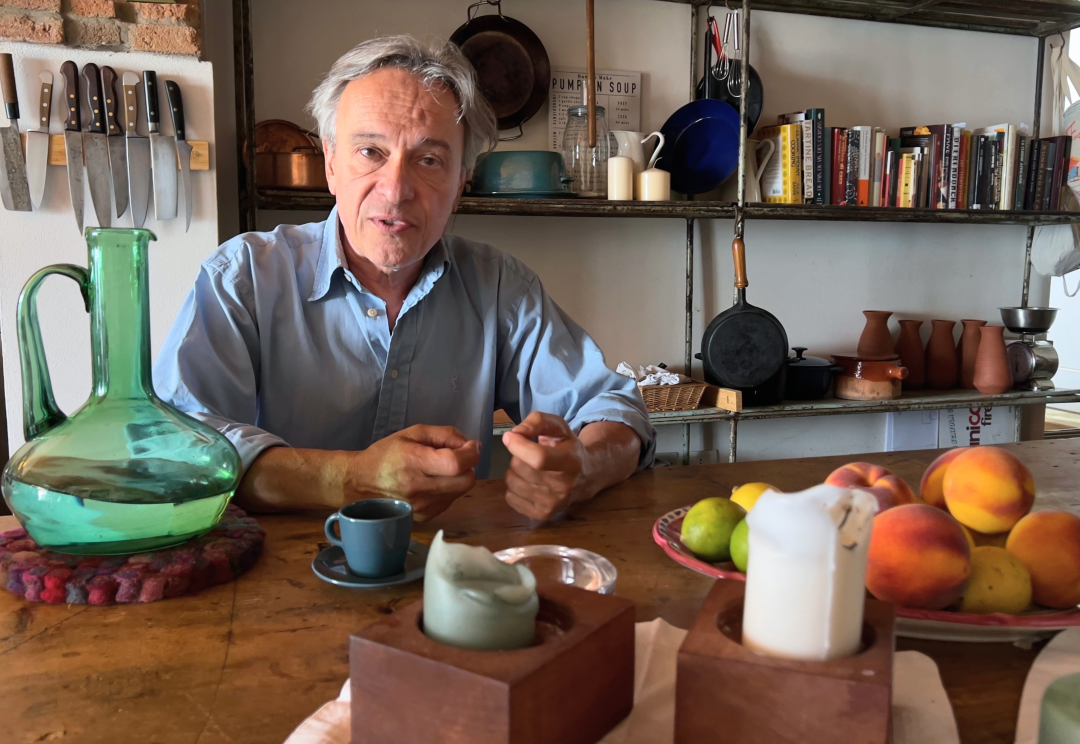
Silvio Messana presented a compelling set of new releases at Montesecondo.
2024: Classical Proportions with Highs and Lows
Two thousand twenty-four is turning out to be better than expected, considering early reports that spoke of heavy rains at the end of the growing season and into harvest. The best 2024s are svelte, aromatic and super expressive. Alcohols are lower than they have been in most recent years. However, I also tasted wines that are too light, diluted and, in some cases, harsh. My impression today is that in some but not all cases, higher-elevation vineyards and cooler microclimates faced the greatest difficulties.
Producers have clearly become more adept at handling these challenges through greater experience and the use of better technology. Even so, no amount of technology can ever replace something Mother Nature has not provided; no amount of sorting is going to make a lighter vintage richer. However, diligent work in the vineyards and equally conscientious work in the cellar can eliminate nearly all rot, underripe or burnt grapes, unwanted stems and anything else that is undesirable. A decade ago, a year like 2024 would have produced many more vegetal and strident wines than today.
“It was a very hard year in the vineyard because of the rain, but we had the experience of 2023, so we started treating earlier,” Angela Fronti explained at Istine. Fronti plans to bottle her full range of 2024 single-vineyard Chianti Classicos, but they won’t be Gran Seleziones because they all come in under 13% alcohol, currently the minimum threshold for Chianti Classico’s highest tier. All of Italy’s appellations set minimum alcohol levels, a legacy from a time when that was considered a marker of quality intended to encourage quality farming and low yields over volume. Whether this is relevant today is a question for another time. “We had a lot of rain between late September and early October. The key was limiting yields,” said Michele Braganti at Monteraponi.
Although only the straight Chianti Classicos have been released so far, the wines of producers who eschew the traditional appellation system provide useful insights as to the potential of the vintage. Sean O'Callaghan presented gorgeous 2024s from his Tenuta Carleone. The same is true for Silvio Messana, who turned out a superb set of wines at Montesecondo. “It’s a vintage that takes me back to my 20s, like turning the clock back 30 years,” Messana told me. “We picked in mid-September and had to run a bit at the end, as rain was intensifying.” I tasted highly promising 2024s from barrel at Fontodi. Castello di Ama plans to bottle all their top selections, something they tellingly did not do in 2023. Based on the finest 2024s I have tasted so far, I expect the top selections from the best sites will be quite good, and some may be even better than that. We shall see.
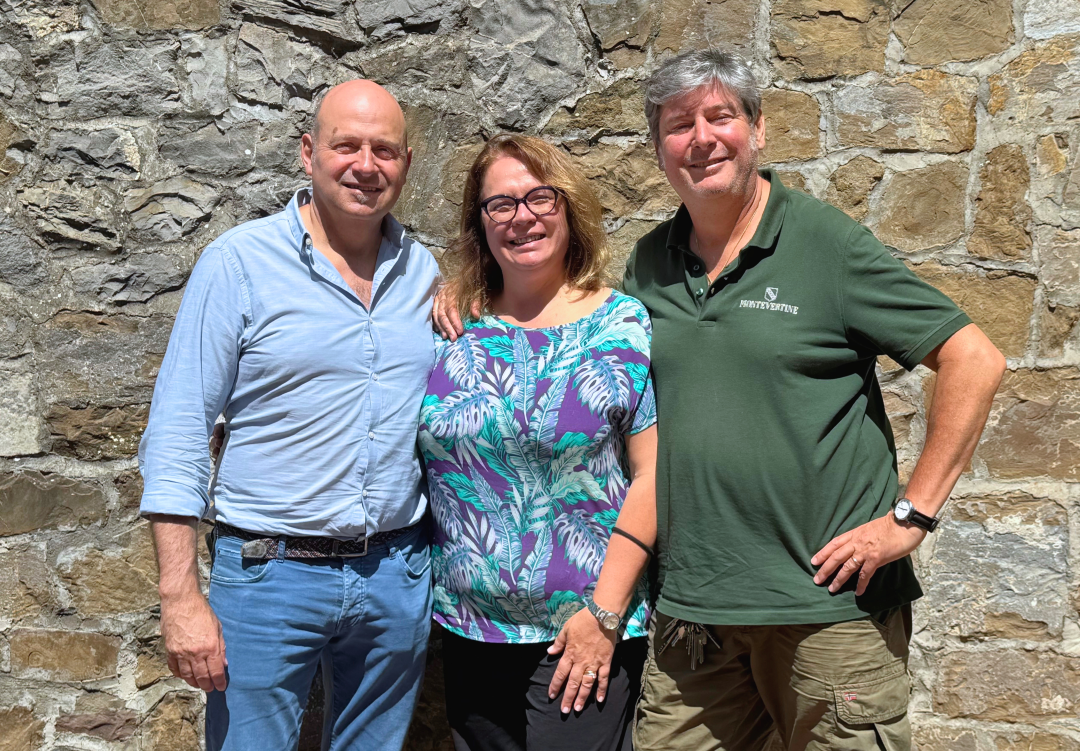
The team at Montevertine, where the wines remain benchmarks. Longtime Winemaker Paolo Salvi (left), with Owners Liviana Midolini (center) and Martino Manetti (right).
2023: A Wild Rollercoaster Ride
Two thousand twenty-three will be remembered for heavy and persistent rain that started early and continued through most of the season. Warm temperatures created the perfect conditions for widespread outbreaks of Peronospora that advanced at a faster rate than anyone had ever seen in the past.
These conditions were quite a shock for Chianti Classico, a region that generally experiences much more favorable weather to the extent that producers have made significant strides in adopting organic and biodynamic farming. Many estates were severely challenged. Interestingly, though, there is also some evidence that vineyards can build resistance to various maladies over time, even when farmed with minimal inputs, in the way a person can develop resistance to various diseases by having a strong immune system. It’s a deeply fascinating topic that is beyond the scope of this report.
“It was a tough year in the vineyard,” Giovanna Morgante told me at Le Boncie. “It felt like we were playing catch-up all year trying to stave off Peronospora with treatment after treatment. The vines were just exhausted by the time harvest arrived.” Producers who treated aggressively often had to do so by hand because vineyards were too wet to spray by tractor. Those who waited lost significant portions of their crop. Yields were down 30-50% in many places. Quite a few wines were not bottled at all. “Our annual production is around 80,000 bottles; in 2023 it’s closer to 7,000 bottles,” Maurizia di Napoli told me at Castello dei Rampolla, one of the most heavily impacted wineries in 2023.
In tasting, the wines are highly variable. Many are obviously light in body, texture and overall structure. Others are richer and deeper, the result of more favorable conditions, but also certain choices made in the vineyards and cellar. Overall, 2023 is a highly inconsistent vintage to approach with caution and on a case-by-case basis.

Vicky Schmitt presented some of her finest wines ever at Fattoria Le Fonti-Panzano this year.
2022 Revisited
Coverage of the 2022s is split between this year and last year’s report. Given that climate conditions obviously did not change between reports, what follows is taken from last year’s article. It’s a vintage with many facets. In terms of style, some wines feel much more classic than one might expect in a year in which much of the season was very hot and dry. For example, the 2022 Gran Seleziones at Querciabella are quite restrained next to the more opulent 2023s. Other 2022s show the riper side of the year. The finest 2022s are positively riveting. Wines like Isole e Olena’s Cabernet Sauvignon along with Castello di Ama’s Chianti Classico Gran Selezione Vigneto Bellavista, Montevertine’s Le Pergole Torte and San Giusto a Rentennano’s La Ricolma, all reviewed last year, are among the highlights.
The 2022 growing season got off to a positive start, with good rain in winter and spring prior to budbreak. Temperatures picked up during the second half of spring and persisted through mid-August. Rainfall was minimal. The most dramatic and defining event of the year occurred on the evening of the national Ferragosto holiday on August 15, when a violent storm passed through Chianti Classico. Some spots only saw rain, but about 400 hectares of vineyards were severely impacted by devastating hail. “We lost the entire western portion of our estate, which accounts for 25-30% of our total production,” Giovanni Manetti reported at Fontodi. Several estates in and around Panzano saw their vineyards destroyed and production reduced to next to nothing. Le Cinciole bottled only their Chianti Classico, while La Massa lost their entire crop.
In all my years tasting and writing about wine I have only seen events like this in Burgundy and Piedmont. As if that were not enough, a few vineyards succumbed to wild boar and other animals that found in grapes a rare source of water in a year where streams and creeks were parched. Production is down sharply at the hardest-hit properties. Some wines weren’t bottled at all.
The growing season proceeded quite differently in areas that were not adversely affected by the weather. Conditions turned quite damp and cool from mid-August to mid-September, extending the growing season unexpectedly with periods of rain, leading to high temperatures again in September. Many producers reported harvests that stretched into October, in other words, later than one might expect in a year marked by heat and drought for much of the growing season.

Lorenza Sebasti and Marco Pallanti at Castello di Ama. Their 2024 Chianti Classico Ama represents nearly 50% of the estate’s production and is a notable success in this challenging harvest.
Nature or Nurture?
It is often said, “Great wines are made in the vineyard.” I could not disagree more. Grapes for wine are produced in vineyards, but wines are made in cellars.
The quality of a vintage is ultimately determined in part by weather and then in equally large part by choices winemakers make in the cellar. For example, in years in which wines are naturally light in concentration, a winemaker can choose to let the wines express that lightness, or they might prefer to bleed the musts a bit to get a little extra depth. These are choices that sit somewhere between the worlds of house style and more philosophical approaches to winemaking. Every producer has their own take. That’s a large part of what makes tasting comprehensively in a challenging vintage so interesting: seeing how each producer interpreted the year.
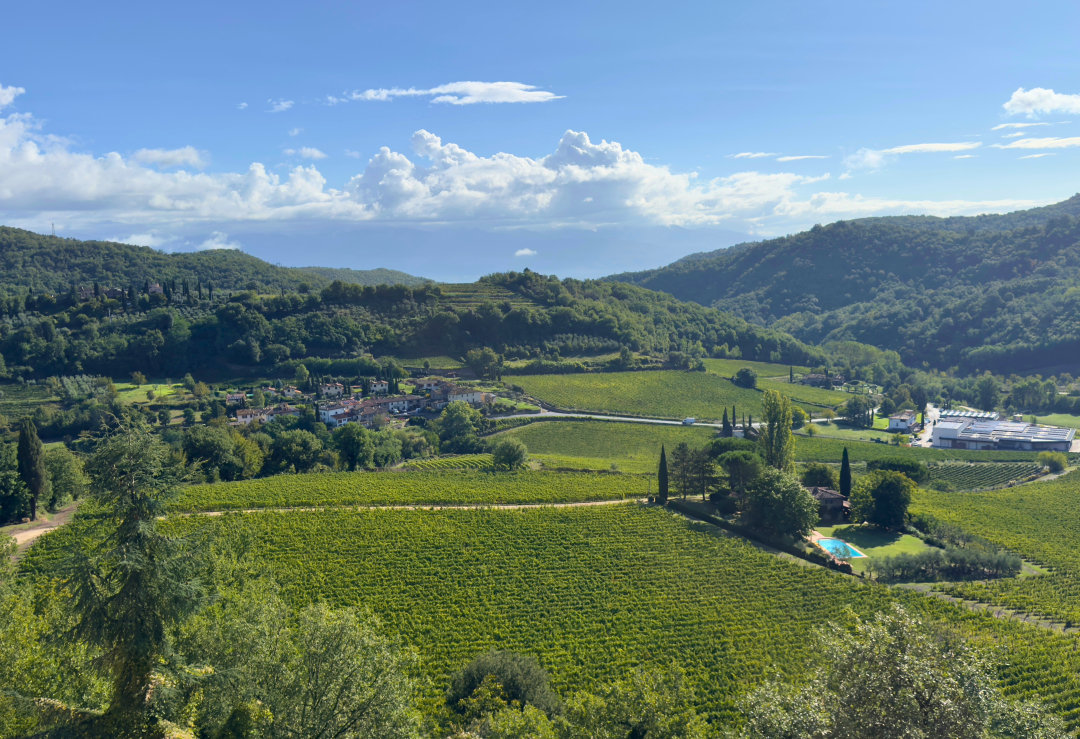
Stunning views from Castello di Querceto, Greve. The wines here have improved markedly in recent years.
Chianti Classico Coverage for 2026
In addition to the wines in this report, readers can look forward to deep verticals of Castello di Ama’s La Casuccia, Monteraponi’s Trebbiano and Montevertine’s Le Pergole Torte in the coming months. I also expect to add reviews for a handful of new releases that had just been bottled or were about to be bottled at the time of my tastings.
About This Report
I tasted all the wines in this article in Chianti Classico in June 2026, and then in follow-up tastings in our offices in the weeks that followed. This article focuses on Chianti Classico, but I also include notes on a handful of producers from neighboring regions that are too small to be covered separately.
© 2026, Vinous. No portion of this article may be copied, shared or redistributed without prior consent from Vinous. Doing so is not only a violation of our copyright but also threatens the survival of independent wine criticism.
You Might Also Enjoy
Chianti Classico: Riding Out the Storm, Antonio Galloni, July 2025
Chianti Classico: The Magnificent 2021s, Antonio Galloni, July 2024
Chianti Classico: The Brilliant 2021s & Variable 2020s, Antonio Galloni, August 2023
Chianti Classico & Neighbors: Looking at the 2020s and 2019s, Antonio Galloni, July 2022
Chianti Classico and Beyond – 2018 & 2019, Antonio Galloni, September 2021
Show all the wines (sorted by score)
- Antinori
- Antinori - Tenuta Tignanello
- Arillo in Terrabianca
- Badia a Coltibuono
- Bibbiano
- Bindi Sergardi
- Brancaia
- Caggio
- Calcamura
- Candialle
- Caparsa
- Capraia
- Carpineta Fontalpino
- Carpineto
- Casaloste
- Castellare
- Castell'in Villa
- Castello dei Rampolla
- Castello della Paneretta
- Castello di Ama
- Castello di Bossi
- Castello di Brolio - Barone Ricasoli
- Castello di Farnetella
- Castello di Gabbiano
- Castello di Meleto
- Castello di Monsanto
- Castello di Querceto
- Castello di Verrazzano
- Castello La Leccia
- Castello Vicchiomaggio
- Castelvecchio
- Cavalli - Tenuta degli Dei
- Cigliano di Sopra
- Cinciano
- Dievole
- Donna Laura
- Enrico Pozzesi & Figlie (formerly Rodano)
- Famiglia Cecchi - Villa Cerna
- Famiglia Cecchi - Villa Rosa
- Fattoria di Rignana
- Felciano
- Fèlsina
- Fontodi
- Frescobaldi - Tenuta Perano
- Gagliole
- Giacomo Mori
- I Fabbri
- Il Barlettaio
- Il Borghetto
- Il Borro
- Il Molino di Grace
- Isole e Olena
- Istine
- Jurij Fiore & Figlia
- Lamole di Lamole
- La Montanina
- La Sala del Torriano
- La Vigna di San Martino ad Argiano
- Le Cinciole
- Le Fonti - Panzano
- Le Masse
- L’Erta di Radda
- L'Orcio a Ca' di Pesa
- Maurizio Alongi
- Mazzei - Castello di Fonterutoli
- Monte Bernardi
- Montefioralle
- Monteraponi
- Monterotondo
- Montesecondo
- Montevertine
- Nardi Viticoltori
- Nipozzano
- Nittardi
- Ormanni
- Pagliarese
- Panzanello
- Petrolo
- Piazzano
- Piemaggio
- Podere Campriano
- Podere Capaccia
- Podere Il Carnasciale
- Podere Il Monastero
- Podere Le Boncie
- Poggerino
- Poggio al Sole
- Poggio Scalette
- Pomona
- Querceto di Castellina
- Querciabella
- Renzo Marinai
- Riecine
- Rocca delle Macie
- Rocca di Castagnoli
- Rocca di Montegrossi
- San Felice
- San Giusto a Rentennano
- Tenuta Casenuove
- Tenuta di Carleone
- Tenuta di Trinoro
- Tenuta La Massa
- Tenuta Sette Ponti
- Terreno
- Tolaini
- Torre Prumiano
- Tregole
- Val delle Corti
- Vallepicciola
- Vallone di Cecione
- Vecchie Terre di Montefili
- Vignole
- Villa Le Corti
- Viticcio
- Volpaia