
Browse using the new Vinous website now. Launch →
Printed by, and for the sole use of . All rights reserved © 2015 Vinous Media
Island Paradise: Wines of Tasmania
BY ANGUS HUGHSON | JULY 7, 2026
In the southeastern corner of Tasmania lies a small stretch of land known as Port Arthur. For a time, it was one of the most feared places in the English-speaking world, where England’s worst criminals were sent to rot. Today, Tasmania is also blessed with a thoroughly unique climate for growing grapes.
This small island is now delivering dramatic expressions of exciting terroirs, wines that are primed to take the world by storm. But growing grapes and making wine in Tasmania is no easy ride, and it has taken decades of trial and error to harness this unique land and climate for fine wine production. There is simply no other significant wine region in the world that mirrors the local conditions enough to serve as a model for local vignerons. Every step of progress over the last 40 years has been made through experimentation, which is now bearing fruit as the finest examples hit their highest peaks.
Tasmania is a genuine unicorn of a place. Firstly, it is one of the southernmost and coolest wine regions in the world, though a few outposts on the Australian mainland come close in terms of temperature. While its latitude is far lower than the coolest European regions, Tasmania’s largely maritime climate brings heat summations to similar levels. Unlike in Europe, maritime influence is constant, keeping temperatures down throughout the day without the midday heat spike that occurs in more continental climates. For this reason, Tasmania is uniquely positioned to withstand climate change.
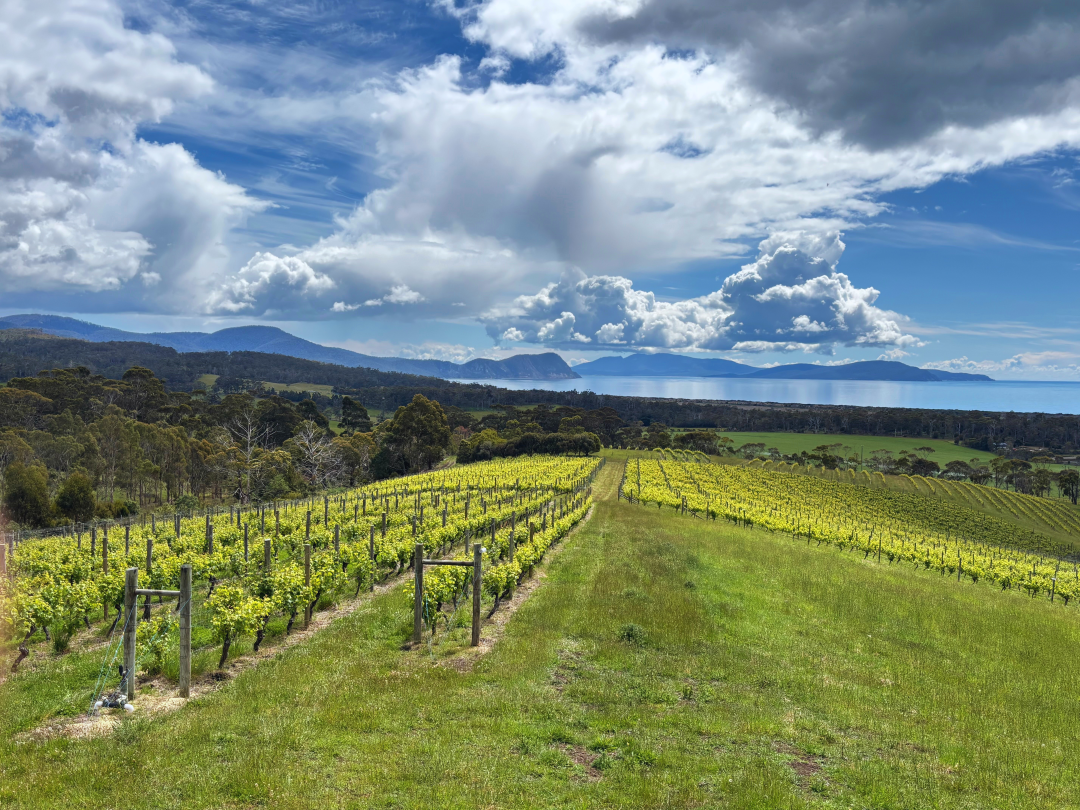
Bream Creek's idyllic location crafts deadly serious Pinot Noir.
Tasmania is also constantly exposed from all sides to the whims of Bass Strait, the Tasman Sea and, most importantly, the Great Southern Ocean, receiving powerful weather systems from Antarctica, particularly during the 2026 season. The island’s lack of protection from the elements provides challenges, often during flowering, when rough weather can dramatically affect yields. Despite being surrounded by ocean, much of Tasmania is surprisingly dry. Hobart, the state capital, around which many of Tasmania’s most famous wineries are located, is the second-driest city in what is already a relatively arid country. Global warming has exacerbated this, as the strong westerly winds that used to bring much of the state’s rainfall have now moved further south to higher latitudes and into the Southern Ocean, far from where rain is needed.
The localised intensity of the sun is a final curiosity. You can literally feel the powerful UV light scorching your skin, more so than in other parts of Australia. This is due to the higher latitude and a general lack of pollution. Luckily, the weather is seldom warm enough to combine with intense UV light and singe grape skins.
This strikingly unusual combination of climatic factors results in stark, powerful wines with a rare vigour. Choosing quality sites is absolutely vital to achieving the best results. In Tasmania, this usually means sticking close to the coast and significant waterways, where maritime influences can bring the fruit to full ripeness.
A Changing Landscape
Though it operates as a single appellation, Tasmania is almost 70,000 square kilometers in size. Around half of the island consists of protected national parks, with much of the remainder unsuitable for viticulture. There are only 3,000 hectares under vine across the whole state, though this has increased quite rapidly in recent years with significant new plantings. In total, Tasmania still makes up only 1.2% of the national crush.
Spread across 2.5° in latitude and 322 kilometers, Tasmania’s vineyards deliver incredible diversity. While Shiraz and even Cabernet Sauvignon can ripen in some isolated warmer sites, Tasmania puts its best foot forward with Pinot Noir, Chardonnay and Riesling across all major wine-producing centers of the island, each with its own individual expression.
River valleys define many of the most prestigious terroirs, as they draw warmer air inland from the ocean. The resulting wines are more powerful than those from exposed coastal sites. These rivers are the lifeblood of the local wine industry, especially on the northern and southern coasts. To the north are the Tamar and Pipers Rivers, while the south encompasses the Huon, Derwent and Coal River Valleys. However, there are also many other small, isolated vineyards, planted outside the major river valleys, whose cooler sites close to the ocean yield wines with delicious delicacy and detail.
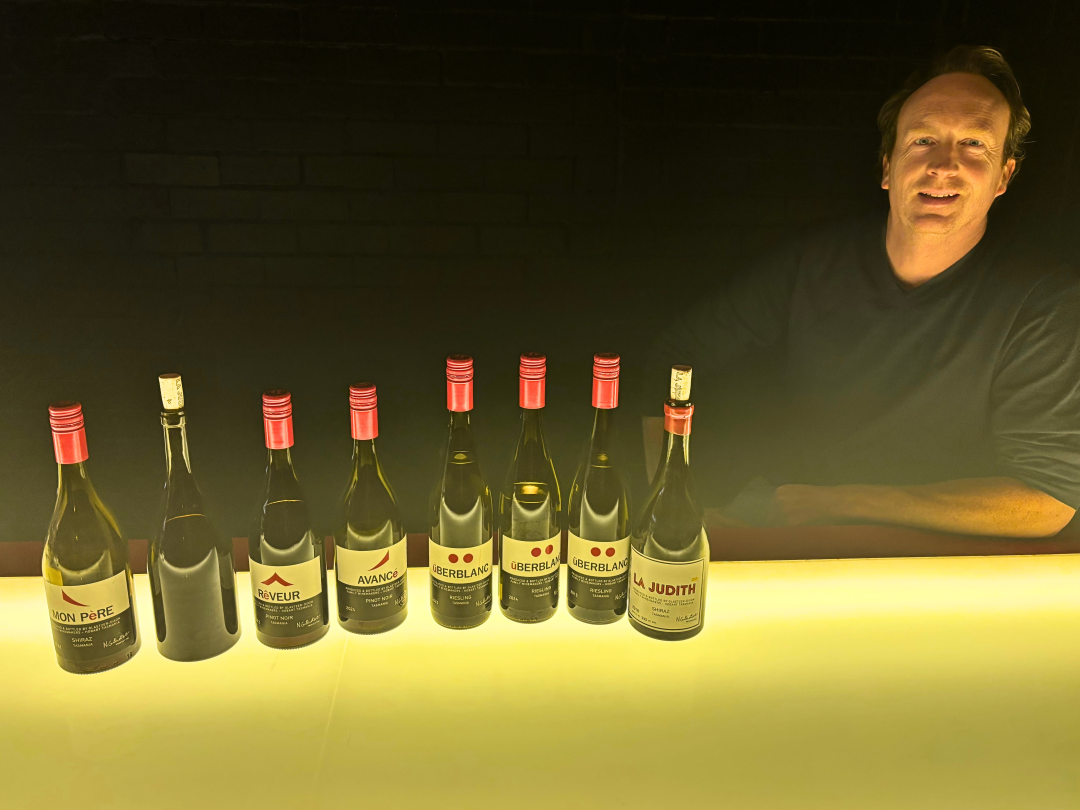
Winemaker Nick Glaetzer's wines, bottled under the Glaetzer-Dixon label, are some of Tasmania's most ageworthy offerings.
It is worth remembering that in Tasmania the rules of climate are not clear-cut. Normally, regions closer to the equator would benefit more from warmer weather and give rise to a region’s most powerful wines, but in Tasmania, this is not the case. Despite being Tasmania’s most southerly and coolest wine region, the Huon Valley delivers some of the most deeply coloured Pinot Noirs. Similarly, Pipers River in the northeast is one of the coolest and best-suited to sparkling wines due to its exposure to the wild weather of Bass Strait, which leads to incredibly fine and pristine expressions. While most of the wine regions in Tasmania have relatively low precipitation, northern zones such as the Tamar Valley and Pipers River enjoy around 15% more rainfall than southern areas. At the coldest extremes of viticulture, the best sites have advantageous sun exposure and a relative absence of frost risk.
There are, however, two outlier zones: the East Coast and Central Highlands. The East Coast reflects a very different side of Tasmania with a warm, sunny and dry climate that can easily ripen Shiraz and Cabernet Sauvignon. These are bold wines that retain characteristic Tasmanian freshness. The Central Highlands are more challenging for grapegrowers due to higher elevations and significant frost risk, but the region can deliver outstanding wines in select sites. These vineyards are the key source of Pinot Noir for Arras, Tasmania’s leading sparkling wine house.
The large Meadowbank vineyard, which supplies many top labels and also bottles wines under its own brand, is the star in this isolated corner of Tasmania. A large dam provides significant protection from humidity and frost, vital to the vineyard’s survival. Under the direction of highly regarded winemaker Peter Dredge, Meadowbank has slowly but surely risen to become one of the leading producers in the state. Recent expansions in the vineyard illustrate growing demand for fruit from this unique terroir. The Central Highlands will never be significant in terms of volume, but its higher and more continental climate delivers individual, thought-provoking wines.
Against the backdrop of diverse terroirs and a unique climate, winemakers have been coming to grips with the conditions and learning how to fashion wines that suit the place. In the early years, there were many vineyards owned by city dwellers dabbling in the wine industry. This left a small number of consultant viticulturists and winemakers in charge who relied on a more formulaic approach. They borrowed techniques and styles from the mainland and across the Tasman Sea in New Zealand. Some Pinot Noir producers were pursuing a Central Otago style, focusing on making wines that were as bold and ripe as possible. Heavy-handed oak usage was also common for both white and red wines. But over the last decade, growing local confidence has seen winemakers better appreciate the unique quality of their fruit and use more intuitive, complementary, hands-off winemaking. This is now, finally, allowing Tasmania to truly shine by letting the fruit and the terroir do the talking. There is an abundance of bright, energetic, almost Chablis-like Chardonnays, as well as perfumed, refined Pinot Noirs.
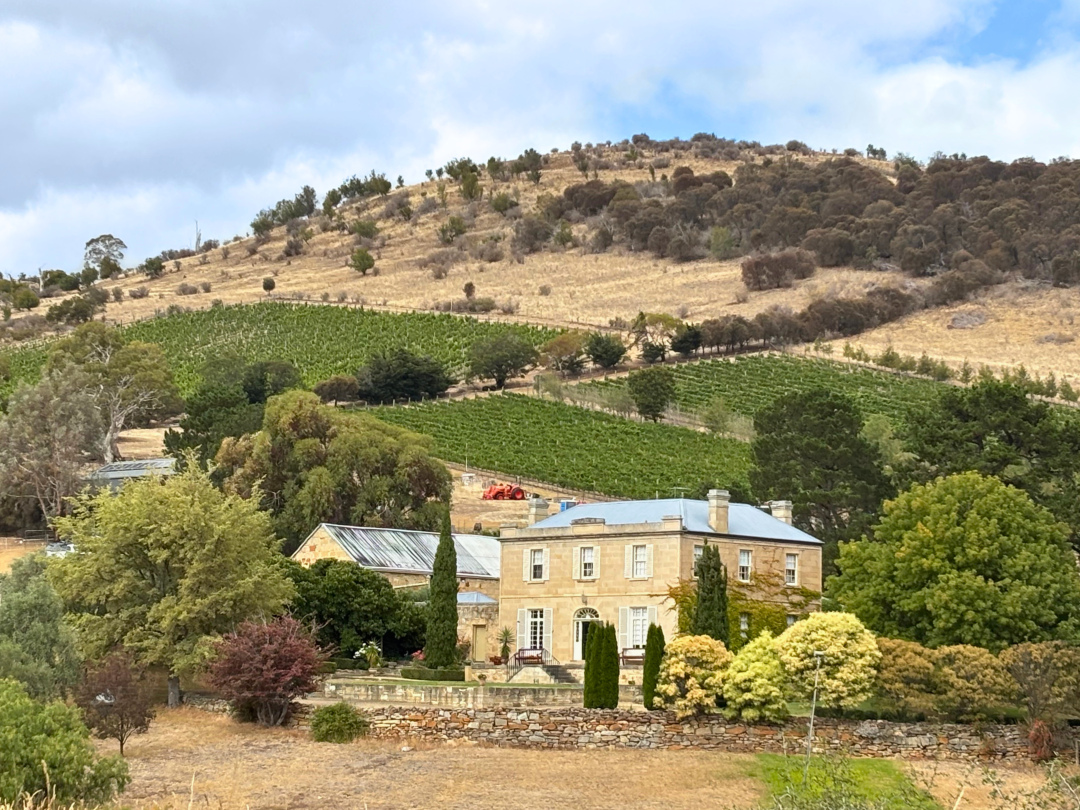
Pooley Wines' historic manor house is the home of exceptional single-vineyard wines.
Sparkling Foundations
While still wines now make up a significant part of local production, it was a desire to craft sparkling wines that brought key players to Tasmania in the first place. In the second half of the twentieth century, a number of French producers developed projects in Australia, including Rémy Martin and Möet & Chandon. In Tasmania, Louis Roederer collaborated with the local Heemskerk estate to launch Jansz in 1989. This was especially significant because, at the time, the Tasmanian wine industry was minute. While Roederer left the partnership in 1997, Jansz sparkling wine remains a beacon of quality. Similarly, the Goelet Family of Napa Valley’s Clos du Val established Clover Hill in 1986, again illustrating that even 40 years ago, Tasmania was already on the radar as a potential source of high-quality sparkling wines.
One of the key turning points was the launch of House of Arras in 1995, a very well-funded operation focused solely on crafting exceptional sparkling wines. Chief Winemaker Ed Carr has been at the helm since the beginning. Even with his vast experience, identifying prime sites and building relationships with growers was a learning process for Carr. “We've never been a single vineyard or single subregion producer, and now we're getting fruit from nearly everywhere. Tamar River, Pipers River and coming down the East Coast to Swansea, Coal River, Upper Derwent and Ouse River. We've found that the terroir is very different in each of those sites,” said Carr. Under the ownership of large company with deep pockets, Arras flourished and spread their accumulated knowledge to the island as a whole. It is difficult to quantify the value of Arras to Tasmania, but the project has also undoubtedly played a role in the island’s impressive improvement in quality over the last 30 years. While Arras has recently moved into family ownership, this winery, and sparkling wines more broadly, will remain a linchpin for the island’s reputation going forward.
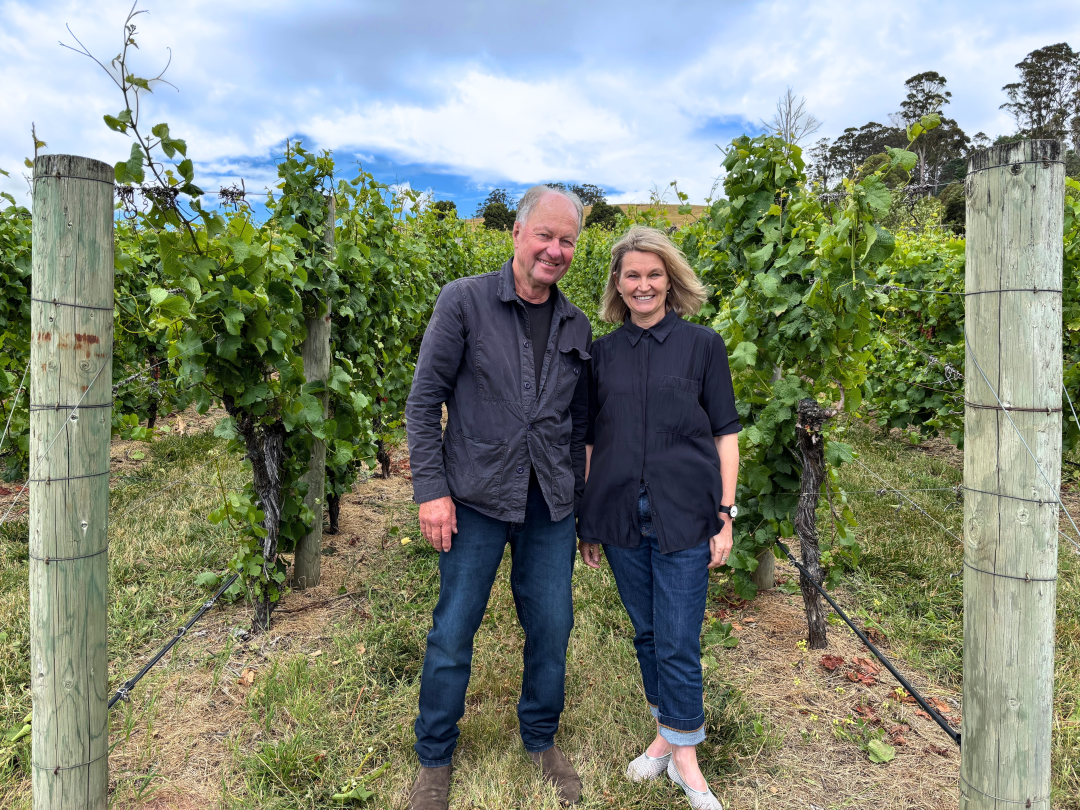
Pioneering winemakers Dr. Andrew Pirie and Jane Ross make some of Tasmania's most nuanced and stylish sparkling wines.
Jansz and Arras have paved the way for smaller players such as Apogee, Henskens Rankin and Bellebonne, who produce stylish, handmade sparkling wines in tiny quantities. Like Arras, these boutique projects employ all the key methods of top Champagne winemaking, including barrel fermentations and extended lees aging for up to 16 years. Aspirations are high among producers of every size, as is the quality of execution.
Despite similar techniques, Tasmania’s very cool maritime climate and relatively dry conditions make for a highly distinctive style of sparkling wine. Firm acidity, purity and fruit power are the hallmarks, with Chardonnay generally forming the base. Pinot Noir also plays an important role, but most producers see Chardonnay as the best representation of local terroir thanks to its electrifying purity, elegance and fruit definition. Unsurprisingly, many of the island’s most exceptional sparkling wines are vintage Blanc de Blancs. Pinot Noir is generally the base for early-release wines, which still generally see at least a year or more en tirage.
Recent Vintages
Two thousand twenty-three was a challenging season in Tasmania with a dominant La Niña weather pattern. A wet winter and very wet spring delayed budburst and led to poor flowering across the state. Warm, humid conditions caused outbreaks of botrytis and downy mildew that required vigilance in the vineyard. Some reprieve came from a warm and drier summer and autumn. Fastidious vineyard management was the key to success in 2023, and top producers made small quantities of excellent, focused wines.
Of all the recent vintages, 2024 is the star, with lower-than-average rainfall throughout the entire growing season. After a string of low-yielding vintages, relatively calm weather at flowering delivered excellent fruit set. The season was warm and dry, bringing fruit to excellent ripeness. Though temperatures were above average, the wines retained energy and brightness. The 2024s are notable for their ripe acidity and generosity of flavour.
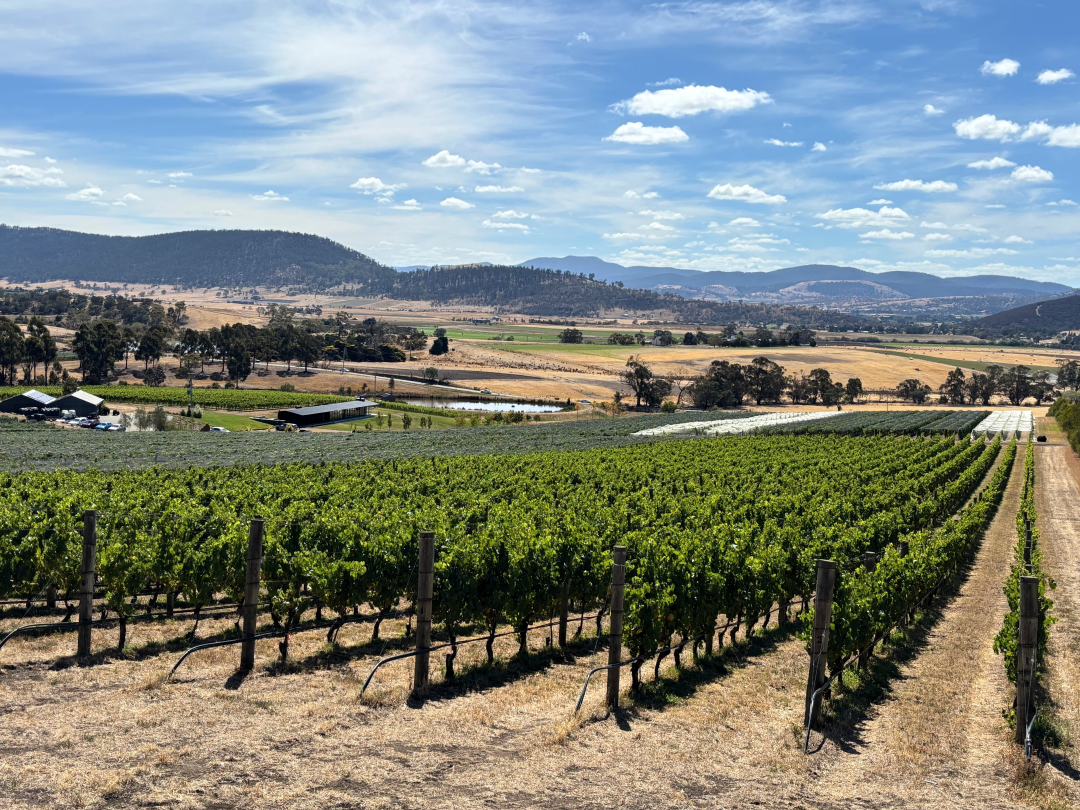
The Tolpuddle Vineyard has proven to be one of Australia's leading sites for Chardonnay.
The warm and dry conditions of 2024 continued into 2025. Thankfully, good winter rainfall helped to replenish soil moisture. Warm conditions at the beginning of spring brought on an early but successful flowering. Much of Tasmania had good rainfall in December and January that set the stage for the rest of the season, although northern zones were significantly drier. From there, the season remained warm and very dry until an early, compressed harvest. The 2025s are intense, powerful wines that lack the finest delicacy of 2024.
Whether still or sparkling, the greatest Tasmanian wines all share a stunning, unforced purity of fruit derived from the island’s isolated location at the mercy of an untamed climate. There is impressive consistency in quality with few misses. While this wild place and climate certainly have their challenges, there are few regions more exciting for cutting-edge wines from the New World.
© 2026, Vinous. No portion of this article may be copied, shared or redistributed without prior consent from Vinous. Doing so is not only a violation of our copyright but also threatens the survival of independent wine criticism.
You Might Also Enjoy
A Landmark Vintage: 2023 Margaret River Cabernet Sauvignon, Angus Hughson, January 2026
Australian Syrah: The Quest for Refinement, Angus Hughson, January 2026
Barossa and Clare Valley: The Champion and the Contender, Angus Hughson, August 2025
The Second Coming of Australian Chardonnay, Angus Hughson, June 2025
Digging for Gold in Western Victoria, Angus Hughson, November 2024
Show all the wines (sorted by score)
- Apogee
- Arras
- Bangor Vineyard
- Bay of Fires
- Bellebonne
- Bream Creek
- Broadacres Vineyard
- Cascade Bay
- Clemens Hill
- Dalrymple Vineyards
- Decades
- Delamere
- Devil's Corner
- Domaine A
- Dr Edge
- Gala Estate
- Ghost Rock Wines
- Glaetzer-Dixon
- Grey Sands
- Haddow + Dineen
- Handpicked Wines
- Hardys
- Henskens Rankin
- Holyman
- Home Hill
- Hughes & Hughes
- Jansz
- Josef Chromy
- Kate Hill
- Kreglinger
- Lowestoft
- Marco Lubiana
- Meadowbank
- Mewstone
- Ossa
- Parish Vineyards
- Pirie
- Pooley
- Pressing Matters
- Riversdale
- Rivulet
- Sinapius
- SISU
- Small Island
- Small Wonder
- Sonnen
- Stargazer
- Stefano Lubiana
- Tamar Ridge
- Tolpuddle Vineyard
- Uplands
- Utzinger