
Browse using the new Vinous website now. Launch →
Printed by, and for the sole use of . All rights reserved © 2015 Vinous Media
2025 Champagne: New Releases
BY ANTONIO GALLONI | APRIL 8, 2025
My annual March trip to Champagne is always one of the highlights of the year. Many producers are preparing to launch their new releases. At the larger houses, this is the time when winemakers are finalizing their blends and deciding whether or not they are going to bottle their tête de cuvées. With spring around the corner, thoughts start to turn to the young vintage and what it might bring.
This year, things were different. Very different. Deep concern over the global economy and the United States’ tariff policies, now instated, cast a pall on every tasting. With the experience of 2020, some producers had already sent a significant portion of their projected 2025 sales volume to the U.S. Even so, the mood was distinctly subdued. That’s a shame, because Champagne continues to be one of the most dynamic regions in the world.

Jérôme Prévost contemplating the state of the world in between wines.
The Grandes Marques – The Changing of the Guard
One of the biggest trends in recent years in Champagne has been the reawakening of the grandes marques following a period in which grower Champagnes gained massively in prominence with professional buyers and consumers alike. The sheer number of growers multiplied by the many wines they each make, along with the flat number of grand marques, led to a situation where grower Champagnes vastly dominate over large houses in terms of the sheer amount of real estate they command on restaurant lists, still the most coveted of placements. This has not gone unnoticed.
One of the first grandes marques to reinvent itself was Roederer, as I have written in many previous articles. Roederer’s push into organic and then biodynamic farming was not only innovative, but it also inspired other producers to do the same. Under the leadership of longtime Chef de Caves Jean-Baptiste Lécaillon, Roederer has become the largest farmer of biodynamic vineyards in Champagne. The flagship Cristal and Cristal Rosé are among the most contemporary Champagnes, while a bevy of new wines have increased the offerings considerably.
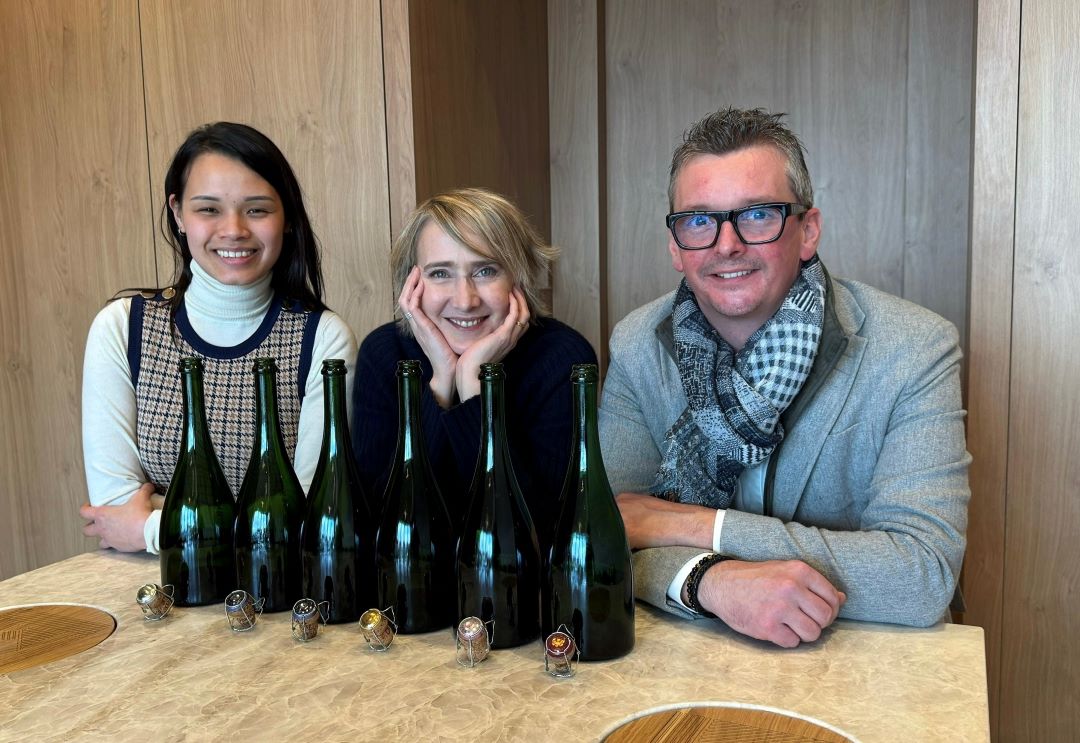
Krug Chef de Caves Julie Cavil, flanked by tasting committee members Isabelle Bui and Jérôme Jacoillot at Krug’s new winemaking facility in Ambonnay.
The younger generation is following suit. At Dom Pérignon, Chef de Caves Vincent Chaperon once again presented a range of vins clairs to start the tasting, each accompanied by detailed maps of the corresponding plots. Last year, I toured several vineyard sites with the entire viticultural team. Chef de Caves Richard Geoffroy, Chaperon’s predecessor and mentor, rarely showed vins clairs. I don’t remember him ever mentioning a vineyard in all the years I tasted with him. Not once. That is not a criticism, it’s simply a reflection of how different generations of Chefs de Caves think about their roles. Chaperon has also decided to start bottling Dom Perignon in years where quality is high but volumes are low because he wants to document each vintage. That is another departure from the past. The 2017 Dom Pérignon, the last vintage vinified by Geoffroy, will be a tiny release that is projected to last in the market for just a few months. It is the smallest production ever for Dom Pérignon. Chaperon has bottled Dom Pérignon in every vintage from 2018 to 2024, except for 2023. More importantly, there is a new feeling of energy at Dom Pérignon today that is palpable.
At Krug, Chef de Caves Julie Cavil has added younger colleagues to her tasting committee with the goal of canvassing the views of several expert tasters. The new Krug winery in Ambonnay is a major step up from the cramped quarters in Reims and a bold investment for the future. This year, Krug introduces a Clos d’Ambonnay Rosé, the first wine they have added to their range in about 20 years, since the release of the 1995 Clos d’Ambonnay.
In Reims, Ruinart recently opened a gorgeous hospitality facility where guests can taste without an appointment and purchase a selection of Champagnes along with other items. In addition to their own Champagnes, Ruinart pours wines from two grower domaines in a rotating selection to enhance the guest experience at their tasting bar. The idea that a grande marque, or any winery for that matter, would show other producers’ wines alongside their own in their hospitality center shows both tremendous yet understated confidence and an openness to the world that is so refreshing. The previous generation of Chefs de Caves only concerned themselves with grande marque Champagne, and in some cases, with their wines only. This new vision reflects the contemporary attitude that Chef de Caves Frédéric Panaïotis has brought to Ruinart. It’s hardly a surprise Panaïotis is making some of the most exciting wines in Champagne today.
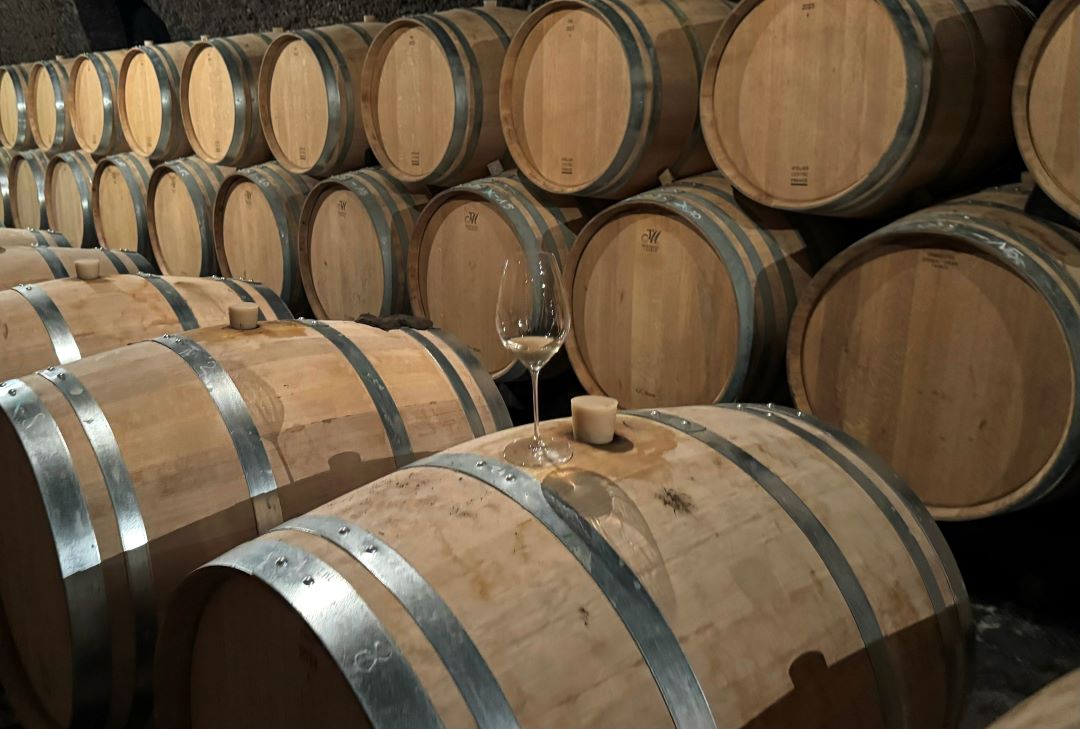
Tasting vins clairs at Selosse, where wines often approach the texture and weight of still wines in other regions.
Growers on the Move
On the grower front, the proliferation of young domaines continues to be nearly impossible to keep up with. That makes Champagne one of the most vibrant regions in the world. Many of the established grower domaines have now passed or are in the process of passing to the next generation. From a pure wine standpoint, grower Champagne continues to shine light on the potential of specific vineyard sites and micro-regions. This is even more true of areas that have historically been regarded as less important, that have been contracted out to larger houses, or where there have never been many benchmark domaines or wines to evaluate in the first place. Growers continue to experiment with some of the more obscure permitted varieties to create new wines, the best of which are compelling. Various offshoots of sustainable farming continue to gain traction, including holistic concepts that encourage healthy and vibrant ecosystems beyond just the vine, such as regenerative farming and vitoforestry, where trees are planted within vineyards.
From a practical standpoint, grower domaines often struggle from being small and subscale. The administrative and bureaucratic requirements that are imposed on wineries today are especially daunting for smaller,family-run estates. Moreover, purchasing land and achieving growth are increasingly difficult. Last but certainly not least are issues around inheritance taxes, which in France are especially punishing. Pretty much every grower domaine would like to make and sell more wine.
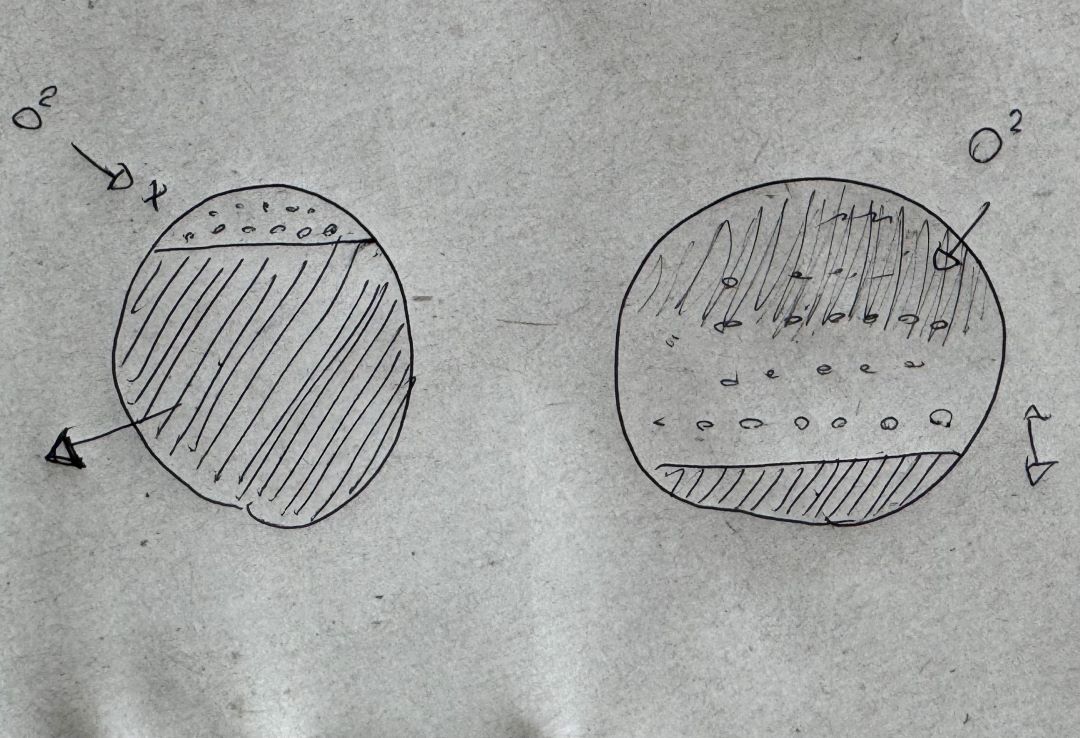
Alexandre Chartogne’s framework for Champagne divides wines into those that are composed of mostly mineral matter (left) and those that are predominantly organic (right) and are therefore more vulnerable to decomposition. Mineral wines are vinified and aged with minimal oxygenation. The goal is to preserve that mineral character. Chartogne believes that organic wines are less interesting and more likely to age relatively quickly. His goal is to transform some of their organic matter to mineral through gentle oxidation during élevage. As a result, these wines (the Meuniers, for example) see more oxygen during their time in barrel.
2024: First Thoughts
Tasting vins clairs is a very good way to get an idea of the new vintage, especially in a challenging year like 2024, where sectors experienced widely different conditions. That said, I have found thatextrapolating these tastings into an idea of what the finished Champagnes will belike to be a tenuous exercise at best because so much takes place with blendingand long aging on the lees, when the young wines transform into Champagne. Moreover, producers only show a small selection of their base wines, and these are naturally going to be the best in the cellar. Nevertheless, I never miss an opportunity to taste vins clairs, as these tastings are highly educational.
In 2024, the main theme was rain, rain and more rain. Average rainfall during the growing season was around 700 mm. Some regions saw close to double that. Mildew was a constant threat throughout the year. The most dramatic period was around September 23 and 24, in which as much as 80 mm of rain fell in two days. Naturally, well-draining sites, such as those on chalk, were favored. The northern Montagne de Reims, which includes Mailly, Verzy and Verzenay, saw considerably less rain than the southern Montagne de Reims.
“The clear winner of the year is Meunier because of its short vegetative cycle, which adapted well to the conditions of 2024,” Chef de Caves Jean-Baptiste Lécaillon explained at Roederer. “We used 30% Meunier in the Collection, the most ever.” Lécaillon bottled both Cristal and Cristal Rosé.“We essentially had a window of ten days of favorable weather to pick everything. Before then, it was not ripe, and after, it rained,” Chef de CavesVincent Chaperon explained at Dom Pérignon. “It all comes down to the capacity of sites to drain, as was the case in the northern Montagne de Reims and well-draining sites in Aÿ, which did better than Bouzy, for example. We are less happy with our Meuniers.”
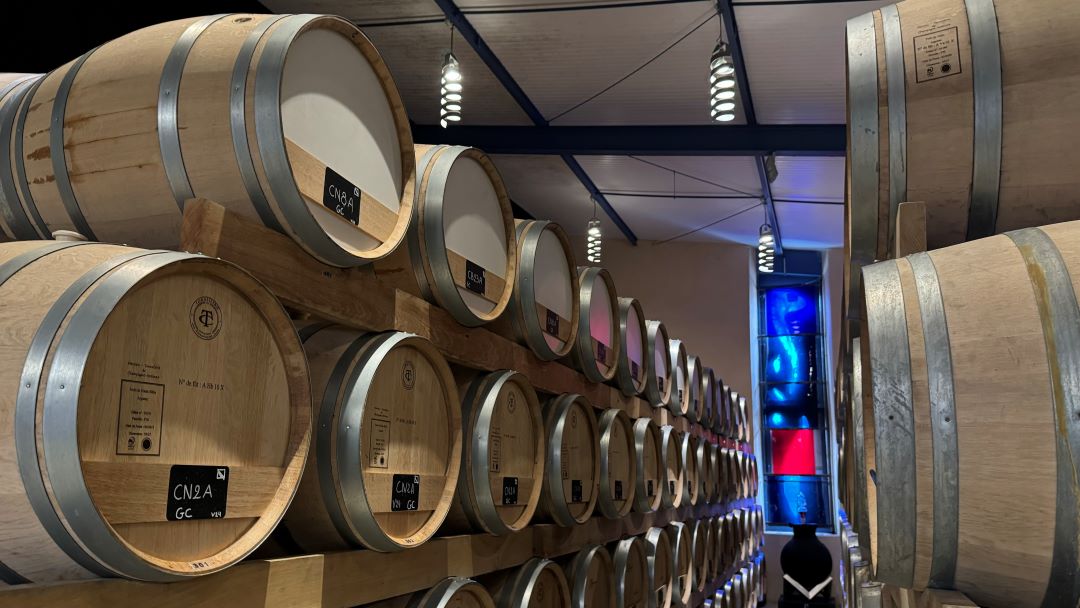
Innovation is a constant theme at Henri Giraud. Barrels on the top row of this image were built with sandstone heads.
“It was extremely difficult in the vineyard,” Chef de Caves Julie Cavil explained at Krug. “Between mildew and yields that were down close to 50%, we really struggled in the vineyard. This is the widest range we have ever seen between what we experienced in the vineyard and then what we saw later in the wines.”
For 2024, the maximum permitted yield in Champagne was 10,000 kilos per hectare, a touch lower than in previous years because of lighter demand in global markets. Most producers reported yields down 40-50% from that number. There are some exceptions. Father-and-son team Laurent and Thomas Champs reported a full crop at Vilmart. Even with lower yields, most Chef de Caves I spoke with at the larger houses bottled their tête de cuvées. I tasted only a few samples from the Aube, which was hit especially hard with a devastating combination of frost, hail and rain that lowered production to virtually nothing in the most affected areas.
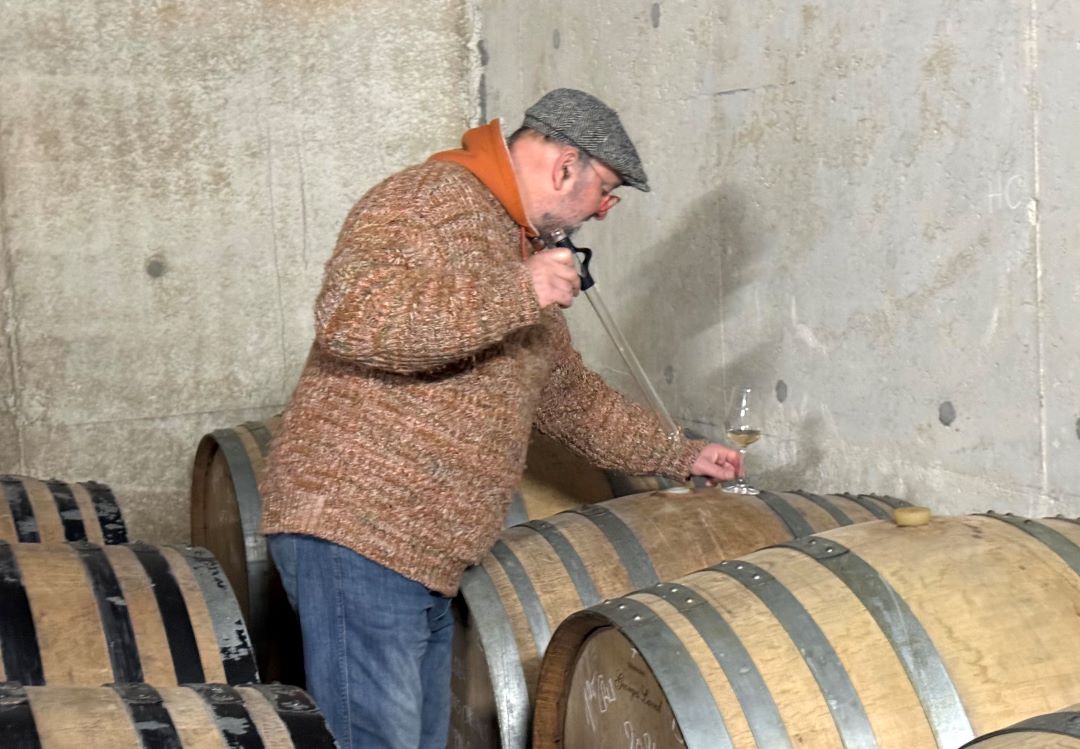
Tasting vins clairs with Vincent Laval at the new barrel cellar just a few steps away from the old cellar, which is now used for aging.
2022: A Step Forward
This year, readers will start to see the first non-vintage Champagnes based on 2022. I have been critical in the past of some recent drier vintages, such as 2015 and 2020, where so many wines are marked by a pronounced vegetal character. I am happy to report that, so far, I do not see those issues in the 2022-based wines, despite considerable heat stress in certain sectors.
For further context, by now it is no secret that Champagne has struggled in some warmer years with wines that often show a vegetal character that suggests underripe fruit. This is one of the modern dilemmas in Champagne. When I asked producers about this in their young 2015s, most of them either pushed back or were not very happy to hear my comments. But time is the great equalizer. And over time, it became clear that many 2015s indeed had a vegetal character. A few years later, vintage 2020 offered a sort of replay, except by then, producers had more widely accepted the idea that warm vintages might be more challenging than they seemed initially. Research is underway to understand if these issues are related to a mismatch of sugar versus phenolic ripeness or perhaps to the appearance of certain kinds of mushrooms. I tend to think it is more a question of the former. One thing is certain: choosing harvest dates in Champagne in the past was almost always done using technical lab data. In other regions, top winemakers know that, while technical data may offer support, the best way to know when to harvest is by tasting analysis. This approach has been slower to arrive in Champagne but now seems to be more widely used. Perhaps that explains the relative success of 2022. I am curious to taste more wines as they arrive on the market.
Coda: Vintage 2022 – Latest Thoughts as of November 2025
I have had an opportunity to taste many more 2022-base Champagnes since the main body of this report was published in April 2025. I am happy to report that many of the 2022-base Champagnes are gorgeous, especially considering the challenges some growers faced in achieving full ripeness in recent years, such as 2015 and 2020. It’s much too soon to know how 2022 will present in vintage Champagnes and têtes de cuvée. For now, the generous, radiant style of the year seems especially well suited to entry-level and NV bottlings, where an extra kick of textural richness makes the wines so easy to drink and enjoy. Perhaps even more importantly, so far I don’t see the worrisome vegetal notes that characterized so many 2015- and 2020-based NV and vintage Champagnes.
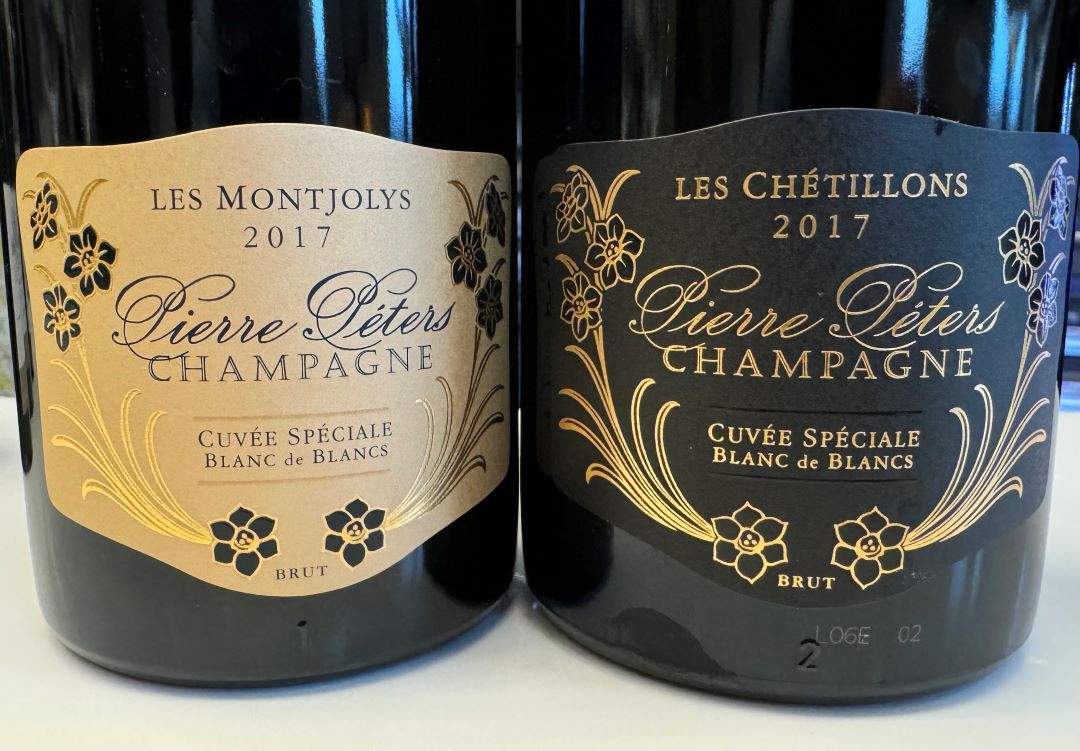
These two 2017s from Pierre Péters say it all when it comes to how different sites respond to challenging weather, in this case,late-season rains. Chétillons, with its chalky soils, was clearly favored over Montjolys, where clay-based soils are more water-retentive.
On Disgorgement Dates
Listing disgorgement dates, base vintages and other technical information has long been our practice. Younger readers may not remember the time, not too long ago, when NV Champagne labels provided the consumer with very little, if any, information about the wines. Champagne was labeled like Coca-Cola. It’s still that way for the most industrial Champagnes. The average person had no way to tell one year’s release from any other release of the same wine. Reviewing these wines critically was highly problematic, as there was no way for consumers to know if they were buying the wine that was actually reviewed.
Along the way, producers and importers began listing disgorgement dates. Growers led the way. This was the first step in differentiating releases. Large houses were initially very resistant. Many grande marque CEOs and Estate Managers flat-out told me they refused to provide this information. “Our clients don’t care about this,” the head of one of Champagne’s most exclusive houses told me. My response was simple. I would not review wines that did not provide some sort of basic information for the consumer. That did not apply just to grower wines or NV Champagnes, it also included iconic wines like Krug’s Grande Cuvée and Laurent-Perrier’s Grand Siècle.
Over time, Champagne producers became more sophisticated. Many of them, again led by growers, began to provide even more information, including base vintage, blends, dosage levels and other details. Krug adopted the Edition series for their Grande Cuvée. For the first time, Grande Cuvée became an allocated Champagne, a far cry from the days when Krug struggled to sell their production. This was not that long ago. Krug IDs on back labels appeared a short time later, providing consumers with more information than ever before. Laurent-Perrier followed with Iterations for their Grand Siècle. Roederer introduced back labels with codes and then created the new numbered Collection series when they phased out the Brut Premier bottling. Occasionally, I would hear complaints, mostly from the wine trade and producers, specifically that buyers only wanted the specific disgorgement I had reviewed. That struck me as a bit hard to believe, given that most houses, even smaller domaines, are disgorging throughout the year.
This brings us to the present. Champagne, especially at the grower level, remains a hot to very hot category. Vinous has readers in more than 100 countries around the world, split evenly between the United States and the rest of the world. Obviously, I taste one disgorgement of each wine, but many disgorgements enter the market. Readers should expect wines disgorged within the same calendar year to be materially similar. For that reason, reviews may now indicate that wines are disgorged throughout the year. Lastly, while disgorgement dates are important—mostly as a differentiator of various releases—the more critical piece of information is the base vintage. That’s what I would like to see on more labels.
About this Article
I tasted all the wines in this report during a week in Champagne in March 2025, with follow-up tastings in New York in November and December 2025. Anne Krebiehl MW contributed additional reviews.
© 2025, Vinous. No portion of this article may be copied, shared or redistributed without prior consent from Vinous. Doing so is not only a violation of our copyright but also threatens the survival of independent wine criticism.
You Might Also Enjoy
Vinous Icons: Roederer – Four Decades of Cristal & Cristal Rosé, Antonio Galloni, November 2024
Champagne: The 2024 Spring Preview and Fall Additions, Antonio Galloni, March 2024
Champagne: 2023 New Releases, Antonio Galloni, November 2023
The 2022 Champagne New Releases, Antonio Galloni, May 2022
Champagne: 2021 New Releases, Antonio Galloni, November 2021
2016 Champagne: Harvest Report, Antonio Galloni, April 2017
Show all the wines (sorted by score)
- A. Bergère
- Adrien Renoir
- Alexandre Bonnet
- Alexandre Lamblot
- Alfred Gratien
- A. Margaine
- Antoine Chevalier
- A. R. Lenoble
- Aubry
- Ayala
- Barbichon & Fils
- Barons de Rothschild
- Benoît Déhu
- Benoît Marguet
- Bérêche et Fils
- Bertrand-Delespierre
- Besserat de Bellefon
- Billecart-Salmon
- Boizel
- Bollinger
- Brimoncourt
- Castelnau
- Cattier
- Cazé-Thibaut
- Cédric Bouchard-Roses de Jeanne
- Charles Heidsieck
- Charpentier
- Chartogne-Taillet
- Christophe Baron
- Christophe Baron
- Christophe Mignon
- Clandestin
- Clos Beau Site
- Crété Chamberlin
- Daniel Moreau
- Dehours & Fils
- Delamotte
- De Saint Gall
- Deutz
- Devaux
- Dhondt-Grellet
- Diebolt-Vallois
- Domaine Hélène
- Domaine Les Monts Fournois
- Domaine Vincey
- Dominique Cousin
- Dom Pérignon
- Doyard
- Drappier
- Duval-Leroy
- Elise Godin
- Emeline de Sloovere
- Eric Rodez
- Famille Moussé
- Fleur de Miraval
- Fleury
- Forget-Brimont
- Francis Boulard & Fille
- Franck Bonville
- Gaiffe-Brun
- Gamet
- Gaspard Brochet
- Gaston Chiquet
- Gatinois
- Georges Laval
- Georges Vesselle
- Girard-Bonnet
- Gonet-Médeville
- Guiborat
- Guillaume S.
- Guy Larmandier
- H. Billiot Fils
- Henri Giraud
- H. Goutorbe
- Jacquart
- Jacques Selosse
- Jacquesson
- Jérome Blin
- Jérôme Prévost - La Closerie
- J. Lassalle
- J.L. Vergnon
- Jules Brochet
- Krug
- Lafalise-Froissart
- La Grande Dame
- Laherte Frères
- Lamiable
- Lancelot Pienne
- Lanson
- Larmandier-Bernier
- La Rogerie
- Laurent Perrier
- Leclerc Briant
- Legrand-Latour
- Legras & Haas
- Lelarge-Pugeot
- Louise Brison
- Madame S
- Madeleine Brochet
- Mailly
- Marc Hébrart
- Marie Courtin
- Marie Tassin
- Matthieu Godmé-Guillaume
- M.G. Heucq
- Michel Arnould
- Michel Gonet
- Moutard
- Mouzon-Leroux
- Nicolas Maillart
- Odyssée 319
- Palmer & Co.
- Pascal Agrapart
- Pascal Henin
- Paul Bara
- Pauline Collin Bérêche
- Payelle Pére & Fils
- Pehu-Simonet
- Perrier-Jouët
- Pertois-Lebrun
- Philipponnat
- Pierre Baillette
- Pierre Gimonnet & Fils
- Pierre Moncuit
- Pierre Paillard
- Pierre Péters
- Piper-Heidsieck
- Pol Roger
- Rémi Leroy
- Rene Geoffroy
- R. H. Coutier
- Roederer
- Roger Coulon
- R. Pouillon & Fils
- Ruinart
- Salon
- Savart
- Taittinger
- Tarlant
- Tellier
- Telmont
- Thierry Fournier
- Ullens
- Valentin Leflaive
- Veuve Fourny & Fils
- Vilmart & Cie
- Vincent Cuillier
- Vincent Laval
- Waris Hubert
- Wirth Michel